Solid Polycarbonates
Optically clear and will not shatter, which is why it is specified for skylights, security glazing and partitions. UV-protected, stocked in Nairobi.
Products
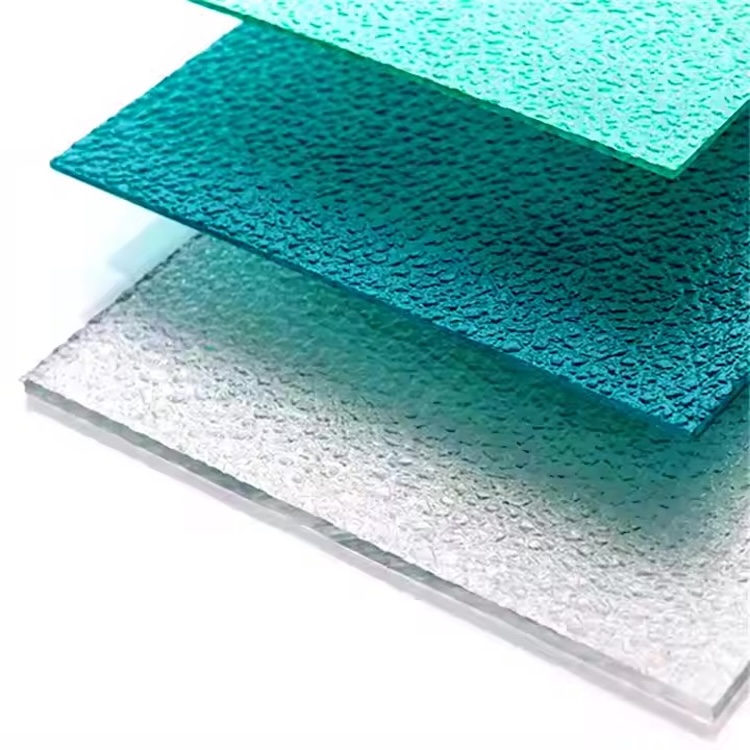
Embossed Solid Polycarbonate Sheet – UV-Protected Textured Strength
Embossed Solid Polycarbonate Sheet – UV-Protected Textured Strength — Embossed Solid Polycarbonate Sheets are textured UV-protected panels offering decorative diffusion plus the full impact strength of solid polycarbonate. Ideal for Kenyan showers, partitions, bathroom enclosures, decorative ceilings, and any application where privacy, diffused light, and virtually unbreakable performance are required.
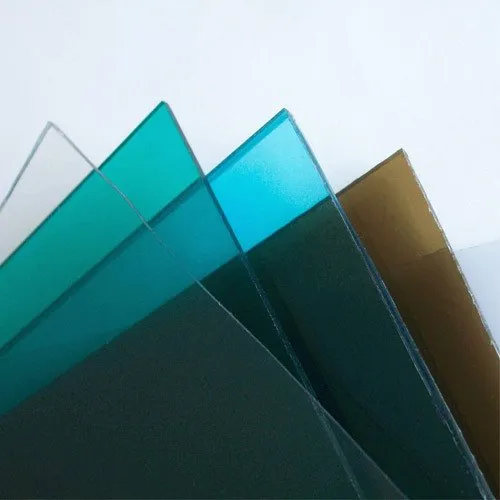
Solid Polycarbonate Sheets
Solid Polycarbonate Sheets — Solid Polycarbonate Sheets are high-clarity, non-shattering thermoplastic panels up to 200× stronger than glass. In Kenya they are the preferred glazing for skylights, canopies, walkways, security screens, and public-building roofing where impact safety, UV resistance, and long service life are critical.
Solid polycarbonate sheets are single-layer, optically clear thermoplastic panels — no internal chambers, no flutes, just one continuous thickness. They are the version of polycarbonate people mean when they talk about a material that behaves like glass but will not shatter, and they are specified across Kenya wherever clarity, security or impact safety matter more than covering area cheaply.
BHD Kenya stocks solid polycarbonate in Nairobi, in clear and embossed finishes, with delivery countrywide.
Why solid rather than glass
Glass fails dangerously. When it breaks it either falls as shards or, if toughened, collapses into a pile of fragments — and either way the opening is left open. Solid polycarbonate does neither. It is dramatically more impact-resistant than glass of the same thickness, and when it is finally overloaded it deforms or cracks while staying in the frame. For anything mounted overhead, or anything protecting people or stock, that difference is the whole argument.
It is also a fraction of the weight of glass for the same panel, which means lighter framing, easier handling on site, and openings that glass could not span without heavy support. It can be drilled and cut with ordinary site tools, where glass has to be ordered to final size and cannot be adjusted.
Solid vs hollow: when to pay for solid
Hollow (multiwall) polycarbonate is the cheaper way to cover a large area, and for a carport or a greenhouse it is usually the right answer. Solid earns its extra cost in three situations:
- You need to see through it properly. Hollow sheet diffuses the view because of its internal walls. Solid is genuinely transparent.
- Something could hit it. Falling debris, an intruder, a stray ball, a machine throwing material — solid takes concentrated impact that hollow will not.
- It is overhead, above people. A skylight over a stairwell, a reception or a walkway is a safety component, not just a roof.
If none of those apply, hollow is the more economical specification and BHD will say so.
Where solid polycarbonate is used
Skylights and roof glazing
The most common use, and the one where the safety case is strongest. A solid sheet lets full daylight into a stairwell, atrium or corridor without the overhead risk that glass carries.
Security glazing and screens
Teller screens, cashier windows, pharmacy and clinic counters, and ground-floor glazing in exposed locations. It resists forced entry far longer than glass and does not leave an open hole when attacked.
Walkway and entrance canopies
Where the canopy is a visible architectural element and a diffused hollow sheet would look wrong, solid gives a clean glazed appearance that stays intact.
Partitions, balustrades and machine guards
Interior partitions and stair balustrades where transparency is the design intent, and guarding on machinery where an operator must see the process while being protected from it.
Signage faces and light boxes
Solid sheet takes print and vinyl well and will not crack when drilled or mounted, which makes it the durable choice for illuminated signage and fascia panels.
Solid polycarbonate in use
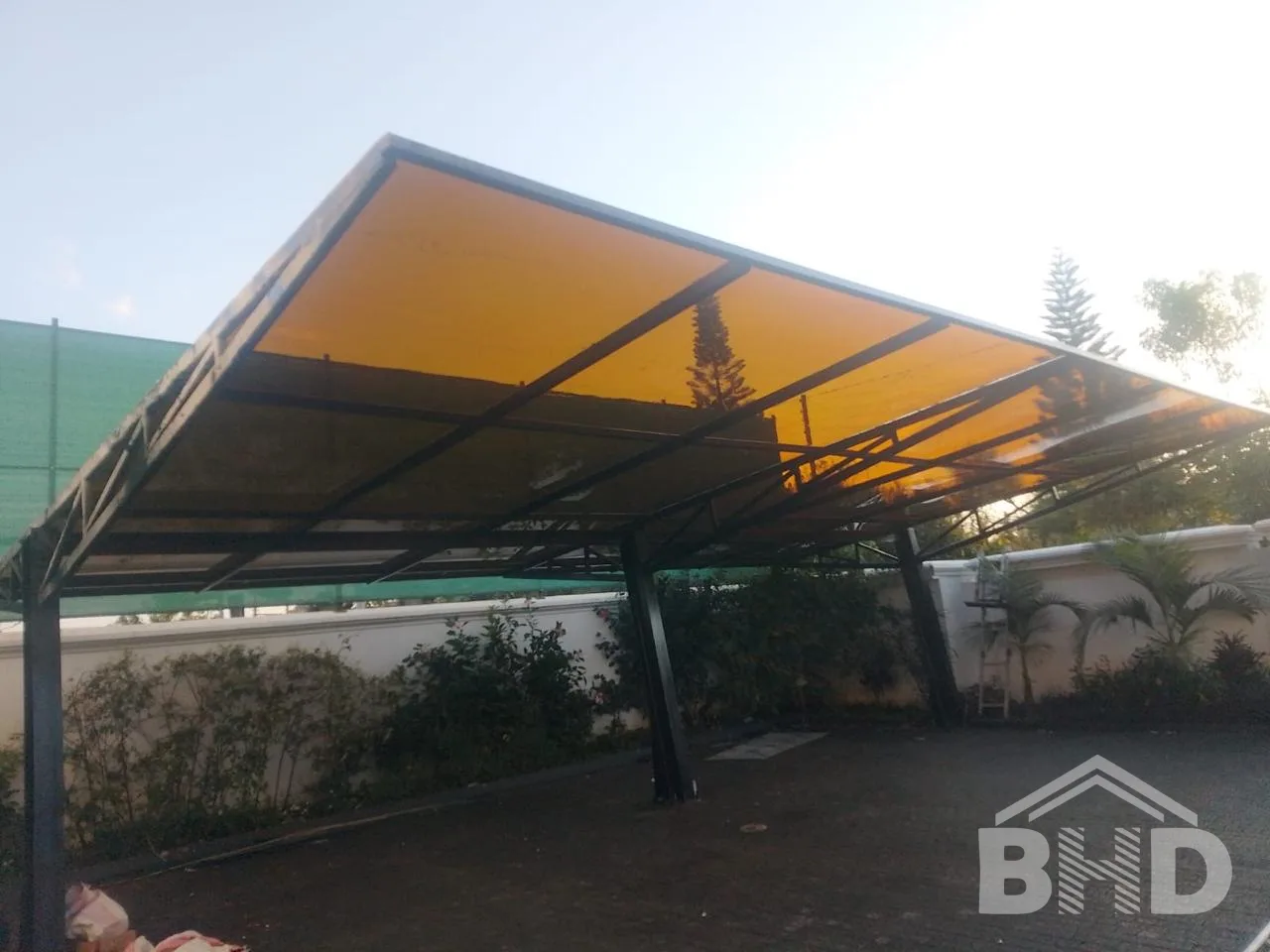
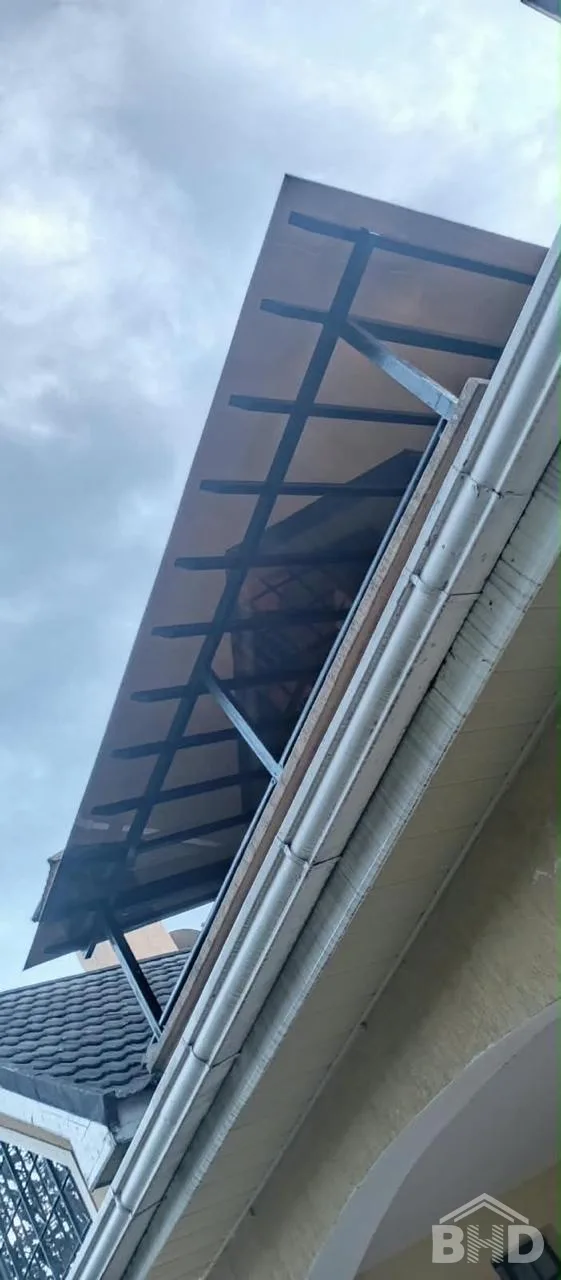
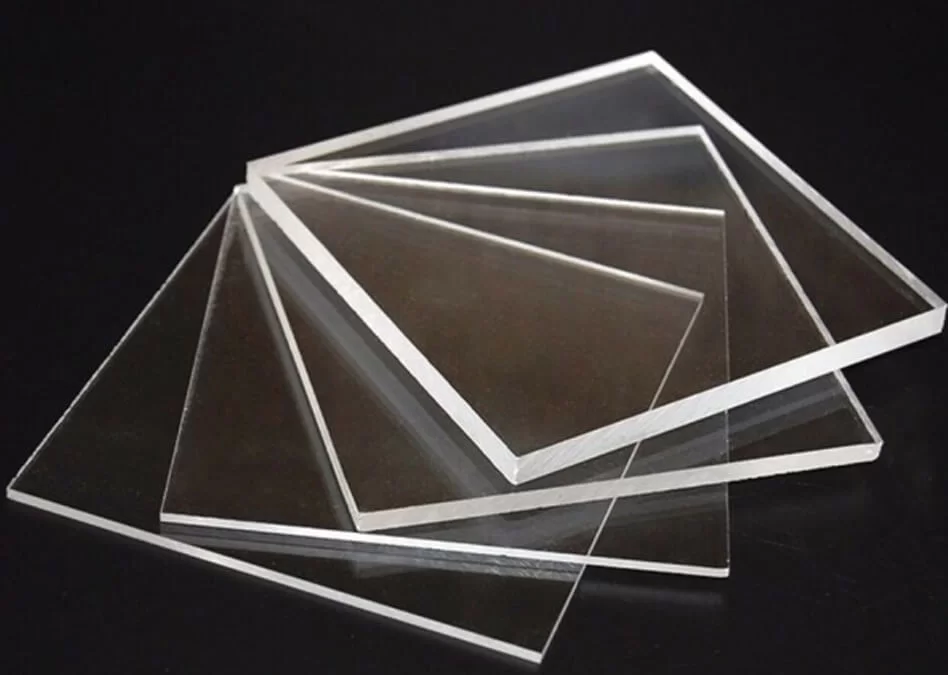
Solid polycarbonate sheets supplied by BHD Kenya. Tell us the span and the structure you are fixing to and we will confirm the thickness, tint and fixings the job needs.
Embossed solid polycarbonate
Embossed sheet is solid polycarbonate with a textured surface on one or both faces. It keeps the full impact strength of a solid panel while scattering light and obscuring the view through it, so it is the practical choice for shower screens, bathroom enclosures, office and bedroom partitions, and decorative ceilings. Where a clear sheet would expose a space and frosted glass would be fragile, embossed solid polycarbonate gives privacy, diffused light and a panel that will not break if someone leans on it.
UV protection is what determines how long it lasts
Polycarbonate is inherently vulnerable to ultraviolet light. Manufacturers address this by co-extruding a UV-resistant layer onto the weather-facing surface during production — it is part of the sheet, not a coating applied afterwards, and it cannot be added later. Under Kenya's equatorial sun an unprotected sheet will yellow, lose clarity and turn brittle, and once that process starts nothing reverses it.
A properly protected sheet carries marking on its masking film identifying the UV face, which must be installed outward. This is the single specification most worth confirming in writing before you buy, and it is the usual explanation for a sheet that was noticeably cheaper than the market.
Specifying and installing solid sheet
Solid polycarbonate is specified by thickness, and thickness determines both how far it will span unsupported and how it behaves when curved. It can be cold-bent to a radius without heating, which is how curved canopies and barrel-vault roofs are formed, but every thickness has a minimum radius below which it will craze.
Two installation points decide whether the panel performs. First, polycarbonate expands and contracts noticeably with temperature, so fixing holes must be oversized and fitted with bonded washers rather than driven tight — a panel screwed down hard will crack around the fixings within its first hot season. Second, it must be supported at the spacing appropriate to its thickness; over-spanning is the other common failure.
Tell BHD the opening you are glazing, whether it is overhead, and whether you need clarity or diffusion, and the team will confirm the current stocked thicknesses, sheet sizes and finishes that suit it, together with the fixings and profiles the installation needs.
Cleaning and care
Solid polycarbonate scratches more easily than glass, which is the one genuine trade-off. Clean it with plenty of water, a mild detergent and a soft cloth — never a dry cloth, an abrasive pad or a solvent-based cleaner, all of which will mark or craze the surface. Light scratches in solid sheet can often be polished out, which is not an option with glass.
Buying solid polycarbonate sheets in Kenya
BHD Kenya is a supplier and stockist rather than a manufacturer, which means the range is chosen for the Kenyan market rather than dictated by one factory's output. Sheets are held in Nairobi for collection or delivery countrywide. What you pay depends on thickness, sheet size, finish and quantity, so send your dimensions and the team will come back with current rates and availability.
Need Solid Polycarbonates?
Contact us for pricing, specifications, and delivery options across Kenya.