
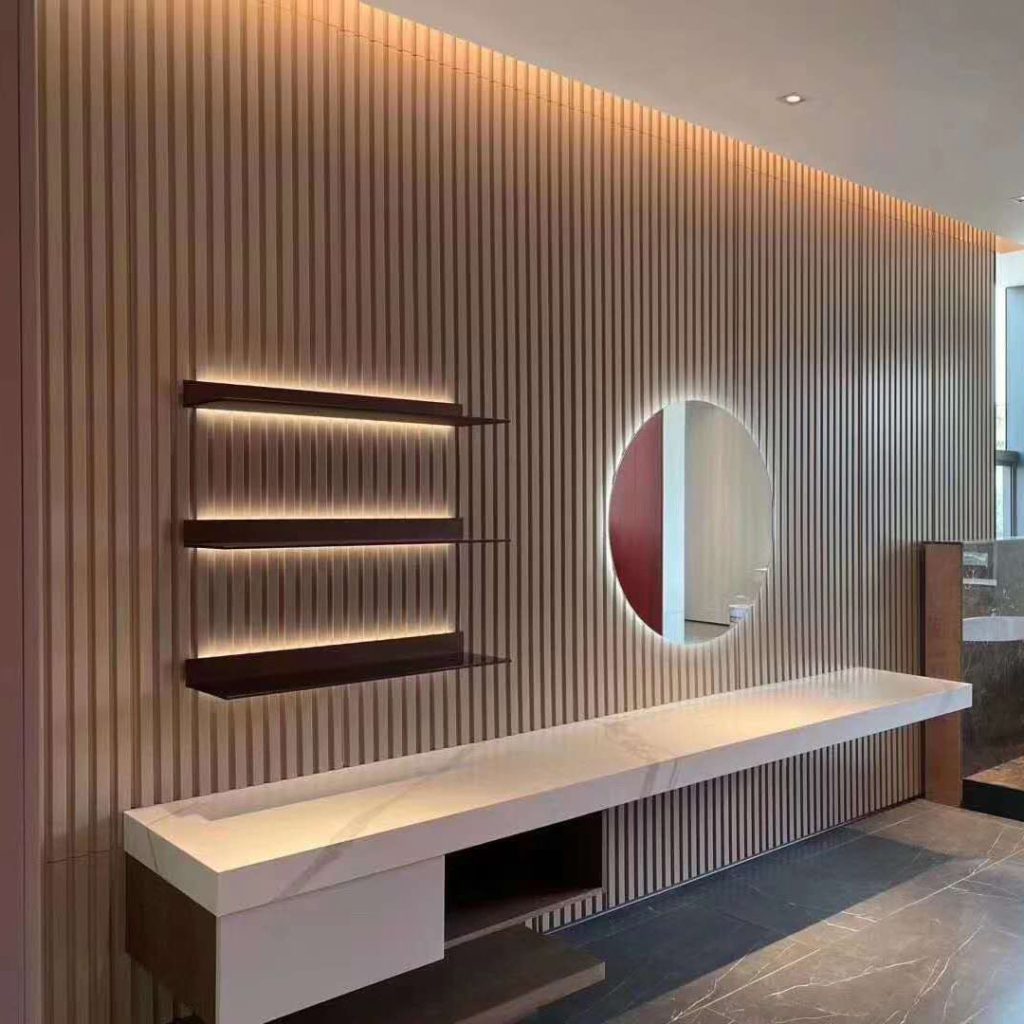
A Step-by-Step Guide to Installing WPC Fluted Panels in Modern Kenyan Office Spaces
Wood Plastic Composite (WPC) fluted panels are increasingly being adopted in Kenya’s commercial architecture for office interiors and façades. Combining the warmth of timber with the durability of polymers, these panels offer aesthetic versatility, low maintenance, and compliance with KEBS standards, making them ideal for modern office spaces across Nairobi, Mombasa, Kisumu, and beyond. This guide provides a step-by-step installation framework, lifecycle considerations, and Kenyan-specific best practices to maximize ROI.
What Are WPC Fluted Panels and Why Are They Used in Kenyan Offices?
Direct Answer:
WPC fluted panels are engineered composites of wood fibers and high-density polymers, designed with vertical or horizontal grooves for texture and acoustics. They are popular in Kenyan office interiors for their durability, moisture resistance, and minimal upkeep compared to natural wood.
Key benefits for Kenyan office spaces include:
-
Durability: Resistant to termites, moisture, and UV degradation, crucial for Nairobi’s varying humidity and Mombasa’s coastal conditions.
-
Acoustic Performance: Fluted design reduces noise, improving office comfort.
-
Aesthetic Flexibility: Multiple finishes, colors, and groove patterns suitable for modern corporate interiors.
-
Compliance: Meets KEBS 2025 Standards Levy and fire-retardant requirements per National Building Code 2024.
For product options and certified panels, visit BHD WPC Panels.
How Do You Prepare a Kenyan Office Space for WPC Fluted Panel Installation?
Direct Answer:
Proper site preparation ensures secure adhesion, alignment, and long-term panel performance. This step reduces installation errors and future maintenance issues.
Steps for Site Preparation:
-
Measure and Mark: Assess wall dimensions, considering electrical outlets, HVAC vents, and ceiling heights.
-
Check Wall Integrity: Ensure surfaces are flat, dry, and free from dust or loose paint. Cement or gypsum walls are ideal.
-
Moisture Testing: For coastal offices (Mombasa, Malindi), check moisture content to prevent panel warping.
-
Gather Materials: WPC fluted panels, aluminum subframes or treated timber battens, screws, adhesives, and sealants certified under KEBS 2025 Standards Levy.
-
Safety Equipment: Gloves, goggles, masks, and scaffolding for high walls.
BHD offers installation accessories and adhesives optimized for Kenyan conditions.
What Tools Are Required for Installing WPC Fluted Panels?
Direct Answer:
Using the right tools ensures precision, alignment, and structural integrity. Kenyan installers should prioritize quality tools to comply with safety and KEBS standards.
Essential Tools:
-
Spirit level and measuring tape
-
Drill and screwdrivers (compatible with corrosion-resistant screws)
-
Saw (circular or fine-toothed for clean edges)
-
Adhesive applicator or caulking gun
-
Rubber mallet for panel adjustment
-
Safety scaffolding or ladders
Optional tools for enhanced efficiency: laser level for large office walls and pneumatic nailers for battens.
Step 1: Installing the Subframe for WPC Panels
Direct Answer:
The subframe provides structural support, ensures ventilation behind panels, and allows for thermal expansion. In Kenya’s humid and variable climates, this step is critical for panel longevity.
-
Material Choice: Use treated timber battens or aluminum subframes. Aluminum is recommended for coastal regions (Mombasa, Malindi) due to its corrosion resistance.
-
Spacing: Vertical battens at 400–600 mm centers, horizontal battens for ceiling-to-floor alignment if required.
-
Fixing: Secure battens with corrosion-resistant screws into concrete or masonry walls.
Proper subframe installation prevents panel warping, ensures alignment, and supports load-bearing for large office façades.
Step 2: Cutting and Aligning WPC Fluted Panels
Direct Answer:
Accurate cutting and alignment maintain aesthetics, reduce waste, and ensure smooth acoustic performance. Panels should be cut using fine-toothed saws to prevent fiber fraying.
-
Measure each panel against wall dimensions.
-
Maintain 2–3 mm expansion gaps for thermal movement.
-
Dry-fit panels to check alignment before permanent fixing.
-
Number panels sequentially to match wall layout and groove continuity.
BHD’s custom-cut panel service supports large office projects to minimize on-site cutting errors.
Step 3: Fixing WPC Fluted Panels to the Subframe
Direct Answer:
Panels are attached to the subframe using screws or adhesives, depending on load requirements and office wall conditions.
Installation Methods:
-
Mechanical Fixing:
-
Screws with concealed caps for aesthetics.
-
Ensure screws penetrate the battens without over-tightening to allow for expansion.
-
-
Adhesive Fixing:
-
Use KEBS-certified polymer adhesives.
-
Ideal for lightweight walls or where minimal drilling is desired.
-
-
Hybrid Fixing:
-
Combines screws at corners with adhesive bonding for large panels.
-
Regularly check vertical alignment using a spirit or laser level.
Step 4: Sealing and Finishing WPC Fluted Panels
Direct Answer:
Sealing joints prevents moisture ingress and enhances longevity, while finishing ensures a premium look for Kenyan office interiors.
-
Apply sealant to vertical and horizontal panel joints, especially in humid regions like Kisumu and Mombasa.
-
Clean panels with a soft cloth to remove dust or adhesive residue.
-
Inspect for gaps, misalignments, or surface damage before final acceptance.
-
Optional: Apply a KEBS-certified UV-protective coating for offices with extensive sunlight exposure.
Correct sealing reduces maintenance costs and maintains appearance for 15–20 years.
Step 5: Maintenance Tips for WPC Fluted Panels in Kenyan Offices
Direct Answer:
Routine cleaning and periodic inspections maintain panel performance and aesthetics, minimizing lifecycle costs.
-
Cleaning: Mild detergent and water; avoid abrasive brushes.
-
Inspection: Check fasteners, sealants, and panel alignment every 2–3 years.
-
Repair: Damaged panels can be removed individually without affecting neighboring sections.
-
Energy Efficiency: Panels can improve insulation, reducing HVAC costs for Nairobi and coastal offices.
Routine upkeep in Kenya is generally limited to light cleaning and sealant checks, translating to lower long-term maintenance costs compared to natural wood.
WPC Fluted Panel Specifications for Kenyan Market
| Parameter | Standard Metric | Kenyan Compliance Notes |
|---|---|---|
| Panel Thickness | 8–12 mm | KEBS 2025 Standards Levy certified |
| Panel Width | 100–300 mm | Flute options customizable |
| Panel Length | 2,400–6,000 mm | Custom orders available |
| Weight | 7–9 kg/m² | Lightweight, reduces wall load |
| Fire Retardancy | Class B1 per NBC 2024 | Complies with National Building Code 2024 |
| Finish | Matte, Woodgrain, or Textured | Durable against UV and humidity |
| Installation Method | Screw/Adhesive/Hybrid | Suitable for Kenyan office walls |
| Warranty | 10–15 years | Covers delamination & structural defects |
BHD provides full specifications and customization for commercial office projects.
How to Calculate ROI of WPC Fluted Panels in Kenyan Offices
Direct Answer:
ROI combines upfront cost, low maintenance, durability, and potential energy savings. Kenyan offices can quantify value by comparing WPC panels with timber or plaster alternatives.
Sample ROI Analysis (100 m² Office Wall):
| Component | KES (Annual or One-Time) |
|---|---|
| WPC Panel Investment | 750,000 |
| Annual Maintenance (WPC) | 15,000 |
| Annual Maintenance (Timber) | 60,000 |
| Energy Savings (HVAC) | 20,000 |
| Panel Lifespan | 15 years |
Total Savings:
-
Maintenance savings: (60,000 – 15,000) × 15 = 675,000
-
Energy savings: 20,000 × 15 = 300,000
-
Total = 975,000
ROI: (975,000 ÷ 750,000) × 100 ≈ 130% over 15 years
This demonstrates that WPC panels are a cost-effective, long-term solution for Kenyan office interiors.
Common Installation Mistakes to Avoid in Kenyan Offices
Direct Answer:
Avoiding common mistakes ensures panel longevity, aesthetics, and ROI.
-
Incorrect subframe spacing → panel sagging
-
Ignoring expansion gaps → buckling in humid conditions
-
Using non-certified adhesives → joint failure
-
Over-tightening screws → panel surface damage
-
Poor cleaning → early staining or mold in coastal areas
BHD’s installation guides and accessories help Kenyan contractors follow best practices.
Where to Source WPC Fluted Panels in Kenya
Direct Answer:
BHD supplies KEBS-certified WPC fluted panels with same-day Nairobi delivery and next-day nationwide shipping.
Delivery Highlights:
-
Nairobi: Same-day delivery
-
Countrywide: Nakuru, Kisumu, Mombasa, Eldoret, Thika, Meru, Kitengela, Malindi
Contact BHD for orders, consultations, and installation support:
burhanihardwaredealers [at] yahoo.com
+254 731 217 462 | +254 704 606 131
https://bhd.co.ke
Industrial Area, Funzi Road, Nairobi
Conclusion: Are WPC Fluted Panels Worth Installing in Kenyan Office Spaces?
Direct Answer:
Yes, WPC fluted panels provide aesthetic appeal, durability, low maintenance, and ROI for Kenyan office projects. Their resilience against humidity, termites, and UV exposure, combined with compliance to KEBS 2025 Standards Levy and National Building Code 2024, makes them ideal for modern office interiors across Nairobi, Mombasa, and Kisumu.
Investing in professional installation, routine cleaning, and KEBS-compliant materials ensures that panels last 15–20 years with minimal cost and operational disruption.











Leave a reply