

Marble Boards Kenya vs Gypsum: 2026 Wall Guide | BHD
Quick answer
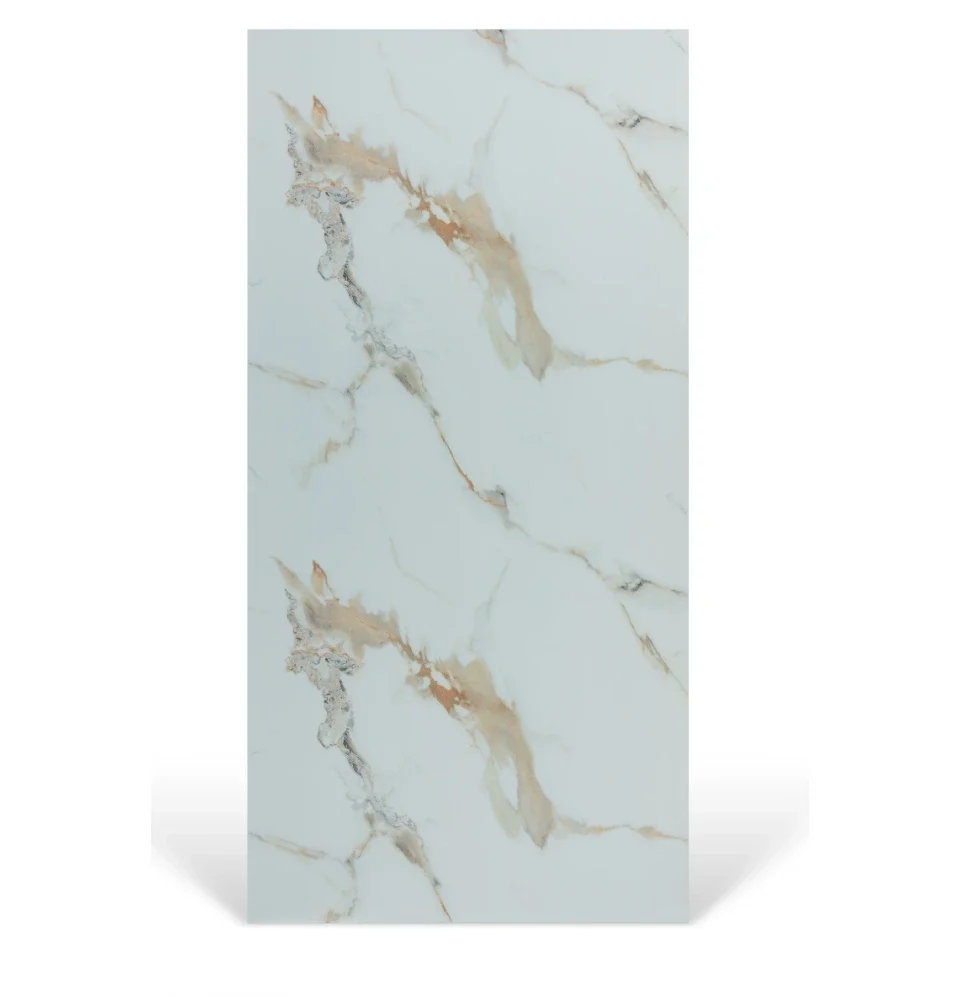
Marble boards are decorative panels with a finished marble-look face, fixed to a wall to become the final surface with no painting needed. Gypsum board is a construction material used to build partitions, dropped ceilings and smooth wall surfaces, which are then jointed, skimmed and painted. Many interiors use both: gypsum to form the wall, marble board for the feature.
Marble Boards vs Gypsum Walls: Which Is Better?
Marble boards and gypsum boards serve different purposes in interior construction, so the better option depends on whether the priority is decorative appearance, wall partitioning, ceiling work, cost, installation speed or long-term maintenance. Marble boards are mainly selected for finished decorative surfaces, while gypsum is widely used for partitions, ceilings and smooth wall finishes.
For homeowners, interior designers, contractors and property developers in Kenya, choosing between these two materials should go beyond appearance.
A TV feature wall, hotel reception, office partition and bedroom wall may require completely different solutions.
This guide compares marble boards Kenya buyers commonly consider with gypsum boards, covering appearance, installation, durability, maintenance, cost and practical applications.
What Is the Difference Between Marble Boards and Gypsum Boards?
Marble boards are decorative wall panels designed to provide a marble-effect or stone-inspired finish, while gypsum boards are manufactured plasterboard panels primarily used for partitions, ceilings and smooth interior surfaces. The two materials can therefore complement each other rather than always compete directly.
The biggest difference is their intended purpose.
| Feature | Marble Boards | Gypsum Boards |
|---|---|---|
| Primary purpose | Decorative wall finishing | Partitions and ceilings |
| Appearance | Marble/stone effect | Smooth painted finish |
| Installation | Panel-based | Framed board system |
| Joint treatment | Product-specific | Requires joint treatment |
| Painting | Usually unnecessary | Usually required |
| Design | Decorative patterns | Highly paintable |
| Typical application | Feature walls | Walls and ceilings |
| Maintenance | Product-dependent | May require repainting/repair |
| Water resistance | Depends on product | Standard gypsum is moisture-sensitive |
| Best use | Feature surfaces | General interior construction |
The appropriate choice depends on the project's requirements.
What Are Marble Boards Used For?
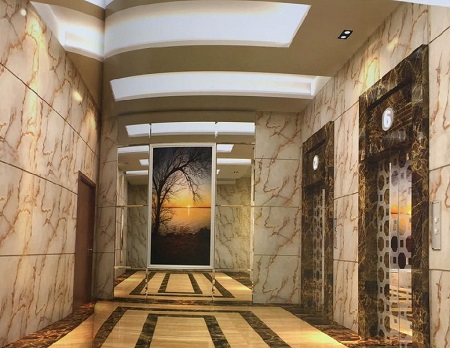
Marble boards are primarily used as decorative interior wall finishes where a polished stone or marble appearance is required. They are especially suitable for TV walls, feature walls, reception areas, bedrooms, restaurants and selected hospitality interiors.
Typical applications include:
- TV feature walls
- Living room walls
- Bedroom feature walls
- Hotel reception areas
- Office reception desks
- Restaurant interiors
- Retail spaces
- Decorative columns
- Entrance feature walls
BHD provides marble boards for suitable architectural finishing applications.
The exact specifications, dimensions and installation requirements should be confirmed before purchase.
What Are Gypsum Boards Used For?
Gypsum boards are widely used to construct interior partitions, ceilings, bulkheads and smooth wall surfaces. They provide a practical base that can be painted, textured or finished with other decorative treatments.
Gypsum is commonly used for:
- Partition walls
- Suspended ceilings
- False ceilings
- Bulkheads
- Wall linings
- TV wall structures
- Office partitions
- Commercial interiors
Gypsum can also be shaped into architectural features such as:
- Curved sections
- Recessed lighting
- Ceiling drops
- Niches
- Shelving structures
This makes gypsum highly useful during the construction stage of an interior.
Are Marble Boards Better Than Gypsum for TV Walls?
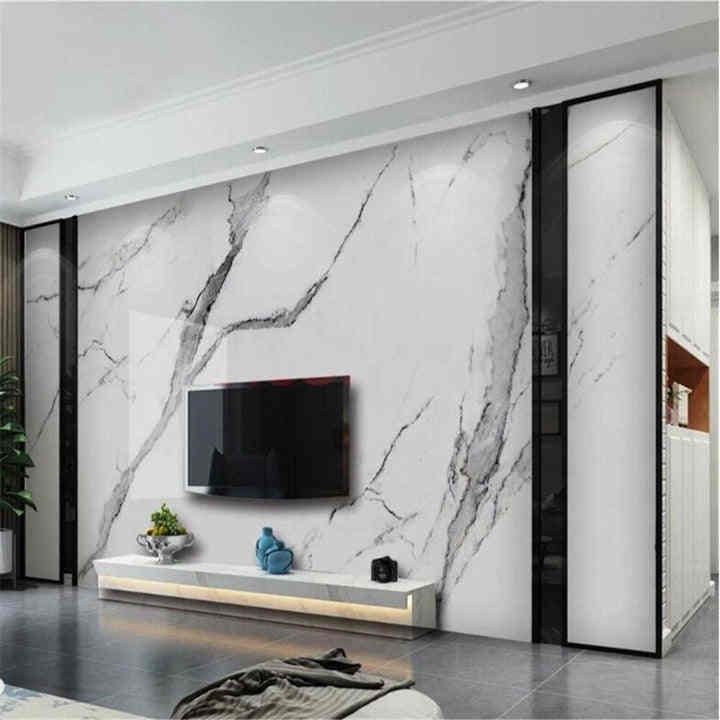
For a finished decorative TV feature wall, marble boards can provide a more immediate stone-effect appearance than a conventional gypsum wall. Gypsum is often better when the designer needs to construct the underlying wall structure, niches, shelving or customised shapes before applying a final decorative finish.
A sophisticated TV wall can actually use both materials.
For example:
Gypsum structure + electrical routing + marble board finish + LED lighting + floating cabinet
This approach combines the structural flexibility of gypsum with the decorative appearance of marble boards.
For additional decorative contrast, WPC wall panels can be incorporated into selected sections.
Which Has a Better Appearance: Marble Boards or Gypsum?
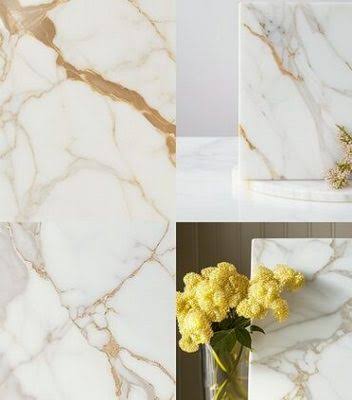
Marble boards generally provide a more decorative appearance immediately after installation because the panel already carries its marble-effect pattern and finish. Gypsum provides a blank, smooth surface that requires painting, wallpapering or another finishing treatment to achieve the desired appearance.
Marble boards can create:
- Stone-like veining
- Glossy finishes
- Modern patterns
- Premium-looking feature walls
- Large visual surfaces
Gypsum can create:
- Smooth painted walls
- Minimalist interiors
- Custom shapes
- Recessed lighting features
- Decorative niches
The choice therefore depends on the design objective.
Which Is Easier to Install?
Installation difficulty depends on the application, but marble boards can provide a faster decorative finish when the supporting wall is already prepared. Gypsum requires framing, board fixing, joint treatment and finishing before painting or decoration.
A typical gypsum installation involves:
- Setting out the wall.
- Installing metal framing.
- Fixing gypsum boards.
- Treating joints.
- Applying filler.
- Sanding.
- Priming.
- Painting or applying another finish.
A marble board installation may involve:
- Measuring the wall.
- Preparing the surface.
- Cutting panels.
- Positioning panels.
- Applying the appropriate fixing system.
- Aligning joints.
- Finishing edges.
The exact procedure depends on the marble-board product and manufacturer's instructions.
Which Is More Durable: Marble Boards or Gypsum?
Neither material should be labelled simply as more durable because performance depends on the product specification, installation quality and environmental conditions. Marble boards can provide a hard decorative surface for suitable interior applications, while gypsum can perform well as an interior wall or ceiling system when protected from inappropriate moisture and impact.
Durability should be assessed against the actual use.
For a busy commercial corridor, consider:
- Impact exposure
- Cleaning requirements
- Moisture
- Surface damage
- Replacement requirements
For a bedroom feature wall, appearance and ease of maintenance may be more important.
For a bathroom or wet area, ordinary gypsum should not automatically be used.
A moisture-resistant board specified for the application may be required.
Are Marble Boards Waterproof?
The term "waterproof" should not be assumed for every marble board because different products have different substrates, coatings and moisture-performance characteristics. Always confirm the manufacturer's water-resistance specification before using a marble board in a wet or humid environment.
This is particularly important in:
- Bathrooms
- Kitchens
- Laundry areas
- Coastal properties
- Commercial wet areas
A decorative surface may resist occasional splashes without being suitable for continuous moisture exposure.
Correct substrate preparation and joint detailing are also important.
Is Gypsum Waterproof?
Standard gypsum board is not waterproof and should not be treated as a general-purpose wet-area material. Moisture-resistant or purpose-designed boards may be required in areas exposed to humidity or water, depending on the application.
The term "moisture-resistant" also does not mean that a board can be continuously exposed to water.
The complete wall system must be considered.
For wet environments, check:
- Board type
- Moisture rating
- Waterproofing system
- Ventilation
- Joint treatment
- Manufacturer instructions
Which Is Cheaper: Marble Boards or Gypsum?
Gypsum is often economical for constructing large interior walls and ceilings, while marble boards can cost more per finished decorative surface depending on the panel specification. A fair comparison should include materials, framing, finishing, labour, painting and maintenance.
Gypsum costs may include:
- Metal framing
- Boards
- Screws
- Joint tape
- Joint compound
- Labour
- Primer
- Paint
Marble-board costs may include:
- Panels
- Adhesive or fixing system
- Cutting
- Edge finishing
- Labour
- Wall preparation
Therefore, comparing only the price per board can give a misleading result.
What Specifications Should You Compare?
When comparing marble boards and gypsum, consider panel dimensions, thickness, weight, moisture suitability, surface finish, fixing method and intended application. The correct specification should be selected based on the environment and required performance rather than appearance alone.
Specifications Comparison
| Parameter | Marble Boards | Gypsum Boards |
|---|---|---|
| Main function | Decorative finish | Wall/ceiling construction |
| Thickness | Product-specific | Product-specific |
| Surface | Marble-effect finish | Paper-faced board |
| Finish after installation | Usually ready decorative surface | Usually requires finishing |
| Weight | Product-dependent | Product-dependent |
| Moisture performance | Product-specific | Board-specific |
| Fixing | Product-specific | Mechanical fixing to framing |
| Painting | Usually not required | Usually required |
| Pattern | Manufactured marble effect | Plain |
| Cutting | Product-specific tools | Standard board-cutting methods |
| Best application | Feature walls | Partitions/ceilings |
Always use the manufacturer's technical data for final specification.
Can You Install Marble Boards Over Gypsum?
Marble boards may be installed over a suitable gypsum-based surface when the supporting substrate is strong, flat, dry and compatible with the selected fixing system. The decorative panel should not be assumed to strengthen an inadequate gypsum wall or replace proper structural support.
Before installation, check:
- Surface flatness
- Board condition
- Moisture
- Load requirements
- Fixing method
- Adhesive compatibility
- Panel weight
If the wall will carry a television, shelves or heavy cabinets, those loads need appropriate structural support.
The decorative panel should not be used as a substitute for structural reinforcement.
Can Gypsum and Marble Boards Be Used Together?
Yes, gypsum and marble boards can work extremely well together because gypsum can create the wall structure while marble boards provide the finished decorative surface. This combination is particularly useful for modern TV walls, reception areas, niches and feature walls.
A common design might include:
- Gypsum bulkhead
- Marble board centre panel
- WPC side panels
- LED lighting
- Floating cabinet
This gives the designer more control over:
- Depth
- Lighting
- Storage
- Cable management
- Material contrast
Which Material Is Better for Office Interiors?
Gypsum is generally more versatile for office partitions, ceilings and space planning, while marble boards are better suited to decorative areas such as reception walls and executive feature walls. Using both can provide a practical balance between construction and appearance.
For example:
General Office Areas
Use gypsum for:
- Partitions
- Meeting rooms
- Ceiling systems
- Service walls
Reception
Use marble boards for:
- Reception backdrop
- Brand wall
- Decorative feature
Executive Office
Combine:
- Gypsum
- Marble boards
- WPC
- Glass
- Metal detailing
This creates a more sophisticated environment without covering every wall in decorative panels.
Which Is Better for Modern Homes?
For general interior construction, gypsum provides greater flexibility for partitions, ceilings and customised architectural forms. For statement walls, marble boards can provide a stronger decorative effect with less additional finishing work.
A modern home can use:
Gypsum for structure and space planning
and
Marble boards for focal areas.
For example:
- Living room TV wall: marble board
- Bedroom feature wall: marble board
- Ceiling: gypsum
- Partition: gypsum
- Entrance feature: marble board
- Decorative shelving: gypsum
This creates a balanced interior rather than relying on one material throughout the house.
How Do Marble Boards Compare With Other Wall Panels?
Marble boards are one of several decorative wall-finishing options available for modern interiors. ACP, WPC, Perspex and other architectural panels offer different combinations of appearance, weight, installation requirements and application suitability.
BHD also provides Alucobond sheets in Kenya for suitable architectural applications.
Perspex sheets can also be considered for applications such as decorative elements, displays and signage where the material specification is appropriate.
For projects involving exterior applications, the product must be selected specifically for outdoor exposure rather than assuming that every decorative panel is suitable outdoors.
How Should You Choose Between Marble Boards and Gypsum?
Choose gypsum when you need partitions, ceilings, bulkheads or custom interior structures, and choose marble boards when the priority is a finished decorative feature surface. If both structural flexibility and premium appearance are required, combining the two materials is often the most practical solution.
Use this decision guide:
| Project Requirement | Recommended Option |
|---|---|
| Partition wall | Gypsum |
| False ceiling | Gypsum |
| Bulkhead | Gypsum |
| Smooth paintable wall | Gypsum |
| Marble-effect TV wall | Marble boards |
| Decorative feature wall | Marble boards |
| Reception feature | Marble boards |
| Custom wall structure | Gypsum |
| Premium decorative finish | Marble boards |
| Combined structure + finish | Both |
How Much Do Marble Boards Cost in Kenya?
Marble board prices in Kenya vary according to panel size, thickness, pattern, finish, quantity and supplier. Installation, wall preparation, cutting and fixing materials can significantly affect the final project cost.
For accurate budgeting, calculate the complete installation cost.
Marble Board Budget
Consider:
- Number of panels
- Panel dimensions
- Wastage
- Adhesive/fixings
- Cutting
- Labour
- Wall preparation
- Edge finishing
Gypsum Budget
Consider:
- Framing
- Board quantity
- Screws
- Joint tape
- Joint compound
- Labour
- Primer
- Paint
- Decorative finishing
This makes an installed-cost comparison more meaningful.
What Are Common Mistakes When Choosing Between Marble Boards and Gypsum?
The most common mistake is choosing a material based only on appearance or price without considering its intended application. Buyers should assess moisture, impact, structural support, maintenance, installation and the required final finish before making a decision.
Avoid:
- Using standard gypsum in unsuitable wet areas
- Assuming every marble board is waterproof
- Mounting heavy equipment without structural support
- Ignoring wall preparation
- Comparing material prices without labour
- Choosing panels without checking dimensions
- Forgetting electrical and cable routes
- Using unsuitable adhesives
- Ignoring manufacturer instructions
The right material is the one that matches the job.
Frequently Asked Questions About Marble Boards Kenya
Marble boards Kenya projects commonly use decorative panels for TV walls, feature walls, reception areas and other modern interiors. Gypsum remains more suitable for partitions, ceilings and structural interior features, while both materials can be combined in one design.
Are marble boards better than gypsum?
Neither is universally better. Marble boards are better for decorative feature surfaces, while gypsum is generally more versatile for partitions, ceilings and custom interior structures.
Can marble boards be installed on gypsum?
Yes, provided the gypsum surface and supporting structure are suitable for the selected marble board and fixing system.
Which is cheaper, marble boards or gypsum?
Gypsum can be economical for general wall construction, while marble boards may have a higher decorative material cost. Compare the complete installed system.
Are marble boards suitable for TV walls?
Yes. They are particularly useful for creating marble-effect TV feature walls.
Can gypsum be used for a TV wall?
Yes. Gypsum can create the structure, niches and bulkheads around a TV, but heavy televisions and cabinets require appropriate structural support.
Which lasts longer, marble boards or gypsum?
Service life depends on the specific product, installation and environment. Neither material has one universal lifespan.
Can marble boards be used in bathrooms?
Only if the specific product is rated for the intended moisture conditions. Confirm the manufacturer's specifications before installation.
Where can I buy marble boards in Kenya?
You can browse BHD's marble boards or contact BHD for product availability and project requirements.
Final Verdict: Marble Boards or Gypsum?
Choose marble boards when you need a ready decorative feature with a marble or stone-inspired appearance, and choose gypsum when you need flexible interior construction such as partitions, ceilings and custom wall structures. For many modern interiors, using gypsum as the structure and marble boards as the decorative finish provides the best combination.
Before buying, consider:
- Intended application
- Wall dimensions
- Moisture exposure
- Impact exposure
- Panel specifications
- Structural support
- Installation method
- Maintenance
- Complete project cost
For homeowners and contractors working on modern Kenyan interiors, the best result comes from selecting materials according to their actual function rather than choosing purely on appearance.
Explore the BHD construction materials catalog for architectural and finishing materials.
Contact Burhani Hardware Dealers (BHD)
Email: burhanihardwaredealers [at] yahoo.com
Call/WhatsApp: +254 731 217 462 | +254 704 606 131
Visit: BHD, Industrial Area, Funzi Road, Nairobi
Website: https://bhd.co.ke/
Delivery Guarantee:
Same-day delivery within Nairobi.
Next-day delivery countrywide to Nakuru, Kisumu, Mombasa, Eldoret, Thika, Meru, Kitengela and Malindi.
Frequently asked questions

Written & reviewed by
BHD Kenya
Burhani Hardware Dealers (BHD Kenya) is a Nairobi-based supplier of polycarbonate roofing, Alucobond/ACP cladding, Perspex, WPC wall panels and steel products, serving contractors, fabricators and homeowners across Kenya.