

WPC Panels vs MDF: 2026 Wall Panel Comparison | BHD

Quick answer
WPC, or wood-plastic composite, resists moisture far better than MDF, which makes it the safer panel for bathrooms, kitchens and humid or ground-floor walls. MDF is a dense fibreboard that machines cleanly and takes paint beautifully, but it swells and loses shape once water reaches it. For dry interiors MDF can be cost-effective; for damp areas, choose WPC.
WPC and MDF wall panels are both used for decorative interior finishes, but they have different material properties and applications. WPC generally has better resistance to moisture, while MDF offers a smooth, easily finished surface and can be cost-effective for dry interior spaces.
For homeowners, interior designers, contractors and developers in Kenya, the right choice depends on where the panels will be installed and what the finished wall needs to achieve.
A living-room TV wall, bedroom feature wall, office reception and humid coastal interior should not necessarily use the same panel.
This guide compares WPC panels and MDF wall panels based on composition, appearance, moisture resistance, durability, installation, maintenance, cost and practical applications.
What Is the Difference Between WPC and MDF Panels?
WPC is a wood-plastic composite made from wood-based material and polymer components, while MDF is a medium-density fibreboard manufactured from refined wood fibres bonded into panels. WPC is generally better suited to environments where moisture resistance matters, while MDF is commonly used for dry interior applications.
The basic difference is the material itself.
| Feature | WPC Panels | MDF Panels |
|---|---|---|
| Material | Wood-plastic composite | Engineered wood fibre |
| Main application | Decorative wall finishing | Decorative interiors/furniture |
| Moisture resistance | Generally higher | Lower unless specially treated |
| Surface | Wood-effect/textured | Smooth |
| Common profiles | Fluted, slatted, textured | Flat, routed, moulded |
| Painting | Usually not necessary | Commonly painted/finished |
| Maintenance | Generally straightforward | Depends on finish |
| Humid environments | Product-dependent, generally preferable | Requires greater caution |
| Interior use | Yes | Yes |
| Exterior use | Product-specific | Generally unsuitable without a purpose-designed system |
The specifications of individual products still matter.
What Are WPC Wall Panels?
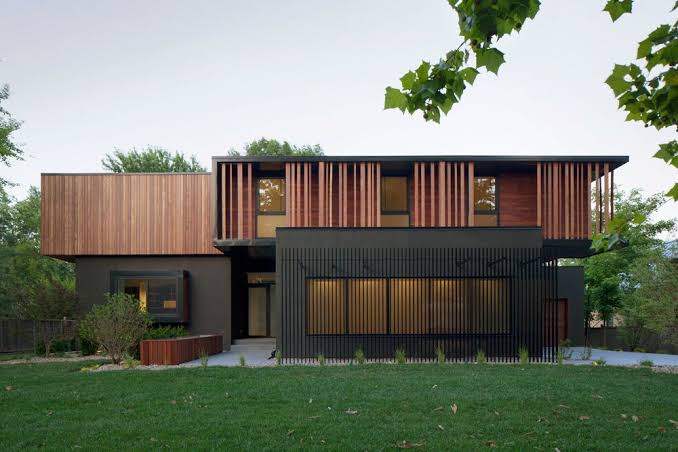
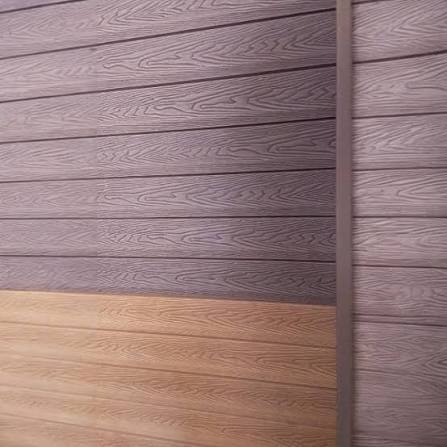
WPC wall panels are decorative composite panels designed to provide wood-like textures and architectural finishes on interior walls. They are commonly used for TV walls, living rooms, bedrooms, offices, reception areas and hospitality interiors.
WPC stands for Wood-Plastic Composite.
The polymer component changes how the material behaves compared with conventional wood-based boards.
Popular WPC designs include:
- Fluted panels
- Slatted panels
- Wood-grain panels
- Ribbed profiles
- Textured panels
- Decorative acoustic-style profiles
BHD provides WPC wall panels for suitable architectural interior applications.
WPC is particularly useful where the designer wants a timber-inspired appearance without relying entirely on conventional wood.
What Are MDF Wall Panels?
MDF stands for Medium-Density Fibreboard, an engineered wood product made by pressing refined wood fibres with resin under controlled conditions. MDF provides a smooth, consistent surface that can be machined, painted, veneered or otherwise finished for interior applications.
MDF is widely used in:
- Furniture
- Cabinetry
- Decorative wall features
- Shelving
- Interior mouldings
- Feature panels
It can be machined into different patterns, including:
- Grooves
- Geometric designs
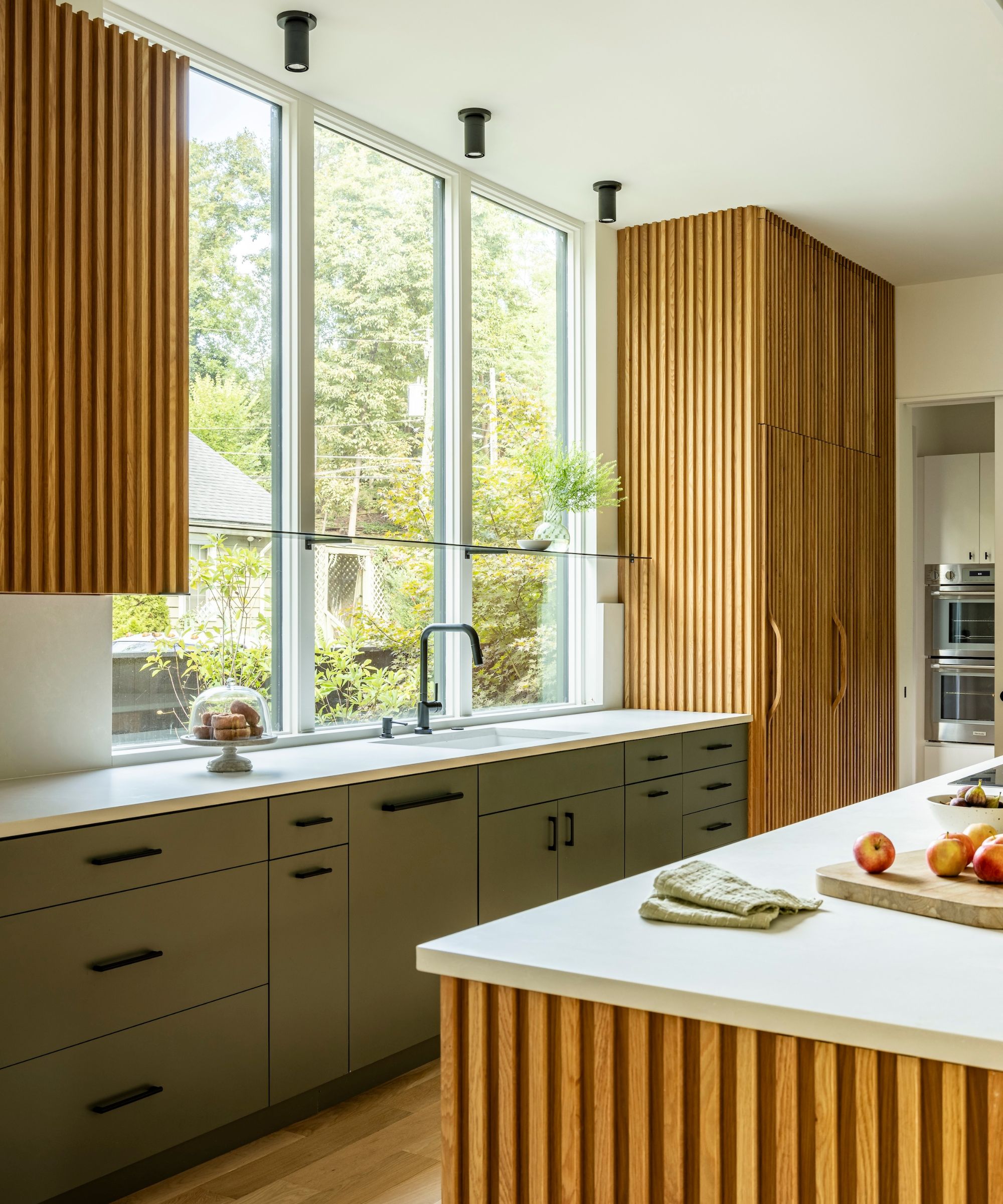
- Fluted profiles
- Raised patterns
- Decorative mouldings
However, standard MDF is primarily intended for dry interior environments.
Is WPC More Moisture Resistant Than MDF?
WPC generally offers better moisture resistance than standard MDF because its composite construction contains polymer material. Standard MDF can absorb moisture and swell when exposed to water, making WPC the more appropriate option for many humid interior applications.
This difference is important in Kenya.
Consider a coastal home in Mombasa.
Humidity can be considerably more significant than in a dry interior environment.
For such projects, the material specification should be assessed carefully.
Standard MDF
Avoid unnecessary exposure to:
- Water
- Persistent humidity
- Damp walls
- Wet cleaning
WPC
WPC can provide better moisture resistance, but that does not mean every WPC product is waterproof.
Always check:
- Manufacturer specifications
- Core composition
- Edge treatment
- Joint details
- Intended application
Is WPC Waterproof?
WPC should not automatically be described as completely waterproof because products differ in composition, construction and installation requirements. Its moisture resistance can be an advantage, but continuous water exposure requires a product specifically rated for that environment.
This distinction matters particularly in:
- Bathrooms
- Shower areas
- Kitchens
- Laundry rooms
- Coastal properties
Water can still enter through:
- Joints
- Cut edges
- Screw penetrations
- Unsealed corners
- Poorly prepared substrates
Therefore, the complete wall system matters.
Which Is More Durable: WPC or MDF?
WPC can be more suitable for areas where moisture and routine cleaning are concerns, while MDF can perform effectively for dry interior applications when properly finished and maintained. Durability depends on the product, installation quality, environmental conditions and physical impact.
A useful way to compare them is by environment.
| Condition | WPC | MDF |
|---|---|---|
| Dry bedroom | Excellent | Excellent |
| Living room | Excellent | Excellent |
| Office | Excellent | Excellent |
| Humid room | Generally preferable | Requires caution |
| Wet area | Product-specific | Generally unsuitable unless specially specified |
| Heavy impact | Product-specific | Product-specific |
| Exterior | Only if specifically rated | Generally unsuitable |
Neither material should be selected purely because it is labelled "durable."
The expected conditions should determine the specification.
Which Looks Better: WPC or MDF?
WPC is particularly effective when the desired appearance is a wood-effect, fluted or slatted feature wall, while MDF offers a smooth and highly adaptable surface for painted or customised designs. The better-looking material depends on the interior style rather than an inherent advantage of one material.
WPC Appearance
WPC works well for:
- Wood-effect walls
- Vertical fluting
- Slatted walls
- Warm modern interiors
- Contemporary TV walls
MDF Appearance
MDF works well for:
- Painted feature walls
- Geometric patterns
- Custom grooves
- Decorative mouldings
- Minimalist designs
MDF can therefore provide more freedom where the designer wants to create a specific painted colour.
Which Is Better for TV Walls?
WPC is an excellent choice for modern TV walls where a wood-effect or fluted appearance is desired, while MDF can be used when a smooth painted or custom-milled design is preferred. Both can work effectively when the television has proper structural support.
A modern TV wall could use:
WPC + LED lighting + floating cabinet
or:
MDF + paint + decorative moulding + LED lighting
The television bracket should be secured to an appropriate supporting structure.
The decorative panel itself should not automatically be considered load-bearing.
For a different visual effect, BHD also offers marble boards that can be used for stone-effect feature walls.
Which Is Easier to Install?
WPC wall panels can provide a relatively straightforward decorative installation when the substrate is prepared and the panel system is designed for direct fixing. MDF can also be installed effectively but may require more cutting, finishing, painting and edge treatment depending on the design.
A typical WPC installation involves:
- Measuring.
- Preparing the substrate.
- Cutting panels.
- Applying the specified fixing system.
- Aligning panels.
- Finishing edges.
MDF may involve:
- Measuring.
- Cutting.
- Routing or profiling.
- Fixing.
- Filling joints.
- Sanding.
- Priming.
- Painting.
Therefore, the installation time can differ significantly even when the wall area is identical.
Which Requires More Maintenance?
WPC generally requires straightforward routine cleaning because many panels are supplied with a finished decorative surface. MDF maintenance depends heavily on the paint, veneer or coating applied to the board and its protection from moisture.
For WPC:
- Dust regularly.
- Wipe surfaces with a suitable cloth.
- Avoid harsh chemicals.
- Inspect joints.
For painted MDF:
- Clean according to the paint manufacturer's instructions.
- Repair chipped surfaces.
- Monitor edges.
- Prevent prolonged moisture exposure.
A damaged painted MDF panel may require sanding and repainting.
A damaged WPC panel may require replacement of the affected section depending on the installation system.
Which Is Cheaper: WPC or MDF?
Neither WPC nor MDF is always cheaper because total project cost depends on panel specification, dimensions, finish, cutting, installation and maintenance. MDF can be economical for straightforward dry interior applications, while WPC can offer practical value where its moisture resistance and ready decorative finish reduce additional work.
A realistic comparison should include:
- Material price
- Panel dimensions
- Coverage
- Cutting
- Labour
- Primer
- Paint
- Adhesive
- Fixings
- Edge finishing
- Waste
For example, a raw MDF panel may initially appear cheaper than a finished WPC panel.
But MDF may require:
- Primer
- Several coats of paint
- More edge finishing
- Additional labour
The installed cost can therefore be different from the initial material price.
What Specifications Should You Compare?
When comparing WPC and MDF panels, check thickness, dimensions, weight, surface finish, moisture performance, fixing method and intended application. These specifications provide a more reliable basis for selection than comparing material names alone.
WPC vs MDF Specifications Table
| Parameter | WPC Panels | MDF Panels |
|---|---|---|
| Material | Wood-plastic composite | Medium-density fibreboard |
| Thickness | Product-specific | Product-specific |
| Width | Product-specific | Product-specific |
| Length | Product-specific | Product-specific |
| Weight | Product-specific | Product-specific |
| Surface | Wood-effect/textured | Smooth/machinable |
| Typical finish | Factory decorative finish | Paint/veneer/coating |
| Moisture resistance | Generally higher | Lower for standard MDF |
| Cutting | Product-specific | Easy to machine |
| Installation | Adhesive/mechanical/product-specific | Mechanical/adhesive/product-specific |
| Typical environment | Interior | Dry interior |
| Maintenance | Generally straightforward | Depends on finish |
Do not use assumed values for project specifications.
Always obtain the technical data for the exact product being purchased.
Is WPC Better for Humid Kenyan Areas?
WPC is generally the more practical choice between standard WPC and standard MDF where interior humidity is a concern, provided the selected WPC product is designed for that application. Coastal locations such as Mombasa require particular attention to moisture, ventilation and substrate condition.
Kenya has several different climate conditions.
Nairobi
For Nairobi interiors, both WPC and MDF can work well in:
- Living rooms
- Bedrooms
- Offices
- TV walls
The main consideration is usually design and maintenance rather than severe moisture exposure.
Mombasa
In coastal environments:
- Humidity is higher.
- Moisture management is more important.
- Ventilation matters.
- Metal fixings should be appropriately selected.
WPC can have an advantage over standard MDF in suitable applications.
Kisumu
Humidity should also be considered, particularly where walls have existing moisture problems.
The panel cannot compensate for a damp substrate.
Is MDF Suitable for Kenyan Homes?
MDF can be an effective decorative material for dry interior areas in Kenyan homes when it is properly finished and protected from excessive moisture. It is particularly useful where homeowners want painted feature walls, custom profiles or furniture-style interior detailing.
Good applications include:
- Bedrooms
- Dry living rooms
- Home offices
- Entertainment walls
- Decorative niches
- Furniture-integrated walls
It should not be treated as a universal replacement for moisture-resistant materials.
Which Is Better for Bedrooms?
Both WPC and MDF can work well in bedrooms because these spaces are generally dry interior environments. WPC is convenient for wood-effect or fluted designs, while MDF offers greater freedom for painted and customised decorative patterns.
For a warm bedroom:
WPC fluted panel + warm LED lighting
For a classic bedroom:
MDF moulding + neutral paint
For a modern luxury bedroom:
Marble board + WPC accents
The choice should match the furniture and flooring.
Which Is Better for Living Rooms?
WPC is particularly suitable for modern living-room feature walls because it provides texture and a wood-effect finish with relatively straightforward maintenance. MDF can be preferable where the design calls for a painted, smooth or highly customised decorative wall.
Consider WPC when you want:
- Vertical flutes
- Timber appearance
- Texture
- Contemporary styling
Consider MDF when you want:
- Painted panels
- Geometric designs
- Decorative mouldings
- Custom routing
Which Is Better for Office Interiors?
WPC is useful for office feature walls and reception areas where a contemporary textured finish is required, while MDF can provide clean painted surfaces and customised corporate designs. The best option depends on the traffic, maintenance requirements and desired corporate appearance.
For example:
Reception
WPC can create a warm, contemporary backdrop.
Executive Office
MDF can be routed and painted to match corporate colours.
Meeting Room
Either material can work depending on the desired acoustic and decorative requirements.
General Office
Use decorative panels selectively to control costs.
Can WPC and MDF Be Used Together?
Yes, WPC and MDF can be combined in the same interior when each material is used for a suitable purpose. WPC can provide textured sections while MDF provides smooth or painted elements, creating visual contrast.
For example:
WPC fluted centre + painted MDF side panels
Another option is:
MDF geometric pattern + WPC vertical strips
This can create a custom feature wall without covering the entire surface with one material.
Can WPC or MDF Be Used in Bathrooms?
Standard MDF should generally be kept away from continuous moisture, while WPC may be suitable for selected bathroom applications only when the specific product is rated for the expected moisture conditions. Neither material should be assumed to be suitable for direct shower exposure without product-specific confirmation.
For bathroom applications, check:
- Moisture rating
- Core material
- Edge treatment
- Joint sealing
- Fixing system
- Ventilation
- Manufacturer instructions
A decorative panel does not replace a proper waterproofing system.
Can WPC or MDF Be Used Outdoors?
Standard interior WPC and MDF panels should not automatically be used outdoors. Exterior applications require materials specifically designed to withstand UV exposure, rain, temperature changes, wind and other environmental conditions.
MDF is generally intended for controlled interior environments.
WPC products vary significantly.
Some are designed for outdoor applications, while others are strictly decorative interior panels.
Always confirm the product's intended use.
For exterior architectural applications, materials such as Alucobond sheets may be considered where the specified system is appropriate.
What Are Common Buying Mistakes?
The biggest mistake is choosing a panel based only on price or appearance without checking its intended environment and technical specifications. Buyers should compare the complete installed system, including preparation, fixing, finishing and maintenance.
Avoid:
- Buying standard MDF for damp areas
- Assuming all WPC is waterproof
- Ignoring panel thickness
- Comparing different panel sizes by piece price
- Forgetting installation costs
- Ignoring wall preparation
- Failing to check the fixing method
- Buying insufficient material
- Ignoring waste
- Mounting heavy items without structural support
How Do You Choose Between WPC and MDF?
Choose WPC when moisture resistance, ready decorative appearance and wood-effect textures are priorities, and choose MDF when a smooth, paintable or highly customised dry-interior finish is required. The room's environmental conditions should be considered before appearance or price.
Use this simple guide:
| Project Requirement | Recommended Choice |
|---|---|
| Wood-effect feature wall | WPC |
| Fluted wall | WPC |
| Moisture-prone interior | WPC, product permitting |
| Painted feature wall | MDF |
| Custom routed design | MDF |
| Dry bedroom | Either |
| Dry living room | Either |
| Office feature wall | Either |
| Wet area | Product-specific |
| Exterior | Purpose-designed exterior product |
Frequently Asked Questions About WPC Panels
WPC panels are popular for decorative interior walls because they combine a wood-inspired appearance with composite material properties. MDF remains useful for dry interiors where smooth surfaces, painting and customised machining are important.
Is WPC better than MDF?
WPC is generally better where moisture resistance is important, while MDF is useful for dry interior applications requiring a smooth, paintable or highly customised surface.
Is WPC more expensive than MDF?
Prices vary by product and finish. Compare the total installed cost rather than the price of one panel.
Can WPC panels get wet?
Some WPC products have good moisture resistance, but suitability for continuous water exposure depends on the specific product.
Does MDF swell when wet?
Standard MDF can absorb moisture and swell when exposed to water. It should therefore be protected from prolonged moisture.
Which is better for a TV wall?
WPC is particularly suitable for modern fluted and wood-effect TV walls. MDF works well for painted or custom-routed designs.
Which is easier to maintain?
WPC can be relatively easy to maintain because many products have a finished decorative surface. MDF maintenance depends on its paint, veneer or coating.
Can WPC be installed over MDF?
It may be possible if the MDF substrate is stable, dry and compatible with the selected fixing system. The installation should follow the panel manufacturer's requirements.
Where can I buy WPC wall panels in Kenya?
You can browse WPC wall panels from BHD or contact BHD for current product specifications and availability.
Final Verdict: WPC vs MDF Wall Panels
WPC is generally the stronger choice for moisture-resistant decorative applications and modern fluted or wood-effect walls, while MDF remains a versatile option for dry interiors requiring painting, routing and customised designs. For many Kenyan homes, the choice should be based on room conditions, finish requirements and total installed cost.
Choose WPC when you want:
- Wood-effect appearance
- Fluted or slatted designs
- Straightforward decorative finishing
- Better moisture resistance than standard MDF
Choose MDF when you want:
- Smooth surfaces
- Painted finishes
- Custom routing
- Decorative mouldings
- Dry interior applications
And when the design allows it, combine the two.
The best wall is not necessarily made from the most expensive material. It is made from a material that performs appropriately in the environment where it is installed.
For more architectural and construction materials, browse the BHD catalog.
Contact Burhani Hardware Dealers (BHD)
Email: burhanihardwaredealers [at] yahoo.com
Call/WhatsApp: +254 731 217 462 | +254 704 606 131
Visit: BHD, Industrial Area, Funzi Road, Nairobi
Website: https://bhd.co.ke/
Delivery Guarantee:
Same-day delivery within Nairobi.
Next-day delivery countrywide to Nakuru, Kisumu, Mombasa, Eldoret, Thika, Meru, Kitengela and Malindi.
Frequently asked questions

Written & reviewed by
BHD Kenya
Burhani Hardware Dealers (BHD Kenya) is a Nairobi-based supplier of polycarbonate roofing, Alucobond/ACP cladding, Perspex, WPC wall panels and steel products, serving contractors, fabricators and homeowners across Kenya.