
Skylight Kenya: 7 Best Materials for 2026 | BHD Kenya.
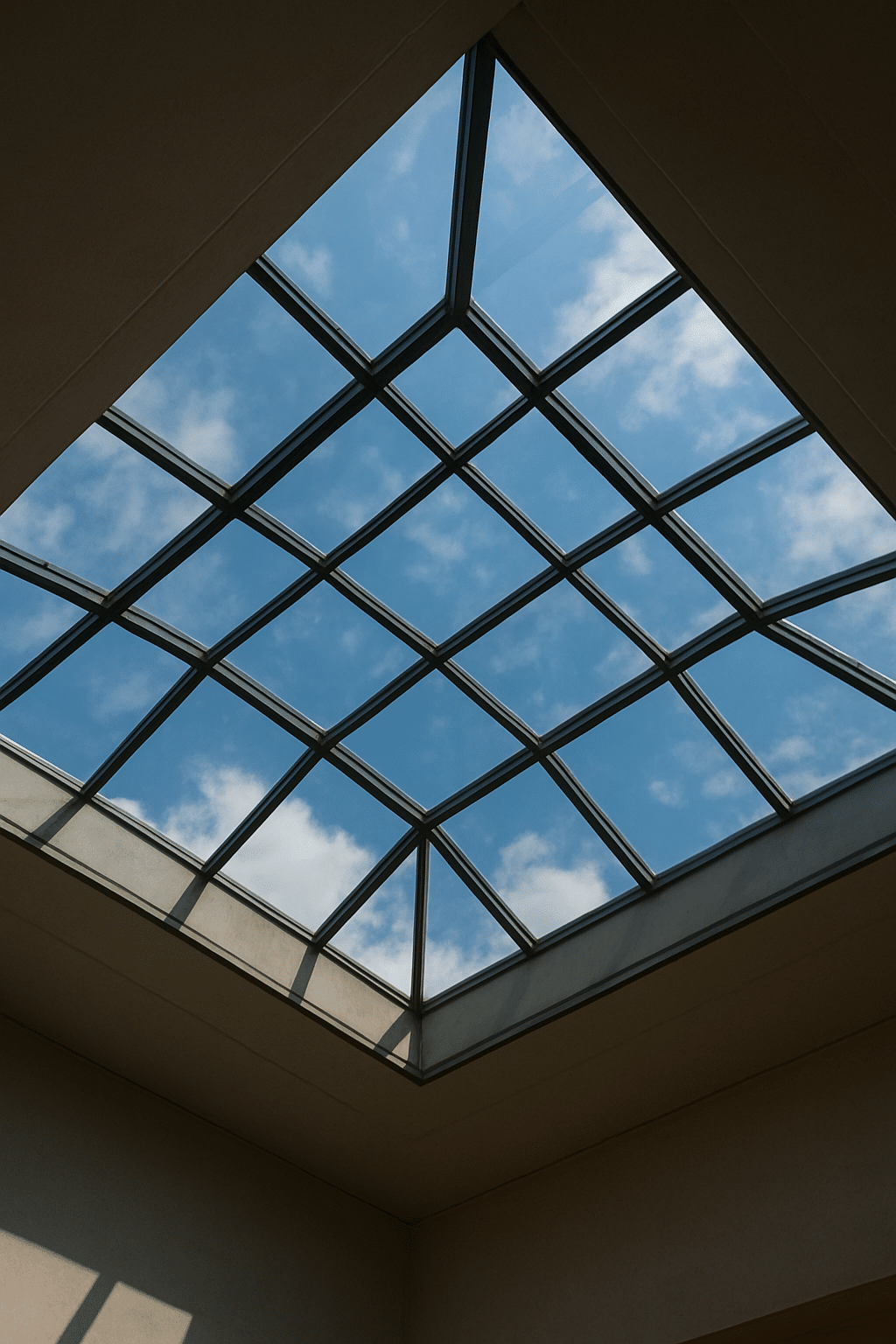
Quick answer
Polycarbonate is the most widely used skylight material in Kenya because it is light, resists impact, and comes in clear or tinted sheets that bring daylight in without the weight of glass. Acrylic offers better clarity, and glass offers the best scratch resistance. The right choice depends on span, roof pitch, heat gain and impact risk.
Polycarbonate is one of the most practical materials for many skylight applications in Kenya because it is lightweight, impact-resistant and available in translucent forms that allow natural daylight into a building. Glass and Perspex can also be suitable for specific projects, but the right choice depends on heat exposure, roof design, impact risk, ventilation, light transmission and installation requirements.
A well-designed skylight can reduce the need for artificial lighting during daylight hours while improving the appearance of an interior space.
However, installing a transparent panel into a roof is more than simply creating an opening and covering it with a clear sheet.
The material must work with the roofing system, supporting structure, drainage, flashing and fixing method.
Kenyan conditions also vary considerably.
A skylight in Nairobi may face strong sunlight, dust and temperature changes, while one in Mombasa may experience high humidity and salt-laden air. Buildings in exposed areas of the Rift Valley may also need careful consideration of wind loads and roof structure.
What Is a Skylight?
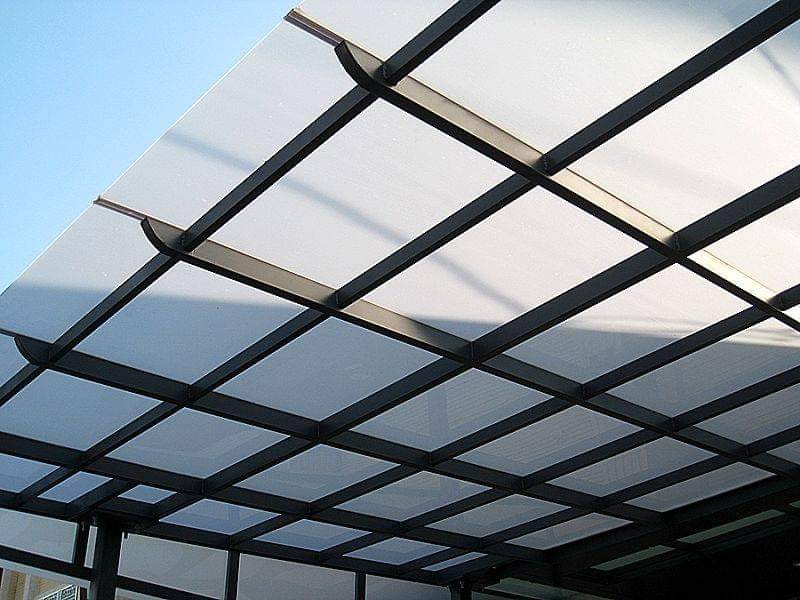
A skylight is a transparent or translucent roof opening designed to admit natural daylight into an interior space. It can be made from materials such as polycarbonate, glass or acrylic and must be properly integrated with the surrounding roof to prevent leaks and structural problems.
Skylights can be installed in:
- Residential roofs
- Commercial buildings
- Warehouses
- Workshops
- Offices
- Shopping spaces
- Schools
- Atriums
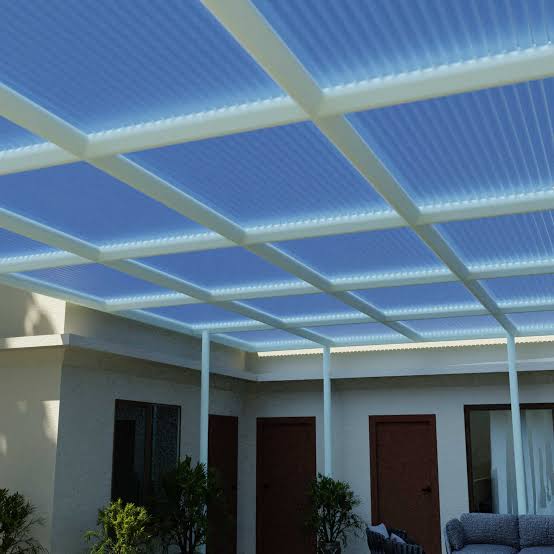
- Covered walkways
The basic objective is simple:
Bring daylight through the roof without compromising the building envelope.
A skylight therefore needs to manage both light and water.
What Are the Best Skylight Materials in Kenya?
Polycarbonate, glass and Perspex/acrylic are the main materials to consider for skylights, with polycarbonate being particularly practical for many lightweight roofing applications. The best material depends on the building, roof structure, required light transmission, heat control, impact resistance and budget.
| Material | Main Strength | Typical Application |
|---|---|---|
| Hollow polycarbonate | Lightweight and good daylighting | Roof skylights |
| Solid polycarbonate | Impact resistance and solid sheet construction | Skylights and protective glazing |
| Glass | Optical clarity and scratch resistance | Premium architectural skylights |
| Perspex/Acrylic | Lightweight and easy fabrication | Decorative and selected skylight applications |
For many roofing projects, polycarbonate provides a good balance between weight, durability and daylight transmission.
BHD provides polycarbonate sheets in Kenya for suitable roofing and architectural applications.
Why Is Polycarbonate Popular for Skylights?
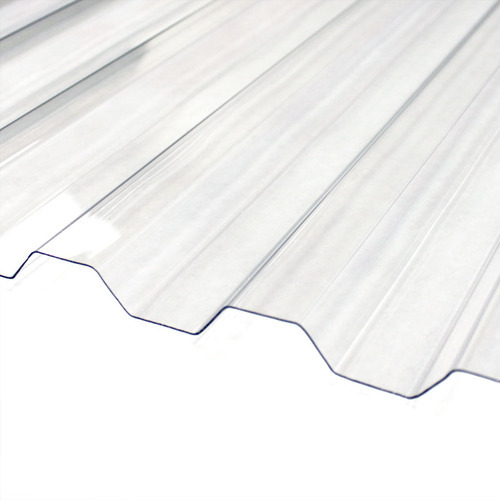
Polycarbonate is popular for skylights because it combines low weight with high impact resistance and good light transmission. It can also be manufactured in different structures and finishes, allowing designers to balance daylight with thermal and structural requirements.
Polycarbonate can be particularly useful where the roof requires a lightweight transparent or translucent section.
Its advantages include:
- Low weight
- Impact resistance
- Natural light transmission
- Fabrication flexibility
- Availability in different configurations
- Suitability for many roofing applications
However, polycarbonate is not automatically suitable for every roof.
The selected product must match:
- Roof pitch
- Purlin spacing
- Sheet profile
- Fixing system
- Environmental exposure
- Required light level
What Are Hollow Polycarbonate Skylights?
Hollow polycarbonate sheets contain internal channels separated by ribs, creating a lightweight multi-wall structure. These channels can improve thermal insulation compared with a single solid sheet while allowing daylight into the building.
The internal structure gives hollow sheets several useful characteristics.
They can provide:
- Lower weight
- Rigidity
- Daylight transmission
- Some thermal insulation
- Reduced material use
BHD offers hollow polycarbonate sheet options for applications where a multi-wall panel is appropriate.
Where Are Hollow Sheets Useful?
They can be considered for:
- Residential skylights
- Covered walkways
- Commercial roofs
- Canopies
- Atriums
- Greenhouses
- Lightweight daylighting sections
The number of walls and internal geometry affect the panel's thermal and structural characteristics.
What Are Solid Polycarbonate Skylights?
Solid polycarbonate is a single continuous sheet rather than a multi-wall panel, providing a different combination of transparency, impact resistance and surface characteristics. It can be used for skylights where a solid sheet construction is preferred.
Solid polycarbonate can be useful where:
- Impact resistance is important
- A flat sheet is preferred
- The design requires a solid transparent panel
- The application needs a robust sheet material
BHD supplies solid polycarbonate sheets for suitable applications.
Solid and hollow polycarbonate should not be treated as interchangeable products.
Their:
- Weight
- Thermal performance
- Rigidity
- Thickness
- Light transmission
can differ significantly.
Is Glass Good for Skylights?
Glass can provide excellent optical clarity and a premium architectural appearance, making it suitable for high-end skylights when the correct glazing system is specified. However, glass is heavier than polycarbonate and requires careful structural design, handling and safety considerations.
Glass skylights are common in:
- Premium homes
- Commercial buildings
- Atriums
- Hotels
- Shopping centres
- Architectural feature roofs
Where glass is used overhead, the type of glass is especially important.
Depending on the project, designers may specify:
- Laminated glass
- Tempered glass
- Insulating glass units
- Special solar-control glazing
The glass should not be selected solely because it is transparent.
The complete glazing system must be appropriate for overhead use.
Is Perspex Suitable for Skylights?
Perspex or acrylic can be used in selected skylight and daylighting applications because it is lightweight and available in transparent or translucent forms. However, the specific acrylic grade, thickness, UV performance and structural requirements must be checked before exterior roof installation.
Perspex can be useful where the project requires:
- Lightweight glazing
- Decorative daylighting
- Custom-shaped panels
- Transparent or coloured surfaces
BHD supplies Perspex sheets for suitable applications.
For permanent roof exposure, confirm that the specific sheet is intended for the environmental conditions.
Which Skylight Material Is Best for Heat Control?
The best skylight material for heat control depends on the panel structure, solar-control properties, light transmission and roof design rather than transparency alone. Multi-wall polycarbonate can provide useful thermal performance, while specialised glass can provide solar-control properties for demanding architectural applications.
A completely clear skylight may admit substantial solar radiation.
That can increase internal heat.
For Kenyan buildings, particularly in sunny locations, consider:
- Light transmission
- Solar heat gain
- UV protection
- Panel structure
- Roof orientation
- Shading
- Ventilation
Hollow Polycarbonate
The internal air spaces can improve thermal insulation compared with a simple single-layer panel.
Solid Polycarbonate
Performance depends strongly on thickness and coating.
Glass
Specialised solar-control glass can be specified for projects where heat gain is a major concern.
The objective should be:
Enough daylight without creating unnecessary heat gain.
Which Skylight Material Is Best for Kenyan Weather?
Polycarbonate is often a practical choice for Kenyan skylights because of its impact resistance and relatively low weight, but the exact product must be suitable for UV exposure and outdoor roofing conditions. Coastal installations also require attention to the corrosion resistance of fixings and support components.
Kenya has several distinct environmental conditions.
Nairobi and Central Kenya
Skylights may experience:
- Strong sunlight
- UV exposure
- Rain
- Dust
- Temperature changes
UV-resistant products are particularly important for long-term outdoor applications.
Mombasa and Coastal Kenya
Consider:
- High humidity
- Salt exposure
- Corrosion
- Strong sunlight
The skylight panel and its fixing system should therefore be selected as a complete assembly.
Rift Valley
In exposed areas, consider:
- Wind
- Roof uplift
- Structural support
- Temperature variations
The panel must be securely fixed to the roof structure.
What Skylight Material Is Best for Homes?
Polycarbonate is a practical choice for many residential skylights because it can provide daylight without the weight of a large glass panel. Glass can be preferable for premium architectural designs where optical clarity, aesthetics and specialised glazing performance are priorities.
Residential skylights can be installed in:
- Kitchens
- Staircases
- Bathrooms
- Corridors
- Living rooms
- Indoor courtyards
For a typical home, the designer should first identify the reason for the skylight.
If the objective is simply to brighten a dark corridor, a relatively small translucent panel may be sufficient.
A large clear skylight over a living room requires much more consideration of:
- Solar gain
- Glare
- Ventilation
- Water drainage
- Roof structure
What Skylight Material Is Best for Commercial Buildings?
Commercial buildings often benefit from polycarbonate or specialised architectural glazing depending on the scale and performance requirements. Warehouses and covered commercial spaces commonly prioritise daylighting, low weight and durability, while premium buildings may prioritise architectural appearance and solar control.
For example:
Warehouse
A translucent polycarbonate roof section can provide daytime illumination.
Shopping Centre
Architectural glass may provide a premium atrium appearance.
Office
A controlled skylight can improve daylight distribution.
Covered Walkway
Polycarbonate can provide weather protection while allowing light through.
The correct choice depends on the building's design and operating conditions.
How Do You Choose the Right Skylight Thickness?
Skylight thickness should be selected according to the material, panel dimensions, support spacing, wind exposure, roof system and manufacturer's installation requirements. Thickness should never be selected based on appearance alone.
For a contractor or fabricator, the specification should include:
- Material type
- Thickness
- Sheet dimensions
- Profile
- Support spacing
- Fixing system
- UV protection
- Light transmission
- Manufacturer requirements
A thicker panel is not automatically better if the roof system was designed around a specific profile and fixing method.
Skylight Materials Specifications Table
A proper skylight specification should identify the material, thickness, dimensions, light transmission, UV performance and structural requirements. This gives contractors enough information to match the panel with the roof system instead of treating all transparent sheets as equivalent.
| Parameter | Hollow Polycarbonate | Solid Polycarbonate | Glass | Perspex/Acrylic |
|---|---|---|---|---|
| Structure | Multi-wall | Solid sheet | Solid | Solid sheet |
| Weight | Low | Moderate | High | Low |
| Light transmission | Product-specific | Product-specific | High | High |
| Impact resistance | High | High | Product-specific | Generally high vs ordinary glass |
| Thermal performance | Often favourable | Product-specific | Product-specific | Product-specific |
| UV performance | Grade/coating dependent | Grade/coating dependent | Generally high | Grade dependent |
| Thickness | Product-specific | Product-specific | Product-specific | Product-specific |
| Outdoor use | Product-specific | Product-specific | Yes, with correct specification | Product-specific |
| Typical application | Roof daylighting | Skylights/glazing | Premium skylights | Selected glazing |
Exact technical values should be obtained from the product manufacturer or supplier before structural design.
What Are Common Skylight Installation Mistakes?
Most skylight failures are not caused by transparency or sheet material alone; they often result from poor fixing, inadequate flashing, incorrect overlaps or insufficient structural support. Proper installation is therefore as important as selecting the correct panel.
Common mistakes include:
Incorrect Fixing
Fasteners must be compatible with the sheet and roof system.
Poor Flashing
Water must be directed away from the opening.
Incorrect Overlap
The panel must be installed according to the roofing manufacturer's requirements.
No Allowance for Movement
Materials expand and contract with temperature.
Weak Support
Large panels need appropriate structural support.
Excessive Exposure
A roof opening should not be designed without considering wind and rain conditions.
Poor Sealant Selection
Sealants must be compatible with the roofing and skylight material.
Blocked Drainage
Water must have a clear path away from the roof opening.
How Should Skylights Be Installed?
A skylight should be integrated into the roof as a complete weatherproof assembly rather than simply placed over a roof opening. The installer must coordinate the sheet, supporting structure, flashing, fixings, sealants, overlaps and drainage.
A typical installation process includes:
- Confirm the skylight dimensions.
- Inspect the roof structure.
- Determine the support spacing.
- Prepare the opening.
- Install the supporting frame where required.
- Position the skylight panel.
- Install compatible fixings.
- Complete flashing and overlaps.
- Seal appropriate joints.
- Inspect drainage.
- Test for leaks.
The exact method depends on the roofing system.
How Much Do Skylights Cost in Kenya?
Skylight costs in Kenya depend on the material, thickness, dimensions, roof design, support structure, flashing, fixing system and installation complexity. A small residential skylight and a large commercial roof-light system can have substantially different costs.
The complete project cost may include:
- Skylight sheet
- Frame
- Fixings
- Flashing
- Sealants
- Roofing modifications
- Labour
- Transport
- Access equipment
For budgeting purposes, measure the opening first.
Then specify:
Length × width × material × thickness
A quotation based only on "one skylight" is unlikely to be sufficiently precise.
How Do You Maintain a Skylight?
Skylights should be inspected periodically for dirt, cracks, loose fixings, blocked drainage and failed seals. Cleaning should use methods appropriate for the specific material, especially for acrylic and polycarbonate surfaces that can be scratched by abrasive materials.
A maintenance inspection should check:
- Surface condition
- Fasteners
- Flashing
- Sealants
- Roof connections
- Water drainage
- Cracks
- Discolouration
For acrylic and polycarbonate, avoid harsh cleaning methods unless specifically approved for the material.
What Are the Advantages of Polycarbonate Skylights?
Polycarbonate skylights provide natural daylight while offering a lightweight and impact-resistant alternative to conventional glass in many roofing applications. Hollow polycarbonate can also provide a useful combination of daylight transmission and thermal performance.
Key benefits include:
- Natural daylight
- Low weight
- Impact resistance
- Multiple configurations
- Easy integration with many roofing designs
- Suitable for residential and commercial applications
For larger installations, however, the structural design must still account for wind and other loads.
What Are the Disadvantages of Polycarbonate Skylights?
Polycarbonate is not maintenance-free and can be affected by scratching, unsuitable cleaning methods and product-specific UV exposure. Thermal expansion and correct fixing also need to be considered during installation.
Potential concerns include:
- Scratching
- Thermal movement
- Product-specific UV performance
- Heat gain if poorly specified
- Dirt accumulation
- Incorrect fixing
- Seal deterioration
These issues can generally be reduced through appropriate product selection and installation.
How Do Skylights Compare With Transparent Roofing Sheets?
A skylight is essentially a daylighting element integrated into a roof, while transparent or translucent roofing sheets can form a larger roof area designed to admit light. The appropriate solution depends on whether the project needs a small architectural opening or broader roof daylighting.
For example:
Small skylight:
A defined opening over a staircase.
Roof daylighting:
Translucent polycarbonate sheets installed between opaque roofing sheets.
A warehouse may therefore use multiple translucent roof sections rather than a conventional framed skylight.
Frequently Asked Questions About Skylight Kenya
Polycarbonate is a practical skylight option for many Kenyan buildings, but glass and Perspex can also be appropriate for specific designs. Material selection should consider daylight, heat, UV exposure, impact, roof structure and installation.
What is the best material for a skylight in Kenya?
Polycarbonate is one of the most practical choices for many Kenyan roofing applications because it is lightweight and impact-resistant while allowing daylight through.
Are polycarbonate skylights good?
Yes. Properly specified polycarbonate skylights can provide natural daylight, impact resistance and relatively low weight for residential and commercial roofing.
Is hollow or solid polycarbonate better for skylights?
It depends on the application. Hollow sheets provide a lightweight multi-wall construction with useful thermal characteristics, while solid sheets provide a continuous panel construction and can be selected where impact resistance and flat-sheet performance are priorities.
Can glass be used for a skylight?
Yes. Glass can provide excellent optical clarity and a premium architectural appearance, but overhead glass requires appropriate safety and structural specifications.
Can Perspex be used for skylights?
Certain Perspex/acrylic products can be used for selected skylight applications, provided the product is suitable for outdoor exposure and the installation meets the required structural conditions.
Do skylights make rooms hot?
They can if excessive solar radiation enters the building. Material selection, light transmission, solar control, shading, roof orientation and ventilation should be considered.
How long do polycarbonate skylights last?
Service life depends on product grade, UV protection, environmental exposure, installation and maintenance. The manufacturer's stated service conditions and warranty should be used rather than assuming one lifespan for every polycarbonate sheet.
Where can I buy polycarbonate skylight sheets in Kenya?
You can browse BHD's polycarbonate sheet catalog or contact BHD for product availability and specifications.
Final Verdict: Best Skylight Materials in Kenya
Polycarbonate is a strong starting point for many Kenyan skylight projects because it combines daylight transmission, low weight and impact resistance. Glass remains valuable for premium architectural glazing, while Perspex can serve selected lightweight and decorative applications.
For most roofing projects, the decision should begin with four questions:
- How much daylight is required?
- How much solar heat can the building tolerate?
- What weather and structural loads will the skylight experience?
- What material can be securely integrated into the existing roof?
For a lightweight roof daylighting system, explore BHD's hollow polycarbonate sheets and solid polycarbonate sheets.
For related roofing components, you can also review PVC gutters and Zed purlins.
Contact Burhani Hardware Dealers (BHD)
Email: burhanihardwaredealers [at] yahoo.com
Call/WhatsApp: +254 731 217 462 | +254 704 606 131
Visit: BHD, Industrial Area, Funzi Road, Nairobi
Website: https://bhd.co.ke/
Delivery Guarantee:
Same-day delivery within Nairobi.
Next-day delivery countrywide to Nakuru, Kisumu, Mombasa, Eldoret, Thika, Meru, Kitengela and Malindi.
Frequently asked questions

Written & reviewed by
BHD Kenya
Burhani Hardware Dealers (BHD Kenya) is a Nairobi-based supplier of polycarbonate roofing, Alucobond/ACP cladding, Perspex, WPC wall panels and steel products, serving contractors, fabricators and homeowners across Kenya.