

Black Pipe, Round Pipe or CHS: Are They the Same Thing?
Quick answer
When buying steel pipes for construction, metal fabrication or industrial projects, you may come across three terms: black pipe, round pipe and circular hollow section (CHS). Some suppliers and customers use these names interchangeably, but they do not always refer to exactly the same product.
When buying steel pipes for construction, metal fabrication or industrial projects, you may come across three terms: black pipe, round pipe and circular hollow section (CHS). Some suppliers and customers use these names interchangeably, but they do not always refer to exactly the same product.
A contractor looking for round steel pipes may be offered black pipes, while a fabricator requesting CHS may receive a quotation for circular steel tubing. Although these products share a similar appearance, their manufacturing specifications, intended applications, dimensions and wall thicknesses can differ.
Understanding black pipe vs chs is particularly important when purchasing steel for gates, railings, structural frames, columns, supports and other fabricated components.
In Kenya, buyers also encounter these terms when searching for the round pipe price in Kenya, circular hollow section dimensions and CHS steel suppliers. Knowing what to request helps avoid ordering the wrong material or comparing prices for products with different specifications.
This guide explains the differences between black pipe, round pipe and CHS, how they are manufactured, where each is used and what to confirm before purchasing.
What Is a Black Pipe?
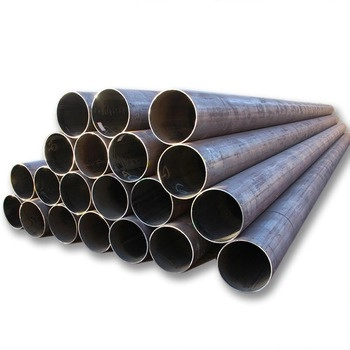
Black pipe is a steel pipe with a dark surface resulting from an iron oxide layer formed during manufacturing. The term generally describes the pipe's surface appearance rather than one specific structural shape or engineering classification.
Black pipes are commonly manufactured from steel and used in construction, fabrication, mechanical installations and industrial applications.
Their dark appearance distinguishes them from galvanised pipes, which have a protective zinc coating.
Common characteristics of black pipes
Usually have a dark or black oxide surface.
Are available in different nominal diameters.
Come in different wall thicknesses.
Can be cut, drilled and welded using suitable procedures.
Are used in fabrication and selected industrial applications.
Require suitable corrosion protection when exposed to weather and moisture.
Black pipes are commonly used for metal fabrication, selected piping installations, frameworks and mechanical applications.
However, not every black pipe is suitable for structural loading or fluid transportation. The relevant manufacturing standard, material grade and dimensional specification must be checked before use.
Where are black pipes used?
In Kenya, black pipes are commonly considered for:
Gate fabrication.
Fence structures.
Metal railings.
Workshop projects.
Industrial installations.
General steel fabrication.
Selected support structures.
The correct pipe depends on the application, required dimensions and design specifications.
What Is a Round Pipe?
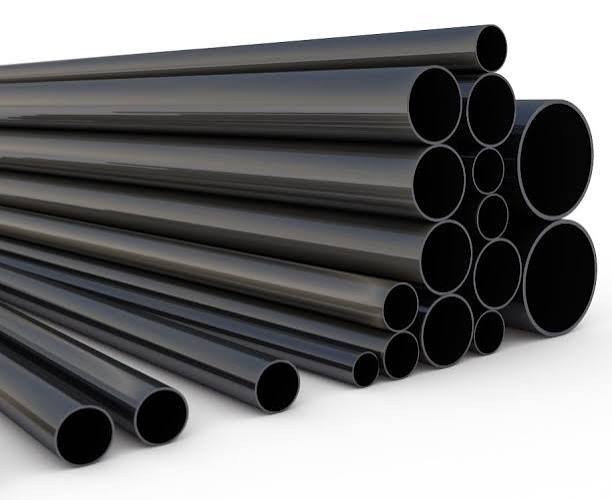
A round pipe is a general description of a hollow steel product with a circular cross-section.
The term describes the shape rather than necessarily identifying the manufacturing process, steel grade or applicable standard.
A round pipe can be manufactured for different purposes, including structural applications, mechanical installations and fluid transportation.
For this reason, simply asking for a round pipe may not provide enough information for a supplier to identify the exact product you need.
Common characteristics of round pipes
Have a circular cross-section.
Are available in different diameters.
Have hollow interiors.
Come in different wall thicknesses.
Can be manufactured to different product specifications.
Are used in fabrication, construction and engineering.
A round pipe may be black, galvanised, painted or manufactured with another surface finish.
This means that black pipe is one possible type of round steel pipe, but not every round pipe is a black pipe.
Where are round pipes used?
Round pipes are used in several applications, including:
Handrails and balustrades.
Gates and fences.
Furniture frames.
Machinery components.
Fabricated steel structures.
Industrial installations.
Selected mechanical and piping systems.
The intended use determines which dimensions, material properties and manufacturing standards are appropriate.
What Is Circular Hollow Section (CHS)?
Circular hollow section, commonly abbreviated as CHS, is a steel product with a circular hollow cross-section.
Unlike the general term round pipe, CHS is commonly used in structural steel terminology to describe circular hollow structural sections.
CHS products are designed and specified for structural applications where properties such as strength, stiffness, dimensions and consistency are important.
They are commonly used in steel construction, architectural frameworks and engineered fabrication.
Common characteristics of CHS steel
Has a circular hollow cross-section.
Is specified using outside diameter and wall thickness.
Is commonly manufactured for structural applications.
Offers an efficient shape for resisting loads from different directions.
Is available in different diameters and thicknesses.
Can be incorporated into welded and bolted steel structures using suitable connections.
CHS is particularly useful in structures where appearance and structural performance are both important.
Where is CHS steel used?
Circular hollow sections are commonly considered for:
Structural columns.
Roof trusses.
Canopies.
Industrial frameworks.
Architectural structures.
Steel supports.
Fabricated frames.
Large commercial structures.
The actual suitability of a CHS section depends on its dimensions, steel grade, manufacturing standard, loading conditions and connection design.
For load-bearing projects, a qualified structural engineer should specify the required section.
Black Pipe vs CHS: What Is the Difference?
The main difference between black pipe and CHS is that the terms describe different aspects of a steel product.
Black pipe generally refers to a pipe's dark surface appearance and commonly used product description. CHS refers to a circular hollow structural section.
A black steel pipe may have a circular shape, but that does not automatically make it a certified structural CHS product.
Likewise, CHS may have a dark mill finish, but its classification depends on the applicable structural product specification rather than its colour.
Black pipe vs CHS comparison table
Feature | Black Pipe | CHS |
|---|---|---|
Meaning | General description of dark-finished steel pipe | Circular hollow structural section |
Shape | Commonly circular | Circular |
Main identification | Surface appearance and pipe specification | Structural section dimensions and specification |
Manufacturing | Depends on product standard | Depends on structural product standard |
Wall thickness | Varies by pipe specification | Specified according to section requirements |
Applications | General fabrication and selected piping uses | Structural and architectural steelwork |
Surface finish | Usually dark oxide surface | May have mill finish or other coating |
Structural suitability | Must be verified | Must be verified against design requirements |
The important distinction is that the product name alone does not establish the strength or suitability of the steel.
When comparing black pipe vs chs, always check the actual manufacturing standard and mechanical properties.
Black Pipe vs Round Pipe: Are They the Same?
This is another common source of confusion when purchasing steel in Kenya.
Black pipe and round pipe can refer to the same physical product, but the descriptions are not identical.
Black pipe identifies a commonly recognised surface appearance, while round pipe describes the product's cross-sectional shape.
For example, a circular steel pipe with a dark oxide finish can reasonably be described as both a black pipe and a round pipe.
However, a galvanised round pipe is still a round pipe even though it is not a black pipe.
Similarly, stainless steel tubing can have a circular cross-section without being classified as black pipe.
The distinction matters because suppliers may stock several types of round steel products with different finishes, specifications and applications.
When requesting a quotation, explain whether you need black-finished steel, galvanised steel, structural CHS or another type of circular steel product.
Round Pipe vs CHS: Which One Should You Choose?
Round pipe and CHS can look almost identical. Both have circular cross-sections, hollow interiors and different available diameters.
However, the main difference is how the products are classified and specified.
Round pipe is a broad description that may cover products manufactured for different applications.
CHS is a structural designation used for circular hollow sections.
When should you choose round pipe?
Round pipe may be appropriate when:
You need a circular steel product for general fabrication.
The project requires a particular outside diameter.
You are making selected furniture or decorative components.
You need a pipe for a specified mechanical application.
The required product standard is based on piping or tubing specifications.
When should you choose CHS?
CHS may be appropriate when:
You are fabricating structural steelwork.
The design specifies circular hollow sections.
You need a product with defined structural dimensions.
The project involves engineered columns or supports.
You are working from structural drawings or engineering specifications.
The correct choice should be based on the project's requirements rather than appearance alone.
Understanding Round Pipe Dimensions and CHS Sizes
One of the most important considerations when comparing round pipe and CHS products is understanding their dimensions.
Steel pipes and hollow sections are generally specified using measurements such as:
Outside diameter.
Wall thickness.
Length.
Steel grade.
Manufacturing standard.
The outside diameter measures the distance across the external surface of the circular section.
Wall thickness measures the thickness of the steel forming the hollow section.
The internal diameter can be calculated by subtracting twice the wall thickness from the outside diameter.
Where:
ID = Internal diameter.
OD = Outside diameter.
t = Wall thickness.
Example of round steel pipe dimensions
Consider a circular steel pipe with:
Outside diameter: 60.3 mm.
Wall thickness: 3 mm.
Its approximate internal diameter is:
This demonstrates why two pipes with the same outside diameter may have different internal diameters.
It also explains why buyers should not rely on nominal inch measurements alone.
Common circular pipe dimensions
The following are examples of commonly used nominal pipe sizes and their approximate outside diameters.
Nominal size | Approximate outside diameter |
|---|---|
1/2 inch | 21.3 mm |
3/4 inch | 26.7 mm |
1 inch | 33.4 mm |
1 1/4 inch | 42.2 mm |
1 1/2 inch | 48.3 mm |
2 inch | 60.3 mm |
2 1/2 inch | 73.0 mm |
3 inch | 88.9 mm |
4 inch | 114.3 mm |
These figures follow commonly used nominal pipe sizing conventions. They should not be treated as universal CHS dimensions because structural hollow sections may use different outside diameters and dimensional series.
Always confirm the actual product dimensions with the supplier.
Wall Thickness: Why It Matters When Comparing Round Pipe and CHS
Wall thickness is one of the most important specifications when selecting circular steel sections.
Two products may have the same outside diameter but different wall thicknesses.
For example, consider two circular steel sections with an outside diameter of 60 mm.
Specification | Section A | Section B |
|---|---|---|
Outside diameter | 60 mm | 60 mm |
Wall thickness | 2 mm | 3 mm |
Internal diameter | 56 mm | 54 mm |
Steel quantity | Lower | Higher |
Approximate weight | Lower | Higher |
A thicker wall generally means more steel per metre, resulting in greater weight and usually a higher material cost.
It may also improve resistance to certain forms of deformation, although actual structural performance depends on the section geometry, steel grade, length, support conditions and loading.
When comparing black pipe vs chs, do not assume that products with identical outside diameters have equivalent structural performance.
The wall thickness and material specification must also match.
Round Pipe Price in Kenya: What Determines the Cost?
The round pipe price in Kenya depends on several factors, including diameter, wall thickness, steel grade, length and manufacturing specification.
Buyers should understand these factors before comparing quotations from different steel suppliers.
1. Outside diameter
Larger circular sections generally require more steel than smaller sections when other specifications are comparable.
This can increase the material cost.
2. Wall thickness
A thicker wall increases the amount of steel used in manufacturing.
Consequently, a heavier section will generally cost more than a thinner section of the same outside diameter.
3. Steel grade
Different steel grades have different mechanical properties and manufacturing requirements.
Products designed for specific structural applications may have different specifications and prices from general-purpose steel pipes.
4. Length
Steel pipes and CHS products are sold in different lengths depending on supplier stock and manufacturing arrangements.
A longer product generally costs more per piece because it contains more material.
5. Manufacturing standard
The applicable standard affects dimensional tolerances, material properties and quality requirements.
Buyers should ensure that quotations cover equivalent specifications.
6. Market conditions
Steel prices in Kenya can change due to raw material costs, imports, transport, exchange rates and local market demand.
For this reason, it is advisable to request current quotations rather than rely on outdated price lists.
2 Inch Round Pipe Price in Kenya: What Should You Check?
The search for 2 inch round pipe price in Kenya is common among fabricators, contractors and people undertaking metalwork projects.
However, the term 2-inch round pipe does not always identify one exact product.
A nominal 2-inch pipe commonly has an outside diameter of approximately 60.3 mm. A structural circular hollow section may use a different dimensional designation, even when buyers informally describe it as 2-inch round steel.
Before requesting a quotation, establish whether you need general-purpose round pipe or structural CHS.
Information to provide when requesting a 2-inch round pipe quotation
Required outside diameter.
Wall thickness.
Pipe or CHS specification.
Required length.
Quantity.
Steel grade, where applicable.
Intended application.
For example, asking for a 2-inch round pipe with a 3 mm wall thickness is more useful than simply requesting a 2-inch pipe.
This helps suppliers provide quotations that can be compared accurately.
When checking the round pipe price in Kenya, also confirm whether the quoted price is per piece, per metre or per kilogram.
Applications of CHS Steel in Kenya
Circular hollow sections are widely considered for structural and architectural projects because of their circular geometry and versatility.
1. Structural columns
CHS can be used for columns in appropriately designed steel structures.
Its circular profile provides a consistent shape around the section, making it useful in certain architectural and structural designs.
The required diameter and wall thickness must be calculated based on the applied loads and design conditions.
2. Roof structures
CHS may be used in selected roof trusses, canopies and supporting frameworks.
It can provide an alternative to other hollow steel sections depending on the structural design.
3. Industrial frameworks
Factories, warehouses and industrial facilities use different hollow steel sections in their supporting structures.
CHS may be specified where circular members are required.
4. Architectural features
Circular hollow sections can be used in decorative steel structures, exposed supports, canopies and architectural installations.
Their smooth circular appearance can be desirable in modern building designs.
5. Fabricated supports
CHS can be used for selected fabricated supports and frames when its dimensions and structural properties meet the design requirements.
For all load-bearing applications, the structural engineer should specify the appropriate section.
Black Pipe vs CHS: Which Is Better for Gates, Railings and Frames?
The best product depends on the fabrication requirements.
Gates
Both general-purpose round pipes and appropriately specified hollow sections can be used in gate fabrication.
The choice depends on the gate's dimensions, design, expected use and required durability.
The frame, internal supports and decorative components may require different steel specifications.
Railings
Round pipes are commonly used in railing fabrication because of their circular profile.
CHS may also be appropriate where structural specifications or architectural requirements call for it.
The designer must consider connection details, safety requirements and the forces expected during use.
Steel frames
CHS is particularly relevant when a circular structural section is specified in engineering drawings.
General-purpose round pipes may be appropriate for lighter fabrication projects, provided their specifications meet the requirements.
Industrial structures
Industrial applications require careful material selection.
A product that is suitable for decorative fabrication may not be appropriate for a load-bearing structure.
Always use the specified material grade, section dimensions and manufacturing standard.
How to Identify the Right Product When Buying Steel
If you are unsure whether you need black pipe, round pipe or CHS, the easiest solution is to describe the intended application and provide the required dimensions.
Use the following guide when speaking to a supplier.
Your requirement | What to ask for |
|---|---|
General circular steel fabrication | Round steel pipe with specified dimensions |
Dark-finished circular steel pipe | Black steel pipe |
Structural circular steelwork | Circular hollow section (CHS) |
Outdoor steel installation | Appropriate steel section with corrosion protection |
Structural columns | CHS or another engineer-specified structural section |
Metal gates and railings | Round pipe or suitable hollow section based on design |
Questions to ask your supplier
Before placing an order, confirm:
Is the product black pipe, general round pipe or structural CHS?
What is the actual outside diameter?
What is the wall thickness?
Which manufacturing standard does it meet?
What steel grade is available?
What lengths are in stock?
What is the current price?
Is delivery available?
These questions reduce confusion and help ensure you receive the correct product.
Where to Buy Circular Hollow Sections in Kenya
Finding the right steel product requires more than comparing the advertised price.
You need a supplier who can help you identify the appropriate product, confirm available dimensions and provide information about the specifications.
BHD supplies steel and building materials for construction, fabrication and related applications.
If you are looking for circular hollow section Kenya, explore the BHD Circular Hollow Section (CHS) product page.
The product page is a useful starting point when sourcing CHS for structural and fabrication projects.
Before ordering, confirm:
Available CHS diameters.
Wall thickness options.
Standard product lengths.
Steel specifications.
Current prices.
Available quantities.
Delivery arrangements.
If you are comparing the round pipe price in Kenya with the cost of CHS, make sure the products have equivalent dimensions and specifications.
This is particularly important when sourcing materials for construction projects where the wrong section can affect fabrication quality and structural performance.
Frequently Asked Questions About Black Pipe, Round Pipe and CHS
1. Is black pipe the same as round pipe?
Not exactly. Black pipe describes a commonly recognised dark surface finish on steel pipe, while round pipe describes the circular cross-sectional shape. A black pipe can also be a round pipe.
2. Is CHS the same as round pipe?
Not necessarily. CHS stands for circular hollow section and refers to a structural steel product. Round pipe is a broader description that can include different types of circular steel products.
3. What does CHS mean in steel construction?
CHS means circular hollow section. It is a hollow steel section with a circular cross-section, commonly used in structural frameworks, columns, supports and architectural steelwork.
4. What is the difference between black pipe vs CHS?
Black pipe generally describes the surface appearance and common product classification of steel pipe. CHS identifies a circular hollow structural section specified for structural applications. Their suitability depends on the manufacturing standard, dimensions and material properties.
5. Can black pipes be used for structural work?
Some black steel pipes may be suitable for specific structural applications if they meet the required design specifications. However, the term black pipe alone does not establish structural suitability. Always confirm the material grade and applicable standard.
6. What is the difference between round pipe and circular hollow section?
Round pipe describes the circular shape of a hollow product, while circular hollow section is a structural steel classification. The two may look similar but can differ in manufacturing standards, dimensions and intended applications.
7. What determines the round pipe price in Kenya?
The price depends on outside diameter, wall thickness, length, steel grade, manufacturing standard, supplier stock and prevailing steel market prices.
8. How much does a 2-inch round pipe cost in Kenya?
The price of a 2-inch round pipe depends on its wall thickness, length, material specification and supplier. Request a current quotation and confirm whether the price is per piece, metre or kilogram.
9. Is CHS stronger than ordinary round pipe?
Not automatically. Structural performance depends on the outside diameter, wall thickness, steel grade, manufacturing quality and loading conditions. A properly specified round pipe may perform adequately in certain applications, while an unsuitable CHS may also fail if incorrectly designed or installed.
10. Can CHS be used for gates and railings?
Yes. CHS can be used in suitable gate and railing designs. However, the selected diameter, thickness, connections and finish must match the project's requirements.
11. Does black pipe rust?
Yes. Black steel pipe can rust when exposed to moisture and oxygen. Appropriate surface preparation and protective coatings help reduce corrosion.
12. Where can I buy CHS steel in Kenya?
You can explore available circular hollow sections through BHD's Circular Hollow Section (CHS) product page. Confirm dimensions, wall thickness, availability and current prices before ordering.
Conclusion
Black pipe, round pipe and circular hollow section may look similar, but the terms do not always describe the same product.
Black pipe generally refers to a dark-finished steel pipe, round pipe describes a circular hollow shape, and CHS identifies a structural circular hollow section.
Understanding black pipe vs chs helps contractors, fabricators and construction professionals select the correct material for their projects.
When purchasing steel, always confirm the outside diameter, wall thickness, steel grade, manufacturing standard and intended application.
Whether you are comparing the round pipe price in Kenya, sourcing general fabrication materials or looking for circular hollow section Kenya, choosing the correct specification is more important than relying on the product name alone.
Explore the BHD Circular Hollow Section (CHS) range to find suitable steel products for your next construction or fabrication project. Contact the supplier to confirm available sizes, specifications and current prices before placing your order.
Frequently asked questions

Written & reviewed by
BHD Kenya
Burhani Hardware Dealers (BHD Kenya) is a Nairobi-based supplier of polycarbonate roofing, Alucobond/ACP cladding, Perspex, WPC wall panels and steel products, serving contractors, fabricators and homeowners across Kenya.