

H Beam vs I Beam: What Is the Difference and Which Do You Need?
Quick answer
Choosing the right structural steel beam is an important decision in construction. Whether you are building a warehouse, commercial property, factory, residential development or industrial facility, the beams you select influence how the structure carries loads and distributes forces.
Choosing the right structural steel beam is an important decision in construction. Whether you are building a warehouse, commercial property, factory, residential development or industrial facility, the beams you select influence how the structure carries loads and distributes forces.
Two commonly used structural steel sections are H beams and I beams. Although they look similar, they have differences in flange width, web thickness, dimensions, weight distribution and typical applications.
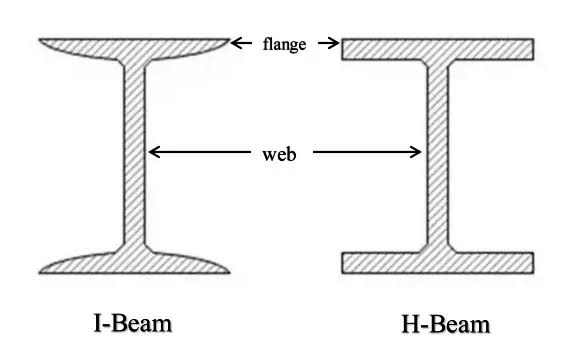
When comparing h beam vs i beam, the most noticeable difference is usually the shape of their cross-sections. H beams generally have wider flanges, while traditional I beams have narrower flanges that give them their distinctive I-shaped appearance.
However, appearance alone does not determine which beam is stronger or more suitable. The correct choice depends on the beam's dimensions, steel grade, span, loading conditions, support arrangements and structural design.
In Kenya, contractors, engineers, steel fabricators and property developers also compare H beams and I beams when researching i beam prices in kenya and h beam prices in kenya.
Understanding the differences helps buyers communicate their requirements accurately, compare supplier quotations and avoid purchasing a beam that does not meet the project's engineering specifications.
This guide explains H beams, I beams, their differences, common applications, pricing considerations and how to choose the appropriate structural steel section.
What Is an H Beam?
An H beam is a structural steel section with a cross-section resembling the letter H.
It consists of three main parts:
Two horizontal flanges.
One vertical web connecting the flanges.
The flanges are generally wider than those of traditional narrow-flange I beams. This gives H beams a relatively broad profile and makes them useful in different structural configurations.
H beams are commonly used in commercial construction, industrial buildings, warehouses, bridges and other engineered structures.
Their geometry allows them to resist bending and axial forces when appropriately selected and designed.
Main characteristics of H beams
1. Wide flanges
H beams generally have wider flanges compared with traditional narrow-flange I beams. This creates a broader cross-section that can be useful in structural applications involving different loading conditions.
2. Relatively substantial web
The web connects the two flanges and helps resist shear forces. Its thickness varies depending on the beam's dimensions and manufacturing specification.
3. Structural versatility
H beams can be used in columns, beams and other structural members, depending on their section properties and engineering design.
4. Different dimensions
H beams are manufactured in different heights, flange widths and thicknesses to meet varying structural requirements.
5. Multiple applications
They are used in industrial buildings, commercial developments, warehouses and other construction projects.
Where are H beams used in Kenya?
Common applications include:
Industrial warehouse columns.
Commercial building frames.
Factory structures.
Heavy-duty support frameworks.
Bridge components.
Large roof structures.
Engineered steel columns.
For example, a warehouse developer may use H sections for selected columns and supporting members because the design requires sections with particular axial and bending resistance.
The engineer must determine the appropriate dimensions and grade based on the building's design loads.
What Is an I Beam?
An I beam is a structural steel section with a cross-section resembling the letter I.
Like an H beam, it consists of two horizontal flanges connected by a vertical web.
However, traditional narrow-flange I beams generally have narrower flanges relative to their depth.
Their shape is designed to provide structural resistance to bending, particularly around the strong axis of the section.
I beams are widely used in construction, industrial fabrication and engineering applications.
Main characteristics of I beams
1. Narrower flanges in traditional designs
Traditional I beams usually have narrower flanges than comparable broad-flange H sections.
2. Vertical web
The web connects the flanges and provides resistance to shear forces.
3. Efficient bending performance
I beams can provide efficient resistance to bending when loaded in their intended orientation.
4. Different sizes and weights
They are available in multiple section dimensions and weights per metre.
5. Structural applications
They are commonly used in floor supports, roof structures, industrial frameworks and other engineered applications.
Where are I beams used in Kenya?
Typical applications include:
Building floor supports.
Roof support structures.
Industrial platforms.
Mezzanine floors.
Bridge components.
Fabricated steel frameworks.
Machinery support structures.
An I beam may be selected for a building floor where the engineer requires a particular bending capacity, stiffness and deflection performance over a specified span.
The final selection must be based on calculations rather than the beam's appearance.
H Beam vs I Beam: What Are the Main Differences?
The main difference between H beams and traditional I beams is their cross-sectional geometry.
H beams generally have wider flanges, while traditional I beams have narrower flanges relative to their depth.
However, modern structural steel products include several section families, and some broad-flange I sections can look very similar to H beams.
The actual product designation and section dimensions are therefore more reliable than appearance alone.
H beam vs I beam comparison table
Feature | H Beam | Traditional I Beam |
|---|---|---|
Cross-section | H-shaped | I-shaped |
Flange width | Generally wider | Generally narrower |
Web | Connects the two flanges | Connects the two flanges |
Flange profile | Often relatively parallel | May be tapered or parallel depending on section type |
Structural applications | Columns, beams and frameworks | Beams, floor supports and frameworks |
Axial loading | Suitable when correctly designed | Suitable when correctly designed |
Bending resistance | Depends on section properties | Depends on section properties |
Weight | Varies by dimensions and specification | Varies by dimensions and specification |
Selection | Based on engineering requirements | Based on engineering requirements |
The table provides a general comparison. Actual differences depend on the specific section series and manufacturer's specifications.
1. Flange Width: The Most Visible Difference
Flange width is one of the easiest ways to distinguish traditional H beams from narrow-flange I beams.
An H beam generally has wider horizontal flanges, creating a broader cross-section.
An I beam typically has narrower flanges relative to its depth.
Why does flange width matter?
Flange width affects several structural properties, including:
Resistance to bending.
Section modulus.
Moment of inertia.
Local buckling behaviour.
Connection design.
Overall member stability.
A wider flange can provide advantages in certain structural configurations, but this does not automatically make every H beam stronger than every I beam.
The beam's overall dimensions and material properties must be considered together.
2. Web Thickness and Structural Performance
The web is the vertical section connecting the two horizontal flanges.
Both H beams and I beams rely on their webs to transfer shear forces between the flanges.
Web thickness varies according to the section designation and manufacturing specification.
A thicker web may improve resistance to certain shear and local buckling conditions, depending on the section geometry.
Why should buyers check web thickness?
When purchasing structural steel beams, web thickness matters because it influences:
Shear resistance.
Local buckling behaviour.
Section weight.
Connection details.
Fabrication requirements.
Two beams with similar external dimensions may have different web thicknesses and therefore different structural properties.
This is why comparing h beam vs i beam requires more than looking at the external shape.
3. Strength and Load-Bearing Capacity
One of the most common questions contractors ask is whether an H beam is stronger than an I beam.
The answer depends on the section being compared and the type of loading involved.
A beam's strength is influenced by:
Cross-sectional dimensions.
Flange width.
Flange thickness.
Web thickness.
Steel grade.
Unsupported length.
Loading direction.
Connection and support conditions.
For bending about the major axis, the section's moment of inertia and section modulus are important.
For columns, axial capacity and buckling resistance are also essential.
A wider H section may be advantageous in certain column applications, but a suitably sized I beam may outperform a smaller H beam in a different application.
Therefore, neither product should automatically be considered stronger without comparing the actual section properties.
4. Weight Differences Between H Beams and I Beams
Weight is another important factor when comparing structural steel sections.
H beams and I beams are available in different sizes and weights per metre.
A larger beam with thicker flanges and web will generally weigh more than a smaller beam.
However, an H beam is not automatically heavier than an I beam.
The weight depends on the amount of steel used in the particular cross-section.
How is steel beam weight calculated?
Steel beam weight is commonly expressed in kilograms per metre (kg/m).
For a complete beam, the estimated weight is calculated as:
For example, if a particular beam weighs 30 kg/m and has a length of 6 metres:
The beam would have an approximate total weight of 180 kg.
This is an illustrative calculation, not a specification for a particular H beam or I beam.
Why weight matters when purchasing
Understanding beam weight helps contractors:
Estimate total material requirements.
Prepare transportation budgets.
Plan lifting and installation.
Compare supplier quotations.
Estimate fabrication costs.
Always request the manufacturer's section weight or a recognised steel section table when preparing a project estimate.
5. H Beam vs I Beam for Columns
Columns transfer loads from the structure above to the foundation.
They may carry vertical loads as well as bending forces caused by wind, eccentric loading and other structural conditions.
H beams are commonly considered for column applications because their wider flanges can provide useful section properties in different directions.
However, I sections can also be used as columns when appropriately designed.
The engineer must consider:
Axial loads.
Bending moments.
Buckling about both principal axes.
Effective column length.
End restraints.
Section classification.
Connection design.
For a warehouse or industrial building in Kenya, the choice between an H section and an I section should be based on the structural drawings and calculations.
A wider-looking beam is not necessarily the correct column.
6. H Beam vs I Beam for Floor Supports
Floor beams carry loads from floor slabs, decking, equipment and people.
They transfer these loads to columns, walls or other supporting members.
I beams are commonly used for floor support applications because their geometry can provide efficient resistance to bending about the strong axis.
H beams can also be used where the design requires their particular dimensions and section properties.
What should be considered?
When selecting a beam for a floor structure, the engineer considers:
Floor span.
Dead loads.
Live loads.
Beam spacing.
Deflection limits.
Vibration requirements.
Lateral restraint.
Connection arrangements.
The correct beam is the one that satisfies the design requirements at an appropriate cost.
7. H Beam vs I Beam for Roof Structures
Roof structures in Kenya range from small commercial buildings to large warehouses and industrial facilities.
Both H beams and I beams may be used in roof support systems, depending on the structural design.
For example, a large warehouse may use structural steel beams to support roof members, while smaller steel sections may be used in secondary framing.
The choice depends on:
Roof span.
Roofing material.
Wind loading.
Structural arrangement.
Support spacing.
Required stiffness.
Connection details.
In areas exposed to strong winds, engineers must also consider uplift forces and the stability of the complete roof structure.
Selecting beams based only on their size or price can lead to unsuitable structural arrangements.
Universal Beam Kenya: How Does It Relate to H Beams and I Beams?
When searching for structural steel in Kenya, you may also encounter the term Universal Beam (UB).
A Universal Beam is a standardised structural steel section commonly used in building and engineering applications.
It has two flanges connected by a central web and generally features a broad-flange profile.
Universal Beams are often described as I-shaped or H-shaped depending on the section series and terminology being used.
However, not every product informally called an H beam or I beam is necessarily a Universal Beam.
What is a Universal Beam used for?
Universal Beams are commonly used for:
Floor beams.
Roof supports.
Structural frames.
Industrial buildings.
Bridge structures.
Commercial construction.
What is the difference between Universal Beam and Universal Column?
These are two important structural steel designations.
Feature | Universal Beam (UB) | Universal Column (UC) |
|---|---|---|
Main purpose | Commonly used as a beam | Commonly used as a column |
Cross-section | Broad-flange section | Broad-flange section |
Proportions | Usually deeper relative to width | Usually stockier and more column-oriented |
Typical application | Floor and roof support | Structural columns and supports |
Selection | Based on bending and other design checks | Based on axial, buckling and bending checks |
The distinction is based on section proportions and design characteristics, not simply whether the section looks like an H or I.
A Universal Column can also be used as a beam, and a Universal Beam can be used as a column if the design calculations demonstrate suitability.
H Beam Prices in Kenya: What Determines the Cost?
The h beam prices in kenya depend on several factors, including dimensions, weight, steel grade, manufacturing specification and supplier availability.
H beams are generally priced according to their specifications and the quantity required.
Before requesting a quotation, establish the exact section designation and dimensions.
1. Beam size
Larger beams generally contain more steel and weigh more per metre.
This affects their overall material cost.
2. Weight per metre
Steel beams are commonly identified by their nominal weight per metre.
For example, two sections with different weights per metre will generally have different material costs when supplied at the same length and under comparable pricing arrangements.
3. Steel grade
Steel grade affects the mechanical properties and intended applications of the beam.
Different grades may have different prices depending on availability and manufacturing requirements.
4. Beam length
The length required influences the total quantity of steel purchased.
Some suppliers may offer standard lengths, while other requirements may involve cutting or special ordering.
5. Manufacturing standard
The applicable standard determines dimensional tolerances, material properties and product requirements.
Buyers should confirm that the quoted beam meets the specifications required by their engineers.
6. Quantity ordered
Large construction projects may require several tonnes of structural steel.
Order quantities can influence commercial terms, transport arrangements and delivery costs.
7. Market conditions
Steel prices in Kenya can change due to international steel prices, exchange rates, import costs, transport and local demand.
For this reason, buyers should request current quotations before finalising their budgets.
I Beam Prices in Kenya: What Should Buyers Consider?
The search for i beam prices in kenya is common among contractors, engineers, developers and fabricators sourcing structural steel.
However, the phrase I beam can refer to different section types and dimensions.
An accurate quotation requires more than the product name.
Information needed when requesting an I beam quotation
Provide the supplier with:
Beam designation.
Section depth.
Flange width.
Web thickness.
Flange thickness.
Steel grade.
Required length.
Quantity.
Where possible, provide the section designation from the engineer's drawings.
This reduces the risk of receiving a quotation for a different beam with similar dimensions.
Comparing I beam prices in Kenya
When comparing i beam prices in kenya, consider the following:
Price per kilogram: Some quotations may be based on the weight of the steel supplied.
Price per metre: Other quotations may specify the price per metre of a particular section.
Price per piece: A supplier may quote a complete beam based on its length and section weight.
Transport costs: Long and heavy beams require appropriate transport and handling arrangements.
Cutting and fabrication: Additional work may increase the final project cost.
Always compare quotations using the same beam designation, steel grade and length.
H Beam vs I Beam: Which One Is More Cost-Effective?
The most cost-effective beam is not necessarily the one with the lowest purchase price.
A beam that costs less initially may require additional supports, larger connections or modifications to meet the structural requirements.
Similarly, selecting an unnecessarily large beam can increase material and transportation costs.
A proper comparison should consider:
Required structural capacity.
Weight per metre.
Available section dimensions.
Fabrication and connection costs.
Installation requirements.
Material availability.
Long-term structural performance.
For example, a commercial warehouse project may require several structural beams.
The engineer can compare suitable H and I sections to identify which option meets the design requirements while controlling the overall material cost.
This is more reliable than choosing a beam based on its shape or advertised price.
Common Mistakes When Buying H Beams and I Beams
Selecting structural steel without confirming the specifications can create unnecessary costs and construction problems.
Here are some mistakes to avoid.
1. Choosing based on appearance
H beams and I beams may look similar, especially when they have comparable dimensions.
Always confirm the section designation.
2. Ignoring the weight per metre
Beam weight affects material costs, transport and installation.
A quotation should clearly identify the section weight.
3. Assuming every H beam is stronger
A small H beam is not automatically stronger than a larger I beam.
Actual structural performance depends on section properties and design conditions.
4. Comparing quotations with different specifications
A quotation for one beam size cannot be fairly compared with another beam that has different dimensions or steel grade.
5. Ignoring the engineer's drawings
The structural drawings specify the required beam sections and connections.
Substituting a different beam without approval can compromise the design.
6. Forgetting transport and handling
Structural steel beams can be heavy and difficult to transport.
Include lifting, loading, delivery and installation arrangements in the project budget.
How to Choose Between an H Beam and an I Beam
If you are unsure which section to purchase, start with the project's structural requirements.
The following guide provides a general starting point.
Project requirement | Section to investigate |
|---|---|
Structural columns | H beam or UC, as specified |
Floor supports | I beam or UB, as specified |
Warehouse framework | H beams, I beams or other engineered sections |
Industrial platforms | I beams or H beams, depending on design |
Roof support structures | Specified structural beam section |
Bridge components | Engineer-designed structural sections |
Heavy industrial frameworks | H beams, I beams or other suitable sections |
This is general guidance, not a substitute for structural calculations.
Ask your structural engineer these questions
Before ordering, confirm:
What exact beam designation is specified?
What is the required beam depth?
What is the required flange width?
What are the web and flange thicknesses?
What steel grade is required?
What is the weight per metre?
What lengths are needed?
Are there approved alternatives?
Having these details makes it easier to obtain accurate quotations from steel suppliers.
Where to Buy H Beams and I Beams in Kenya
Finding the right structural steel supplier is important for contractors, developers, fabricators and construction professionals.
A reliable supplier should be able to confirm product availability, section dimensions, material specifications and current prices.
BHD supplies building and steel products for construction and related industrial applications.
If you are sourcing structural steel beams, explore BHD's available structural steel product range and confirm the specific H beam or I beam requirements with the sales team.
When requesting a quotation, provide the beam designation, required length, quantity and steel grade.
For customers comparing h beam prices in kenya and i beam prices in kenya, requesting quotations based on matching specifications makes it easier to identify the most suitable option.
Remember to have the selected beam approved by your structural engineer before purchasing or installing it.
Frequently Asked Questions About H Beams and I Beams
1. What is the difference between an H beam and an I beam?
An H beam generally has wider flanges relative to its depth, while traditional narrow-flange I beams have narrower flanges. Both contain a vertical web connecting two horizontal flanges. Their actual structural performance depends on their dimensions and material properties.
2. Is an H beam stronger than an I beam?
Not automatically. Strength depends on the beam's dimensions, flange thickness, web thickness, steel grade, loading conditions and support arrangements. A properly sized I beam can outperform a smaller H beam in a particular application.
3. Which is better for building columns, H beams or I beams?
H beams and Universal Columns are commonly considered for column applications because of their section proportions. However, I sections can also be designed as columns. The structural engineer must check axial capacity, buckling and bending resistance.
4. Which beam is better for floor support?
I beams and Universal Beams are commonly used for floor support because they can provide efficient bending resistance. H beams can also be used where the design requires them. The correct selection depends on span, loading, deflection and connection requirements.
5. Are H beams and Universal Beams the same?
Not necessarily. H beam is a general shape description, while Universal Beam is a recognised structural steel section designation. The exact product should be identified using its section designation and dimensions.
6. What is a Universal Column?
A Universal Column (UC) is a broad-flange structural steel section commonly used for columns. It generally has proportions suited to column applications, although its actual use depends on engineering calculations.
7. What determines H beam prices in Kenya?
H beam prices in Kenya depend on section size, weight per metre, steel grade, manufacturing standard, beam length, order quantity and supplier availability.
8. What determines I beam prices in Kenya?
I beam prices in Kenya depend on dimensions, weight, steel grade, section designation, length, quantity and prevailing steel market conditions.
9. How do I know the weight of an H beam or I beam?
The weight is normally provided in kilograms per metre in the manufacturer's section tables. Multiply the weight per metre by the required length to estimate the total beam weight.
10. Can an I beam be used as a column?
Yes. An I beam can be used as a column if the structural design confirms that it can safely resist the required axial loads, bending moments and buckling effects.
11. Are H beams suitable for warehouse construction?
Yes. H sections are commonly considered in warehouse construction for columns, beams and supporting frameworks. Their suitability depends on the warehouse design, loading conditions and engineering specifications.
12. Where can I buy structural steel beams in Kenya?
You can source structural steel through established steel suppliers such as BHD. Confirm the available beam designations, dimensions, grades, lengths and current prices before ordering.
Conclusion
Understanding h beam vs i beam is important when sourcing structural steel for construction, industrial buildings and fabrication projects.
Although both sections have similar basic components, their flange widths, dimensions, weight distribution and structural properties can differ.
H beams generally have wider flanges, while traditional I beams have narrower flanges. However, neither section is automatically stronger or better for every application.
The correct choice depends on the actual section properties, structural loading, span, steel grade and design requirements.
Whether you are researching i beam prices in kenya, comparing h beam prices in kenya or looking for universal beam kenya suppliers, always confirm the exact section designation before purchasing.
Explore BHD's structural steel range and request a quotation based on your project's specifications. Working with the correct beam dimensions and an engineer-approved design helps ensure that your construction project uses suitable structural steel while keeping material costs under control.
Frequently asked questions

Written & reviewed by
BHD Kenya
Burhani Hardware Dealers (BHD Kenya) is a Nairobi-based supplier of polycarbonate roofing, Alucobond/ACP cladding, Perspex, WPC wall panels and steel products, serving contractors, fabricators and homeowners across Kenya.