
Greenhouse Kenya: Best Roofing Materials for 2026.
Quick answer
The two main greenhouse coverings in Kenya are polycarbonate sheet and UV-treated polythene film. Polycarbonate is rigid, impact-resistant and long-lasting, and multiwall sheet also helps hold warmth overnight. Film costs less to install but must be replaced far more often. The right cover depends on the crop, altitude, wind exposure and how long the structure must serve.
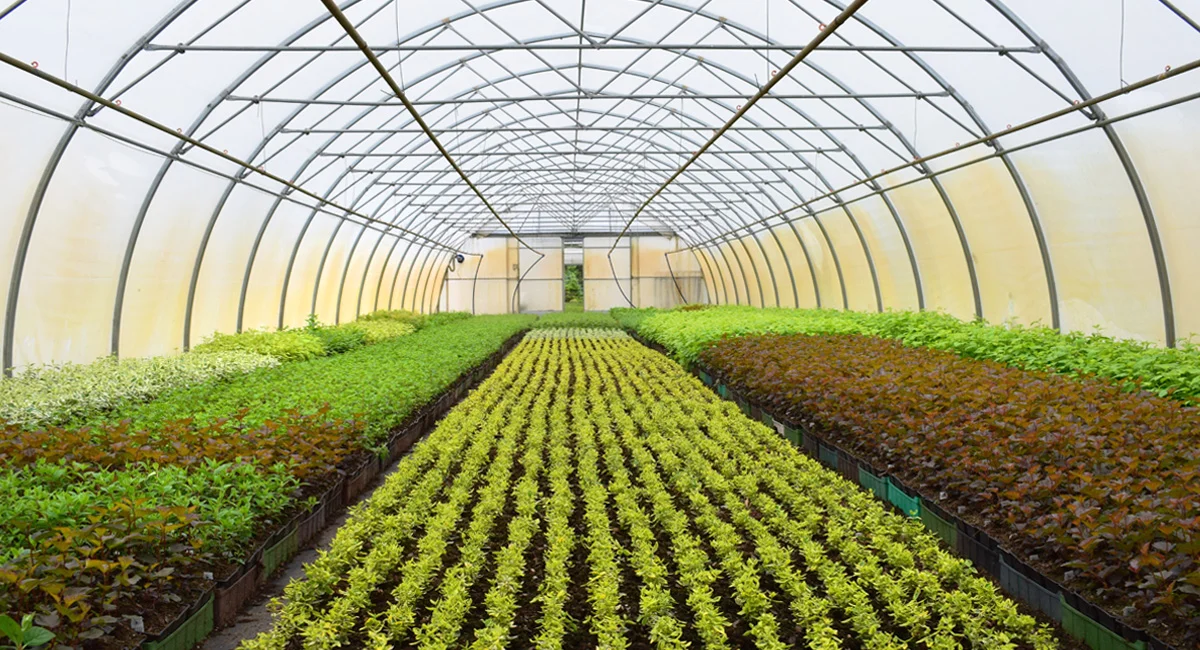
Polycarbonate and UV-treated greenhouse film are among the main roofing options for greenhouse farming in Kenya. The right covering depends on crop requirements, light transmission, temperature control, durability, budget, greenhouse size and the climate of the farming location.
Greenhouse roofing is more than a cover placed over a steel frame. It controls how sunlight enters the growing environment, influences heat retention and ventilation, protects crops from rain and wind, and affects the operating cost of the farm.
For Kenyan farmers, the choice is particularly important because growing conditions vary significantly between Nairobi and Central Kenya, the Rift Valley, coastal areas and semi-arid regions.
A small vegetable greenhouse may have very different requirements from a commercial horticulture facility growing tomatoes, flowers, herbs or other high-value crops.
The main greenhouse covering options include:
- UV-treated polyethylene film
- Hollow polycarbonate sheets
- Solid polycarbonate sheets
- Fibreglass-reinforced panels in specialised applications
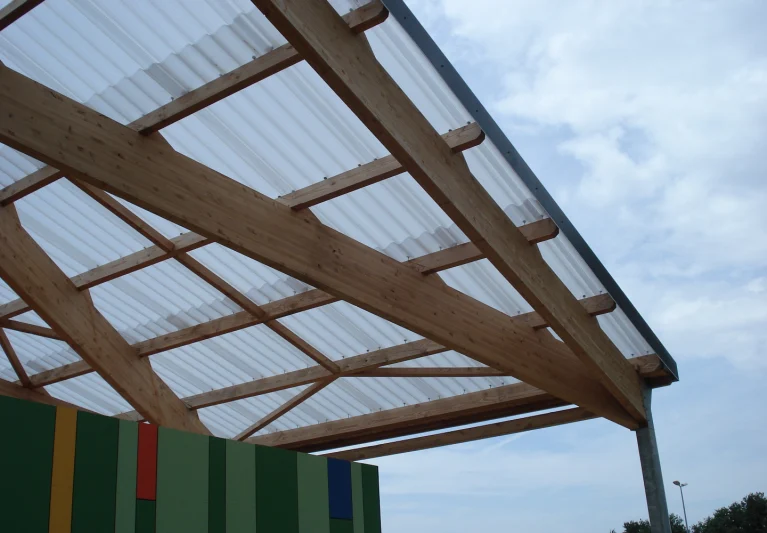
For long-term structures where durability and rigid roofing are priorities, polycarbonate is an important option to consider. BHD's existing greenhouse guidance similarly identifies polycarbonate, polyethylene and fibreglass as the principal covering categories, with the choice depending on durability, light transmission and budget.
What Is the Best Roofing Material for a Greenhouse in Kenya?
The best greenhouse roofing material depends on the farming objective, but UV-treated polyethylene is commonly suited to cost-conscious greenhouse production while polycarbonate is better suited to rigid, longer-term structures. Farmers should compare light transmission, UV protection, insulation, durability, ventilation and replacement costs before choosing a covering.
For a farmer selecting between materials, the first question should not simply be:
"Which roof is cheapest?"
Instead, consider:
- What crop will be grown?
- How long should the greenhouse last?
- How much natural light does the crop require?
- Is heat retention important?
- How exposed is the farm to wind?
- Is the greenhouse in a humid coastal environment?
- How frequently can the covering be replaced?
- What is the total cost over the greenhouse's operating life?
A low initial purchase price may not represent the lowest long-term cost if the covering requires frequent replacement.
Is Polycarbonate Good for Greenhouses?
Polycarbonate is suitable for greenhouse roofing where farmers require a rigid, impact-resistant covering with good light transmission and insulation characteristics. Its multiwall structure can also provide thermal insulation, making it useful for greenhouse environments where temperature fluctuations need to be managed.
Polycarbonate is a thermoplastic material used in roofing, glazing and agricultural structures.
For greenhouse applications, important characteristics include:
- Light transmission
- UV protection
- Impact resistance
- Thermal insulation
- Weather resistance
- Rigidity
- Long-term outdoor performance
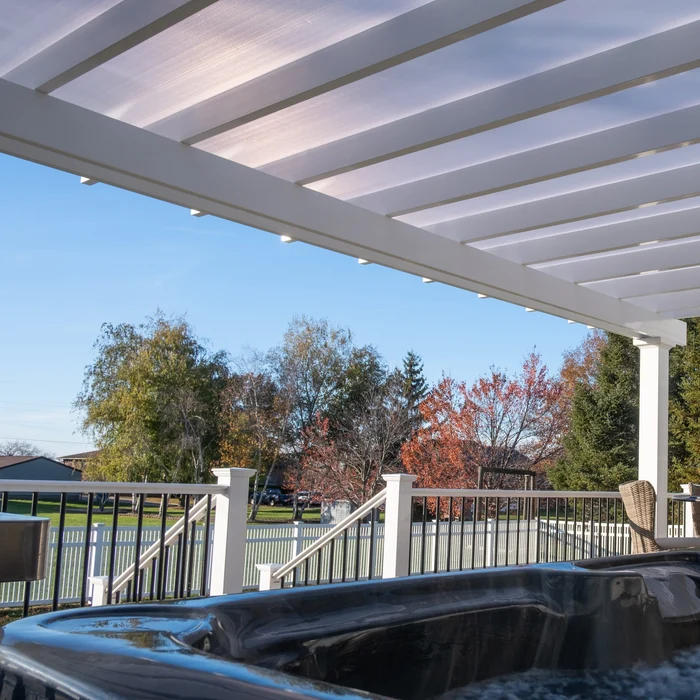
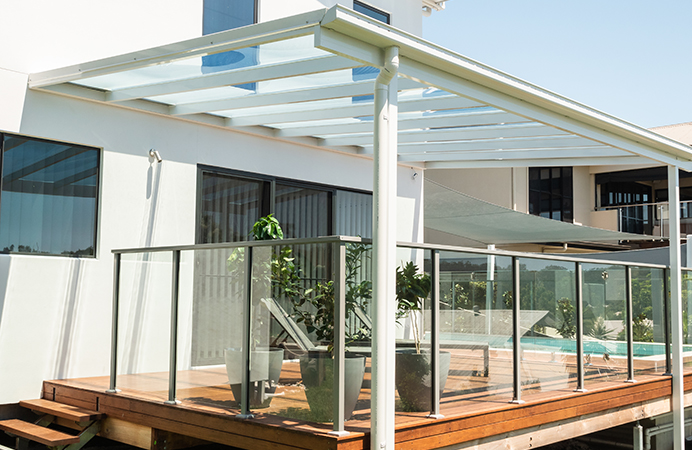
BHD supplies polycarbonate sheets for roofing and architectural applications, including greenhouse projects.
The material is particularly useful when a farmer wants a permanent or semi-permanent rigid covering rather than a flexible film.
What Is UV-Treated Greenhouse Film?
UV-treated polyethylene film is a flexible greenhouse covering designed to transmit useful sunlight while resisting degradation caused by ultraviolet exposure. It is commonly selected for cost-sensitive greenhouse structures because it is lightweight, easy to install and less expensive than rigid polycarbonate.
Greenhouse film can be produced with different properties, including:
- UV stabilisation
- Light diffusion
- Anti-drip characteristics
- Different thicknesses
- Different levels of light transmission
The specification should be matched to the farming application.
Ordinary plastic sheeting should not automatically be treated as equivalent to purpose-made greenhouse film.
A greenhouse covering exposed to intense Kenyan sunlight needs appropriate UV protection to reduce premature deterioration.
Polycarbonate vs Greenhouse Film
Greenhouse film is generally cheaper and easier to replace, while polycarbonate provides a rigid covering with greater structural durability and insulation potential. The better choice depends on the farm's budget, intended service period, crop requirements and environmental conditions.
| Feature | UV-Treated Greenhouse Film | Polycarbonate |
|---|---|---|
| Form | Flexible film | Rigid sheet |
| Initial cost | Generally lower | Generally higher |
| Installation | Relatively simple | Requires rigid framing/support |
| Weight | Very low | Low to moderate |
| Light transmission | High, product-specific | High, product-specific |
| Thermal insulation | Product-dependent | Stronger with multiwall designs |
| Impact resistance | Limited | High, product-dependent |
| Replacement | Relatively easy | Less frequent when properly specified |
| Typical use | Cost-conscious farming | Long-term rigid structures |
The comparison should always use actual product specifications rather than generic assumptions.
What Are the Benefits of Polycarbonate Greenhouse Roofing?
Polycarbonate greenhouse roofing can provide durability, impact resistance, natural light transmission and thermal insulation while creating a rigid growing environment. Hollow polycarbonate is particularly useful where insulation and lower structural weight are important.
Impact Resistance
Polycarbonate is significantly more impact-resistant than many brittle transparent materials.
This can be useful where greenhouses are exposed to:
- Hail
- Windborne debris
- Accidental impact
Thermal Insulation
Multiwall polycarbonate contains internal air spaces that can reduce heat transfer compared with a single solid sheet.
This can be useful in cooler highland locations.
Natural Light
Polycarbonate can transmit substantial natural light, although the exact transmission depends on:
- Sheet type
- Thickness
- Colour
- Surface treatment
- Structure
Rigid Construction
Unlike flexible greenhouse film, polycarbonate forms a rigid panel.
This can create a more permanent greenhouse envelope.
What Type of Polycarbonate Is Best for Greenhouses?
Hollow polycarbonate is generally a practical choice for greenhouse roofing where thermal insulation, low weight and natural light transmission are priorities. Solid polycarbonate is more appropriate where a flat, dense panel and higher impact resistance or clarity are specifically required.
Hollow Polycarbonate
Hollow sheets contain internal chambers.
These chambers can:
- Reduce weight
- Improve insulation
- Provide structural stiffness
- Help regulate heat transfer
BHD offers hollow polycarbonate sheets for applications where these characteristics are required.
Solid Polycarbonate
Solid sheets have a continuous material structure.
They may be considered where:
- Higher impact resistance is required
- A flat appearance is preferred
- Greater clarity is required
See BHD's solid polycarbonate sheets for the solid-sheet category.
What Are the Main Greenhouse Roofing Specifications?
Greenhouse roofing should be specified by material type, thickness, light transmission, UV protection, sheet dimensions and thermal properties rather than by the material name alone. These specifications determine how the covering behaves under sunlight, temperature changes, rain and physical exposure.
A typical polycarbonate specification should consider:
| Parameter | Typical Consideration |
| Material | Polycarbonate |
| Structure | Hollow/multiwall or solid |
| Thickness | Product-specific |
| Light transmission | Product-specific |
| UV protection | UV-protected surface/system |
| Sheet length | Project-specific |
| Sheet width | Product-specific |
| Thermal performance | Product-specific |
| Colour | Clear, translucent or tinted |
| Application | Greenhouse roofing/glazing |
| Support | Steel or aluminium frame |
| Installation | Manufacturer-specific |
Exact thickness and performance values should be confirmed from the product manufacturer's technical documentation before installation.
How Does Light Transmission Affect Greenhouse Farming?
Light transmission determines how much usable sunlight reaches the crops, making it one of the most important greenhouse-covering characteristics. Excessively low transmission can restrict photosynthesis, while uncontrolled direct solar radiation can contribute to heat stress depending on crop and climate.
Plants require light for photosynthesis.
However, greenhouse design is not simply about maximising transparency.
The covering should provide the appropriate balance of:
- Light transmission
- Light diffusion
- Heat management
- UV protection
A diffused covering can distribute incoming light more evenly through the growing space.
This can be particularly useful in crops with dense foliage, where lower leaves may otherwise receive less direct light.
How Does Greenhouse Roofing Control Temperature?
Greenhouse roofing influences internal temperature by controlling solar radiation and heat transfer between the growing environment and the outside air. Multiwall polycarbonate can provide insulation, while ventilation remains essential for removing excess heat.
A common mistake is expecting the roofing material alone to regulate the entire greenhouse climate.
Temperature control also depends on:
- Ventilation
- Roof vents
- Side openings
- Shading
- Greenhouse orientation
- Crop density
- Internal humidity
- Local weather
In hot areas, a highly insulated greenhouse without adequate ventilation can still overheat.
The roof and ventilation system therefore need to be designed together.
What Greenhouse Roofing Is Best for Nairobi and Central Kenya?
Greenhouse roofing in Nairobi and Central Kenya should account for strong daytime sunlight, seasonal rainfall and temperature variation between day and night. Polycarbonate can be useful where insulation and durability are priorities, while UV-treated film remains practical for many conventional greenhouse structures.
Central Kenya includes important agricultural areas with greenhouse production.
Farmers should consider:
- Daytime solar exposure
- Cooler nights
- Heavy seasonal rainfall
- Wind
- UV exposure
For high-value crops, a rigid polycarbonate structure may justify its higher initial investment where long-term durability and temperature management are priorities.
For lower-cost production, a properly specified UV-treated greenhouse film may be more economical.
What Greenhouse Roofing Is Best for Rift Valley Farms?
Rift Valley greenhouse roofing should account for temperature variation, wind exposure, rainfall and the specific altitude of the farm. In areas such as Nakuru, Eldoret and surrounding agricultural zones, insulated multiwall polycarbonate can be considered where retaining heat during cooler periods is important.
The Rift Valley contains diverse agricultural environments.
A greenhouse in a cooler highland location can have very different thermal requirements from one in a warmer, lower-altitude area.
The farmer should therefore consider:
- Night-time temperatures
- Wind exposure
- Solar intensity
- Crop sensitivity
- Required ventilation
A rigid covering can also provide greater resistance to physical damage than thin film, but its structural support requirements must be considered.
Is Polycarbonate Suitable for Greenhouses in Coastal Kenya?
Polycarbonate can be used for greenhouse structures in coastal Kenya, but the design must account for heat, humidity, salt exposure and corrosion of the supporting frame. UV protection, ventilation and corrosion-resistant structural components become particularly important in coastal conditions.
Coastal environments such as Mombasa expose greenhouse structures to:
- High humidity
- Salt-laden air
- Strong sunlight
- Heavy rainfall
The polycarbonate itself is only one part of the system.
The supporting steel frame should also receive appropriate corrosion protection.
Fasteners, brackets and other metal components should be selected for the environmental conditions.
What Steel Is Used for Greenhouse Frames?
Greenhouse frames can use steel sections such as SHS and other appropriately sized structural members, depending on greenhouse dimensions and engineering requirements. The frame must support the covering, resist wind actions and maintain adequate stability throughout the structure's service life.
For larger greenhouse projects, the frame should not be selected based solely on material availability.
Engineers or qualified fabricators should consider:
- Greenhouse width
- Height
- Span
- Column spacing
- Roof geometry
- Covering weight
- Wind loads
- Connection details
- Foundation design
BHD supplies square hollow sections for structural and fabrication applications.
Other steel sections may also be appropriate depending on the engineering design.
How Does Ventilation Work With Greenhouse Roofing?
Ventilation removes excess heat and moisture from a greenhouse and must work together with the roofing system. Roof vents, side openings and controlled airflow can help prevent excessive temperature and humidity levels that may negatively affect crops.
A greenhouse with excellent roofing material can still perform poorly if ventilation is inadequate.
Ventilation helps manage:
- Temperature
- Humidity
- Condensation
- Air movement
- Crop microclimate
For a commercial greenhouse, ventilation should be considered during the design stage rather than added as an afterthought.
How Should Polycarbonate Greenhouse Sheets Be Installed?
Polycarbonate greenhouse sheets should be installed according to the manufacturer's specifications, with correct support spacing, orientation, fastening, sealing and allowance for thermal movement. Poor installation can cause leaks, cracking, condensation problems or premature deterioration even when good-quality sheets are used.
A typical installation process includes:
1. Prepare the Frame
The frame should be straight, level and securely anchored.
2. Confirm Support Spacing
The spacing should correspond to the sheet manufacturer's requirements.
3. Check UV Protection
Where the sheet has a designated UV-protected side, it should face the specified direction.
4. Plan Sheet Orientation
Multiwall sheets may require specific orientation so internal channels drain correctly.
5. Install Compatible Fasteners
Fasteners should be appropriate for polycarbonate and the supporting frame.
6. Allow Thermal Movement
Polycarbonate expands and contracts as temperature changes.
7. Seal Where Required
End protection and sealing should follow the manufacturer's instructions.
8. Provide Ventilation
Roof and side ventilation should remain functional after the sheets are installed.
What Are Common Greenhouse Roofing Mistakes?
The most common greenhouse roofing mistakes include using non-UV-stabilised plastic, selecting the covering without considering crop requirements, inadequate ventilation, poor sheet installation and using a weak structural frame. These problems can increase replacement costs and reduce crop performance.
Using Ordinary Plastic
General-purpose plastic is not necessarily designed for prolonged outdoor agricultural use.
Ignoring UV Exposure
Strong Kenyan sunlight can accelerate degradation of unsuitable materials.
Poor Ventilation
A greenhouse can overheat even with high-performance roofing.
Incorrect Sheet Orientation
Multiwall polycarbonate should be installed according to the manufacturer's orientation requirements.
Poor Sealing
Improperly sealed channels can allow moisture and contaminants into the sheet.
Weak Framing
A high-quality covering cannot compensate for an inadequately designed structure.
Ignoring Wind
Greenhouses have large exposed surfaces.
Wind loads must therefore be considered in the frame and foundation design.
How Much Does Greenhouse Roofing Cost in Kenya?
Greenhouse roofing costs in Kenya depend on the covering material, thickness, dimensions, UV treatment, light transmission, greenhouse size, frame design, installation and transport. Polycarbonate generally requires a higher initial investment than greenhouse film, but its longer service potential can make lifecycle cost more important than purchase price alone.
When comparing quotations, ask suppliers to specify:
- Material type
- Thickness
- Sheet dimensions
- UV protection
- Light transmission
- Quantity
- Frame requirements
- Accessories
- Delivery
- Installation
A quotation that simply says "greenhouse roofing" is difficult to compare accurately.
What Greenhouse Roofing Material Has the Longest Service Life?
Rigid polycarbonate generally offers a longer service potential than basic greenhouse film when the correct product is installed and maintained appropriately. Actual service life depends on UV exposure, product quality, installation, cleaning, impact and environmental conditions.
Film can be economical because replacement is relatively straightforward.
Polycarbonate can be more suitable when the objective is to construct a longer-lasting rigid greenhouse.
The decision should therefore consider the total operating period rather than only the initial purchase price.
How Should Greenhouse Roofing Be Maintained?
Greenhouse roofing should be inspected regularly for cracks, loose fixings, blocked channels, dirt accumulation, leaks and deterioration. Keeping the covering clean and the drainage and ventilation systems functional helps preserve light transmission and maintain the intended growing environment.
Maintenance should include:
- Cleaning the external surface
- Checking fasteners
- Inspecting seals
- Checking for cracks
- Clearing drainage channels
- Inspecting the steel frame
- Checking corrosion
- Maintaining vents
- Removing accumulated debris
For coastal greenhouses, corrosion inspections should be more frequent.
Does Greenhouse Roofing Need to Comply With Kenyan Building Requirements?
Greenhouse structures should be designed and constructed with applicable Kenyan requirements, project specifications and structural safety considerations in mind. The National Building Code 2024 provides an updated regulatory framework for planning, design, approval, implementation and maintenance of buildings and structures.
The National Construction Authority states that the 2024 Code provides an updated framework for planning, design, approval, implementation, maintenance and demolition of buildings.
For a greenhouse project, the structural design should therefore consider:
- Wind actions
- Structural stability
- Roofing performance
- Drainage
- Material specifications
- Foundations
- Connections
Where the greenhouse is a substantial or permanent structure, professional structural advice is appropriate.
Frequently Asked Questions About Greenhouse Roofing in Kenya
Greenhouse roofing should be selected according to crop requirements, climate, durability, light transmission, ventilation and budget. Polycarbonate is a strong option for rigid long-term structures, while UV-treated greenhouse film remains practical for many cost-conscious farming projects.
What is the best roofing material for a greenhouse in Kenya?
Polycarbonate is a strong option for long-term rigid greenhouse structures, while UV-treated polyethylene film can be more economical for conventional greenhouse farming.
Is polycarbonate better than greenhouse plastic?
Polycarbonate generally offers greater rigidity, impact resistance and insulation potential, while greenhouse film has a lower initial cost and is easier to replace.
Is hollow polycarbonate good for greenhouses?
Yes. Hollow polycarbonate can provide useful insulation, low weight and natural light transmission, making it suitable for many greenhouse applications.
Does greenhouse polycarbonate need UV protection?
Yes, appropriate UV protection is important for prolonged outdoor exposure. The product specification should identify the intended UV protection system.
Can polycarbonate greenhouses be used in Kenya?
Yes. Polycarbonate can be used across Kenya when the covering, frame, ventilation and structural design are matched to the local climate and crop requirements.
Does polycarbonate reduce greenhouse heat?
Multiwall polycarbonate can reduce heat transfer, but it does not replace ventilation or shading where those are required.
What thickness of polycarbonate is best for a greenhouse?
There is no single thickness suitable for every greenhouse. The appropriate thickness depends on the panel structure, span, wind exposure, thermal requirements and manufacturer's specifications.
Where can I buy greenhouse polycarbonate sheets in Kenya?
Farmers and contractors can browse BHD's polycarbonate catalogue or contact BHD for current product specifications and availability.
Final Verdict: Choosing Greenhouse Roofing in Kenya
The best greenhouse roofing material is the one that balances crop requirements, light transmission, temperature management, durability, climate exposure and total cost. Polycarbonate is well suited to durable rigid greenhouse structures, while UV-treated film remains a practical choice where initial cost and easy replacement are priorities.
Before selecting a greenhouse covering, confirm:
- Crop type
- Required light transmission
- Light diffusion
- UV protection
- Temperature requirements
- Ventilation design
- Wind exposure
- Rainfall
- Greenhouse frame strength
- Expected service life
- Maintenance requirements
- Total project cost
For rigid greenhouse projects, BHD's hollow polycarbonate sheets can be considered where insulation and lightweight construction are priorities, while solid polycarbonate sheets are available for applications requiring a solid panel.
BHD also provides steel products for construction and fabrication that can be incorporated into appropriately designed agricultural structures.
Contact Burhani Hardware Dealers (BHD)
Email: burhanihardwaredealers [at] yahoo.com
Call/WhatsApp: +254 731 217 462 | +254 704 606 131
Visit: BHD, Industrial Area, Funzi Road, Nairobi
Website:https://bhd.co.ke/
Delivery Guarantee:
Same-day delivery within Nairobi.
Next-day delivery countrywide to Nakuru, Kisumu, Mombasa, Eldoret, Thika, Meru, Kitengela and Malindi.
Frequently asked questions

Written & reviewed by
BHD Kenya
Burhani Hardware Dealers (BHD Kenya) is a Nairobi-based supplier of polycarbonate roofing, Alucobond/ACP cladding, Perspex, WPC wall panels and steel products, serving contractors, fabricators and homeowners across Kenya.