
Office Partitions Kenya: Best Materials for 2026 | BHD
Quick answer
Office partitions in Kenya are most often built from glass, Perspex acrylic sheet or solid wall panels such as WPC. Glass keeps daylight and sightlines but gives the least visual and acoustic privacy; Perspex is lighter and easier to cut for screens and counter shields; panelled partitions block sight and sound best. Many offices combine all three.
The best office partition material depends on the required privacy, natural light, appearance, durability and installation method. Glass provides a premium open feel, Perspex offers a lightweight transparent alternative, while decorative wall panels provide stronger visual separation and privacy.
Office partitioning is no longer limited to permanent masonry walls. Modern Kenyan offices increasingly use glass, acrylic sheets, WPC panels and other architectural finishes to divide workspaces while maintaining a professional appearance.
The right material depends on what the partition needs to achieve.
A boardroom may need privacy and acoustic separation. A reception area may need transparency and branding. A workstation screen may need to provide separation without blocking daylight.
For contractors, fabricators and developers, the decision should therefore be based on function first and appearance second.
What Is the Best Material for Office Partitions in Kenya?
Glass is suitable where an office needs maximum natural light and visual openness, while Perspex provides a lighter transparent alternative that can be fabricated into different designs. Decorative wall panels are more suitable where privacy and visual separation are the main priorities.
The main options include:
- Glass
- Perspex
- WPC wall panels
- Gypsum board
- Aluminium-framed systems
- Decorative architectural panels
No single material is best for every office.
The right choice depends on:
- Privacy requirements
- Available daylight
- Budget
- Office layout
- Cleaning requirements
- Impact exposure
- Desired appearance
- Acoustic requirements
- Installation method
Why Are Office Partitions Important?
Office partitions divide large spaces into functional areas while controlling privacy, circulation, lighting and visual separation. A well-designed partition can create meeting rooms, private offices, reception areas and workstations without unnecessarily reducing usable floor space.
Partitions can be used to create:
- Executive offices
- Boardrooms
- Meeting rooms
- Reception areas
- Workstations
- Waiting areas
- Staff rooms
- Consultation rooms
- Storage areas
The partition should match the function of the space.
A transparent meeting-room partition has a different purpose from a fully opaque wall separating a manager's office.
Glass vs Perspex for Office Partitions
Glass offers excellent transparency and a premium architectural appearance, while Perspex is lighter and easier to fabricate for many applications. The better choice depends on the required impact performance, thickness, framing system, privacy and overall design.
| Feature | Glass | Perspex |
|---|---|---|
| Transparency | Excellent | Excellent |
| Weight | Higher | Lower |
| Fabrication | Requires specialist processing | Relatively easy to fabricate |
| Visual appearance | Premium | Modern |
| Privacy options | Frosted/tinted options | Opaque/tinted options |
| Impact behaviour | Product-dependent | Generally more impact-resistant than ordinary glass |
| Cleaning | Easy | Requires scratch-conscious cleaning |
| Typical use | Boardrooms, offices | Screens, partitions, displays |
Perspex is an acrylic sheet material.
BHD supplies Perspex sheets that can be considered for suitable architectural and partition applications.
What Are Perspex Office Partitions?
Perspex office partitions use acrylic sheets to create transparent, translucent or coloured separation between areas. They are useful where designers want light transmission and a lightweight material that can be cut, drilled and fabricated into different configurations.
Perspex can be specified in different appearances.
Depending on the product, this can include:
- Clear
- Opal
- Coloured
- Tinted
- Textured
- Decorative finishes
The choice affects both appearance and privacy.
For example, a clear panel allows visual communication between workspaces, while an opaque or translucent option can provide greater separation.
You can also explore BHD's Perspex catalogue when comparing available sheet options.
When Should You Choose Glass Office Partitions?
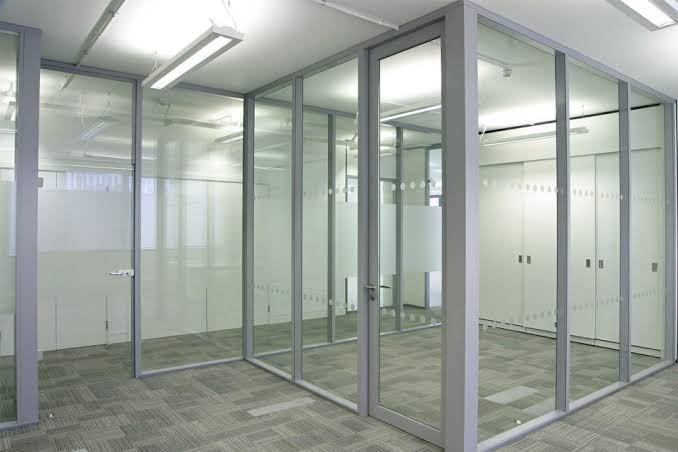
Glass is particularly suitable for boardrooms, executive offices and meeting rooms where daylight, transparency and a premium appearance are important. Frosted, tinted or patterned glass can increase privacy without completely blocking light.
Glass works particularly well in offices with limited natural light.
Instead of creating a solid wall, a glazed partition allows daylight to travel deeper into the workspace.
Common applications include:
- Boardrooms
- Meeting rooms
- Executive offices
- Reception areas
- Internal corridors
However, glass partitions require careful consideration of:
- Thickness
- Framing
- Safety
- Hardware
- Impact exposure
- Installation
The complete partition system matters as much as the glass itself.
Are WPC Wall Panels Suitable for Office Partitions?
WPC wall panels are suitable for decorative partition applications where the priority is privacy, texture and visual warmth rather than transparency. They can create contemporary office interiors with wood-inspired finishes and strong feature-wall character.
WPC means Wood Plastic Composite.
It is commonly used for:
- Feature walls
- Decorative partitions
- Reception backgrounds
- Office dividers
- Meeting-room accents
- Ceiling features
BHD's WPC wall panel range can be considered for offices requiring a decorative finish.
WPC is particularly useful when the designer wants a partition to become part of the interior design rather than simply function as a barrier.
What Are the Advantages of Perspex Partitions?
Perspex partitions provide transparency or translucency with lower weight than many conventional glass applications. They can also be fabricated into different shapes and sizes, making them useful for custom office screens and partition designs.
Key advantages include:
- Low weight
- Light transmission
- Design flexibility
- Easy fabrication
- Multiple colour options
- Smooth surface
- Modern appearance
Perspex can therefore be useful in areas where a conventional heavy partition is unnecessary.
However, acrylic can scratch more easily than glass.
Cleaning should therefore be carried out with appropriate non-abrasive materials.
How Do You Clean Perspex Office Partitions?
Perspex should be cleaned using a soft cloth, clean water and a suitable mild cleaning solution. Abrasive materials and inappropriate solvents should be avoided because they can scratch, haze or chemically damage acrylic surfaces.
Avoid cleaning Perspex with:
- Rough scourers
- Steel wool
- Abrasive powders
- Sharp blades
- Unverified solvents
For busy offices, routine cleaning is important because fingerprints and dust are particularly visible on clear panels.
Which Office Partition Material Gives the Most Privacy?
Opaque wall panels and solid partitions generally provide the highest visual privacy, while clear glass and clear Perspex provide the least. Frosted, tinted and translucent materials provide intermediate privacy while retaining some natural light.
A simple privacy hierarchy is:
Highest privacy → Opaque wall → Translucent panel → Frosted glass/acrylic → Clear glass/acrylic → Lowest visual privacy
However, visual privacy is different from acoustic privacy.
A transparent partition may be modified visually without significantly improving sound insulation.
If confidentiality is important, acoustic performance must be considered separately.
How Do You Choose Office Partitions for Meeting Rooms?
Meeting-room partitions should balance privacy, natural light, acoustics and accessibility. Glass is often selected for visual openness, while frosting, blinds or other privacy treatments can be added where confidential meetings are held.
For a boardroom, consider:
- Daylight
- Visual privacy
- Acoustic separation
- Door configuration
- Hardware
- Lighting
- Branding
- Safety
For example, a transparent boardroom may look open during normal office operations but require frosting or blinds for confidential meetings.
What Are the Best Office Partitions for Reception Areas?
Reception partitions should support the company's visual identity while controlling visitor movement and maintaining an organised entrance. Glass, Perspex, Alucobond and decorative panels can all be incorporated depending on whether transparency, branding or privacy is the priority.
Reception areas often require more than a simple divider.
A partition can incorporate:
- Company branding
- Logo displays
- Lighting
- Reception signage
- Decorative textures
- Visitor direction
Alucobond sheets may be useful for selected architectural and branding applications where a contemporary panel finish is required.
Can Marble Boards Be Used for Office Partitions?
Marble boards can be used for decorative office partitions and feature surfaces where a stone-inspired premium appearance is required. They are most appropriate when the partition does not need to provide transparency.
Potential applications include:
- Executive office backgrounds
- Reception features
- Boardroom feature walls
- Decorative dividers
- Waiting areas
BHD's marble board range provides an option for projects requiring this type of decorative finish.
Marble boards are generally selected for appearance rather than transparency or acoustic performance.
What Is the Difference Between a Partition and a Feature Wall?
A partition divides one space from another, while a feature wall primarily creates a visual focal point without necessarily dividing the room. Some modern interior systems perform both functions by combining separation with decorative finishes.
For example:
Partition:
Separates a meeting room from an open-plan office.
Feature wall:
Creates a visual focus behind a reception desk.
Decorative partition:
Separates spaces while also improving the interior appearance.
Understanding this difference helps prevent selecting a material based only on appearance.
How Does Office Partition Material Affect Natural Light?
Transparent and translucent partitions allow more daylight to pass between spaces than opaque panels. Glass and clear Perspex are therefore useful for offices where designers want to preserve natural light while dividing the floor plan.
An office with multiple solid walls can create dark internal zones.
Transparent partitions can help maintain:
- Daylight
- Visual connection
- Sense of openness
However, excessive transparency can reduce privacy.
The solution is often to combine materials.
For example:
Clear upper section + opaque lower section
can provide both light and separation.
What Office Partition Material Is Easiest to Install?
Installation difficulty depends on the complete partition system, not only the sheet material. Lightweight panels such as Perspex can be easier to handle than heavier glazing, but framing, fixing, cutting and finishing requirements still determine the actual installation process.
Contractors should consider:
- Sheet dimensions
- Weight
- Cutting requirements
- Frame design
- Fixing method
- Site access
- Door openings
- Electrical requirements
- Finishing details
A partition that looks simple can become complicated if electrical outlets, data cables and doors must pass through it.
How Do Kenyan Climate Conditions Affect Office Partitions?
Indoor office partitions in Kenya are generally protected from direct weather exposure, but temperature variation, sunlight through windows, humidity and cleaning practices can still affect materials. Coastal offices require particular attention to humidity and corrosion of metal frames and fixings.
Nairobi
Consider:
- Strong sunlight through windows
- Dust
- Temperature changes
- Air-conditioning
Mombasa and Coastal Areas
Consider:
- Humidity
- Salt-laden air
- Corrosion of metal components
- Moisture around poorly ventilated areas
Rift Valley
Consider:
- Temperature variation
- Wind exposure where partitions are near large openings
- Dust
The material selection should therefore consider the complete installation rather than the panel alone.
What Technical Specifications Should You Check Before Buying Office Partition Materials?
Before purchasing partition materials, confirm sheet thickness, dimensions, weight, finish, transparency, intended application and compatibility with the proposed framing system. The correct specification depends on whether the partition is decorative, transparent, impact-exposed or intended to provide privacy.
| Parameter | Perspex | Glass | WPC Panel |
|---|---|---|---|
| Material | Acrylic | Glass | Wood Plastic Composite |
| Transparency | Clear/translucent/opaque options | Clear/translucent/opaque options | Generally opaque |
| Thickness | Product-specific | Product/system-specific | Product-specific |
| Weight | Relatively light | Relatively heavy | Product-specific |
| Main use | Screens/partitions | Glazed partitions | Decorative partitions |
| Surface | Smooth | Smooth | Textured |
| Privacy | Product-dependent | Product-dependent | High visual privacy |
| Fabrication | Cutting/drilling possible | Specialist processing | Product-dependent |
| Maintenance | Non-abrasive cleaning | Standard glass cleaning | Product-specific |
Always confirm the manufacturer's current technical data before specifying the material for a project.
What Are Common Mistakes When Choosing Office Partitions?
The most common mistake is choosing a partition based only on appearance without considering privacy, acoustics, light, safety, maintenance and installation requirements. A visually attractive material may perform poorly if it does not match the actual function of the room.
Common mistakes include:
- Choosing clear material where privacy is essential
- Ignoring acoustic requirements
- Using unsuitable thickness
- Forgetting door hardware
- Ignoring electrical routes
- Selecting difficult-to-clean surfaces
- Failing to plan maintenance access
- Choosing materials without checking compatibility
- Focusing only on material price
A good partition design begins with the intended use of the room.
How Much Do Office Partitions Cost in Kenya?
Office partition costs in Kenya vary according to material, thickness, dimensions, framing, hardware, design complexity, installation and project size. A material-only price should not be confused with the final installed partition cost.
When comparing quotations, ask whether the price includes:
- Panels or glazing
- Frames
- Fixings
- Doors
- Handles
- Seals
- Cutting
- Installation
- Transportation
- Finishing
For a large office, requesting a complete bill of quantities is more useful than comparing individual sheet prices.
Office Partition Materials Comparison
Glass is strongest as an option for transparency and premium visual openness, Perspex is useful where lower weight and fabrication flexibility matter, and WPC or other solid panels are better where privacy and decorative texture are priorities.
| Requirement | Recommended Option |
|---|---|
| Maximum transparency | Clear glass |
| Lightweight transparent screen | Perspex |
| Strong visual privacy | WPC/solid panel |
| Premium boardroom appearance | Glass |
| Decorative wood effect | WPC |
| Stone-inspired feature | Marble board |
| Branding surface | Alucobond/Perspex depending on design |
| Flexible custom screen | Perspex |
The final choice should be confirmed against the specific project requirements.
Frequently Asked Questions About Office Partitions in Kenya
Office partitions should be selected according to the required balance of privacy, natural light, appearance, durability and installation requirements. Glass, Perspex and decorative wall panels each have different strengths and should not be treated as interchangeable materials.
What is the best material for office partitions in Kenya?
Glass is excellent for transparent partitions, Perspex is useful for lightweight transparent applications, and WPC or other solid panels are suitable where privacy and decorative texture are priorities.
Are Perspex partitions better than glass?
Neither is universally better. Perspex is lighter and easier to fabricate for many applications, while glass offers a familiar premium glazing appearance and strong scratch resistance in many standard applications.
Can Perspex be used for office partitions?
Yes. Perspex can be fabricated into clear, translucent, coloured or opaque office screens and partitions, subject to the appropriate thickness, support and installation method.
Which office partition gives the most privacy?
Opaque partitions provide the highest visual privacy. Frosted or translucent glass and Perspex provide a compromise between privacy and natural light.
Are WPC panels good for office interiors?
WPC panels can be suitable for decorative partitions, feature walls and ceiling applications where a wood-inspired textured finish is required.
How much do office partitions cost in Kenya?
Costs depend on the material, dimensions, thickness, framing, hardware, installation and project complexity. A complete installed quotation gives a more accurate comparison.
Where can I buy Perspex sheets in Kenya?
You can view Perspex sheets from BHD or browse the Perspex product category for available options.
Can office partitions improve natural lighting?
Yes. Clear and translucent partitions can allow daylight to pass between rooms, helping maintain a brighter and more visually open office layout.
Conclusion
The best office partitions in Kenya are selected according to the function of each workspace rather than appearance alone. Glass suits open, light-filled spaces, Perspex provides lightweight transparent options, while WPC and other decorative panels create stronger privacy and visual separation.
For contractors, developers and office owners, the most important questions are:
- How much privacy is required?
- Does the room need natural light?
- Is acoustic separation important?
- How frequently will the surface be cleaned?
- What framing system will be used?
- What level of impact will the partition experience?
- Does the design need branding or decoration?
- What is the total installed cost?
BHD supplies architectural and construction materials for projects across Kenya, including Perspex sheets, WPC wall panels and other materials available through the BHD catalogue.
Contact Burhani Hardware Dealers (BHD)
Email: burhanihardwaredealers [at] yahoo.com
Call/WhatsApp: +254 731 217 462 | +254 704 606 131
Visit: BHD, Industrial Area, Funzi Road, Nairobi
Website: https://bhd.co.ke/
Delivery Guarantee:
Same-day delivery within Nairobi.
Next-day delivery countrywide to Nakuru, Kisumu, Mombasa, Eldoret, Thika, Meru, Kitengela and Malindi.
Frequently asked questions

Written & reviewed by
BHD Kenya
Burhani Hardware Dealers (BHD Kenya) is a Nairobi-based supplier of polycarbonate roofing, Alucobond/ACP cladding, Perspex, WPC wall panels and steel products, serving contractors, fabricators and homeowners across Kenya.