

What Are Zed Purlins? Uses, Sizes and Benefits in Kenya
Quick answer
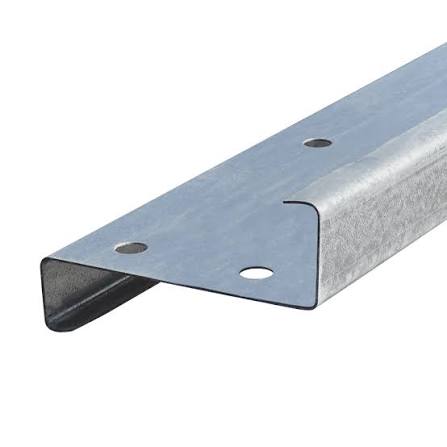
Zed purlins are cold-formed steel members with a Z-shaped cross-section, used as secondary roof supports spanning between the main frame and the roofing sheets. The Z shape lets purlins overlap at supports, stiffening the run and helping carry roof loads back to the structure. They are standard in warehouses, godowns, workshops and agricultural buildings.
Zed purlins are cold-formed steel members used as secondary structural supports in roof systems. They span between primary structural members and support roofing sheets while transferring roof loads to the main frame.
Zed purlins are widely used in warehouses, workshops, commercial buildings, agricultural structures and other buildings with steel roof frames.
Their distinctive Z-shaped cross-section is not simply a design feature. The shape allows the steel to provide useful structural performance while keeping the section relatively lightweight.
For contractors, site foremen and fabricators, understanding the difference between a purlin and a primary structural member is important. Purlins normally support the roof covering and transfer loads to the main structural frame; they are not automatically interchangeable with beams, rafters or columns.
This guide explains how Zed purlins Kenya projects use, how they are selected, installed and protected, and what contractors should check before ordering.
What Are Zed Purlins?
Zed purlins are cold-formed steel sections with a Z-shaped profile used primarily as secondary members in roof structures. They support roofing sheets and transfer loads to primary structural members such as rafters, trusses or portal frames.
A typical Zed purlin has:
- A web
- Top flange
- Bottom flange
- Often a small lip or return
- A specified steel thickness
- A specified overall depth
- A standard or project-specific length
The web is the central vertical portion.
The flanges extend horizontally from the web and contribute to the section's structural behaviour.
The exact profile dimensions and thickness depend on the product specification.
For projects requiring Zed purlins, contractors can view BHD's Zed purlin product for product information and availability.
How Do Zed Purlins Work?
Zed purlins span between primary roof supports and provide intermediate support for roofing sheets. Roof loads are transferred from the roof covering to the purlins and then into the main structural frame and supporting structure.
A simplified roof load path is:
Roofing sheets → Zed purlins → rafters/trusses/portal frames → columns → foundations
The purlin therefore forms an important part of the roof system.
The actual load path depends on the building design.
Loads may include:
- Roofing material weight
- Purlin self-weight
- Insulation
- Ceiling loads
- Maintenance loads
- Wind uplift
- Other imposed loads
For this reason, purlin size and spacing should not be selected by appearance alone.
Where Are Zed Purlins Used?
Zed purlins are commonly used in warehouses, workshops, factories, commercial buildings, agricultural structures, garages and other buildings with steel roof frames. They are particularly useful where relatively long spans and repetitive roof framing require efficient secondary steel members.
Typical applications include:
Warehouses
Large warehouse roofs commonly require repeated secondary supports between primary frames.
Workshops
Steel workshops can use Zed purlins beneath roofing sheets to create a regular support grid.
Commercial Buildings
They can form part of roofing systems for:
- Shops
- Offices
- Retail buildings
- Industrial premises
Agricultural Buildings
They may be used in:
- Farm buildings
- Storage sheds
- Equipment shelters
- Livestock structures
Canopies
Depending on the engineering design, Zed purlins can form part of larger canopy and shelter structures.
The required section should always match the design.
Why Are Zed Purlins Used in Roofing?
Zed purlins provide a practical secondary steel support for roofing sheets while helping distribute roof loads to the primary frame. Their cold-formed profile can provide useful structural efficiency without requiring the same amount of material as some heavier hot-rolled sections.
Their benefits can include:
- Relatively low self-weight
- Efficient use of steel
- Repeatable dimensions
- Easy integration into steel roof frames
- Suitable length options
- Fabrication flexibility
- Compatibility with many roofing systems
However, "lightweight" should not be interpreted as "weak."
The structural capacity depends on the section's:
- Depth
- Thickness
- Steel grade
- Span
- Bracing
- Support arrangement
- Loading conditions
What Are the Advantages of Zed Purlins?
Zed purlins can provide an efficient and practical solution for secondary roof framing because they combine a formed steel profile with relatively low self-weight. Their standardised geometry also makes them suitable for repetitive roof construction and fabrication.
1. Efficient Roof Support
The Z profile provides a useful structural shape for supporting roofing systems.
2. Relatively Lightweight
Cold-formed sections can reduce the amount of steel required for some secondary framing applications.
3. Easy Handling
Compared with some heavier structural sections, appropriately sized purlins can be easier to transport and handle during installation.
4. Fabrication Flexibility
They can be cut and prepared to suit the roof layout.
5. Suitable for Large Roof Systems
They are commonly incorporated into repetitive roof framing systems such as warehouses.
6. Consistent Geometry
Factory-formed profiles provide consistent dimensions across lengths.
7. Compatible With Different Roofing Materials
Depending on the design, purlins can support roofing systems using materials such as metal roofing sheets and suitable translucent roofing products.
For example, BHD also supplies polycarbonate roofing sheets for applications requiring natural light transmission.
What Sizes of Zed Purlins Are Available?
Zed purlin sizes are specified by their overall depth, flange dimensions, lip dimensions and steel thickness. The appropriate size depends on span, purlin spacing, roof loads, wind conditions, support arrangement and the engineering design.
A purlin may be described using dimensions such as:
- Overall depth
- Flange width
- Lip length
- Thickness
- Length
For example, a specification might identify a section by its nominal depth and thickness.
The exact available range varies by manufacturer and supplier.
Why Depth Matters
Increasing purlin depth can affect:
- Section stiffness
- Load capacity
- Deflection behaviour
- Weight
However, a deeper purlin is not automatically the correct purlin.
The complete section properties must be considered.
How Is Zed Purlin Thickness Specified?
Zed purlin thickness is normally specified in millimetres and indicates the thickness of the steel used to form the section. Thickness affects the section's weight, stiffness, strength and fabrication characteristics, so it should be specified clearly when ordering.
For example, two purlins could have similar overall dimensions but different steel thicknesses.
That difference can affect:
- Mass per metre
- Structural capacity
- Deflection
- Connection behaviour
- Handling
Contractors should avoid ordering based only on a description such as "large Zed purlin."
A proper order should identify the required:
Profile + dimensions + thickness + length + quantity + specification
How Far Apart Should Zed Purlins Be Spaced?
Zed purlin spacing should be determined by the structural design rather than a universal fixed distance. The spacing depends on roofing-sheet capacity, purlin span, roof loads, wind loading, purlin section properties and the fixing system.
This is particularly important in Kenya because roof structures may experience substantial wind uplift.
The designer should consider:
- Roofing sheet type
- Roofing sheet thickness
- Purlin span
- Purlin size
- Roof pitch
- Wind loads
- Building location
- Fixing method
For example, a lightweight roofing sheet system may have different support requirements from a heavier roofing assembly.
Do not increase purlin spacing simply to reduce material costs without checking the structural implications.
How Are Zed Purlins Installed?
Zed purlins are installed across the primary roof frame and securely connected at their designed support points before roofing sheets are fixed. Correct alignment, spacing, connections, bracing and end support are essential to achieve the performance specified by the structural design.
A typical installation sequence is:
Step 1: Review the Structural Drawings
Confirm:
- Purlin size
- Spacing
- Span
- Connection details
- Bracing requirements
Step 2: Prepare the Primary Frame
The rafters, trusses or portal frames should be correctly positioned and aligned.
Step 3: Mark Purlin Positions
The installation team marks the specified positions along the roof.
Step 4: Position the Purlins
Each Zed purlin is lifted into position.
Step 5: Make the Connections
Purlins are secured using the specified connection method.
This may involve:
- Bolting
- Cleats
- Plates
- Other engineered connections
Step 6: Check Alignment
The team checks:
- Straightness
- Spacing
- Level
- Connection security
Step 7: Install Bracing Where Specified
Bracing helps control movement and maintain the designed structural behaviour.
Step 8: Install Roofing
Roofing sheets can then be fixed according to the roofing manufacturer's requirements.
Zed Purlin Specifications Table
A complete Zed purlin specification should identify the section depth, flange dimensions, lip dimensions, thickness, length, steel grade and mass per metre. These details allow contractors to order material that matches the structural design rather than relying on a generic product name.
| Parameter | Specification |
|---|---|
| Section type | Zed / Z purlin |
| Profile | Z-shaped |
| Material | Formed steel |
| Overall depth | Project/product specific |
| Flange width | Product specific |
| Lip size | Product specific |
| Thickness | Project/product specific |
| Length | Product/order specific |
| Steel grade | Project/product specific |
| Mass | kg/m, product specific |
| Primary application | Secondary roof support |
| Typical fixing | Engineered bolted/cleated connection |
Exact dimensions should be confirmed against the supplier's current product specification before ordering.
Zed Purlins vs Other Steel Sections
Zed purlins are designed primarily as secondary roof members, while beams, hollow sections and other structural profiles perform different functions. Choosing between them depends on the structural design, span, loading and required geometry.
| Section | Typical Function | Common Applications |
|---|---|---|
| Zed purlin | Secondary roof support | Roofing |
| HR beam | Primary structural member | Frames, floors |
| SHS | Hollow structural/fabrication section | Columns, frames |
| RHS | Rectangular structural/fabrication section | Frames, supports |
| CHS | Circular structural/fabrication section | Columns, rails |
BHD supplies HR beams and square hollow sections for different construction and fabrication requirements.
A Zed purlin should not be substituted for another section without confirming the structural implications.
Are Zed Purlins Suitable for Kenyan Climate?
Zed purlins can be used effectively in Kenyan roof structures when their design, corrosion protection, connections and maintenance are appropriate for the local environment. Coastal areas require particular attention to humidity and salt exposure, while exposed roofs in other regions must account for wind and rain.
Nairobi and Central Kenya
Roof structures may experience:
- Rain
- UV exposure
- Dust
- Temperature changes
Proper coating and drainage help manage environmental exposure.
Mombasa and Coastal Areas
Coastal environments require additional corrosion awareness because humid, salt-laden air can accelerate deterioration of exposed steel.
Protective measures may include:
- Appropriate coatings
- Galvanizing where specified
- Good drainage
- Avoiding water traps
- Routine inspection
Rift Valley
Wind exposure is an important design consideration.
Large roofs, warehouses and lightweight roofing systems should be designed for the applicable wind actions, including uplift.
Why Does Purlin Bracing Matter?
Purlin bracing helps control movement and supports the intended behaviour of the roof framing system. The type, position and quantity of bracing should follow the structural design because requirements vary with purlin span, section, roof geometry and loading.
Bracing may help address:
- Lateral movement
- Rotation
- Stability
- Alignment
The exact bracing arrangement should not be improvised on site.
A structural engineer should determine the appropriate system for critical structures.
What Affects Zed Purlin Prices in Kenya?
Zed purlin prices in Kenya depend on section size, steel thickness, steel grade, length, weight, market conditions, order quantity and delivery distance. Comparing quotations is only meaningful when suppliers are quoting the same specifications.
Important price factors include:
- Section depth
- Flange dimensions
- Thickness
- Steel grade
- Length
- Quantity
- Transport
- Market steel prices
A contractor should avoid comparing:
Zed purlin A: thinner section
against
Zed purlin B: thicker section
and concluding that the cheaper product offers better value.
The steel quantity and structural specification must be comparable.
How Should Zed Purlins Be Stored?
Zed purlins should be stored on level supports above the ground, away from standing water and arranged to prevent bending or damage. Correct storage also makes it easier to identify different sizes and thicknesses before installation.
Good storage practice includes:
- Place purlins above ground.
- Provide adequate support points.
- Keep bundles stable.
- Separate different sizes.
- Prevent water accumulation.
- Avoid dragging sections across rough surfaces.
- Protect coated surfaces from unnecessary damage.
Where steel has a protective coating, handling should minimise scratches and impact damage.
What Are Common Zed Purlin Installation Mistakes?
Common mistakes include incorrect spacing, inadequate connections, poor alignment, insufficient bracing and selecting a purlin without checking the structural design. These errors can affect roof stability, deflection and the ability of the roof system to resist applied loads.
Incorrect Spacing
Purlins should follow the spacing specified by the design.
Undersized Sections
Choosing a smaller section simply because it costs less can compromise performance.
Weak Connections
The connection between the purlin and primary frame must be capable of transferring the required forces.
Poor Alignment
Misaligned purlins can create problems during roofing installation.
Ignoring Wind Uplift
Roof structures must account for uplift, particularly on exposed or lightweight roofs.
Improvised Bracing
Bracing should follow the structural design.
Why Do Zed Purlins Need Standards and Quality Control?
Zed purlins used in construction should meet the applicable product specification and project requirements, with dimensions and material properties verified where required. Quality control matters because purlin geometry, thickness and steel properties directly affect structural performance.
For Kenyan projects, contractors should consider:
- Applicable KEBS standards
- National Building Code 2024
- Engineer's drawings
- Project specifications
- Manufacturer information
- Material documentation
The applicable standard depends on the product and project.
Compliance helps contractors establish that materials are suitable for their intended use rather than relying on appearance or supplier descriptions alone.
Frequently Asked Questions About Zed Purlins Kenya
Zed purlins are secondary roof-support members used between primary structural frames and roofing sheets. Their correct size, thickness and spacing depend on the roof design, loads, span, roofing material, wind conditions and connection details.
What are Zed purlins used for?
Zed purlins support roofing sheets and transfer roof loads to the primary structural frame. They are common in warehouses, workshops, commercial buildings and other steel-framed structures.
What is the difference between a Zed purlin and a beam?
A Zed purlin is normally a secondary roof member, while a structural beam is generally designed to carry larger loads across a span as part of the primary structure.
How do I choose Zed purlin size?
Choose the size based on the structural design, including span, roof loads, purlin spacing, wind loading, section properties and connection requirements.
How far apart should Zed purlins be?
There is no universal spacing suitable for every roof. The spacing should be calculated according to the purlin section, roofing material, span, loads and design requirements.
Are Zed purlins suitable for warehouses?
Yes. Zed purlins are commonly used as secondary roof members in warehouses and industrial buildings when correctly designed and installed.
Can Zed purlins rust?
Yes. Unprotected steel can corrode when exposed to moisture and corrosive conditions. Appropriate coatings, galvanizing where specified, drainage and maintenance can help manage corrosion.
Are Zed purlins suitable for coastal Kenya?
They can be used in coastal areas, but corrosion protection deserves particular attention because humidity and salt-laden air can accelerate steel corrosion.
Where can I buy Zed purlins in Kenya?
You can view Zed purlins from BHD or contact BHD for current product availability, specifications and delivery information.
Final Verdict: Choosing Zed Purlins in Kenya
Zed purlins provide an efficient secondary support system for many steel roofing structures in Kenya. Their performance depends on correct section selection, thickness, spacing, connections, bracing, corrosion protection and compliance with the structural design.
Before ordering, confirm:
- Purlin profile
- Overall depth
- Flange dimensions
- Thickness
- Length
- Steel grade
- Spacing
- Connection details
- Corrosion protection
- Project loading requirements
For warehouses, workshops and commercial buildings, the purlin should form part of a properly engineered roof system rather than being selected independently.
Explore BHD's Zed purlins and complete steel products range for construction and fabrication requirements.
Contact Burhani Hardware Dealers (BHD)
Email: burhanihardwaredealers [at] yahoo.com
Call/WhatsApp: +254 731 217 462 | +254 704 606 131
Visit: BHD, Industrial Area, Funzi Road, Nairobi
Website: https://bhd.co.ke/
Delivery Guarantee:
Same-day delivery within Nairobi.
Next-day delivery countrywide to Nakuru, Kisumu, Mombasa, Eldoret, Thika, Meru, Kitengela and Malindi.
Frequently asked questions

Written & reviewed by
BHD Kenya
Burhani Hardware Dealers (BHD Kenya) is a Nairobi-based supplier of polycarbonate roofing, Alucobond/ACP cladding, Perspex, WPC wall panels and steel products, serving contractors, fabricators and homeowners across Kenya.