

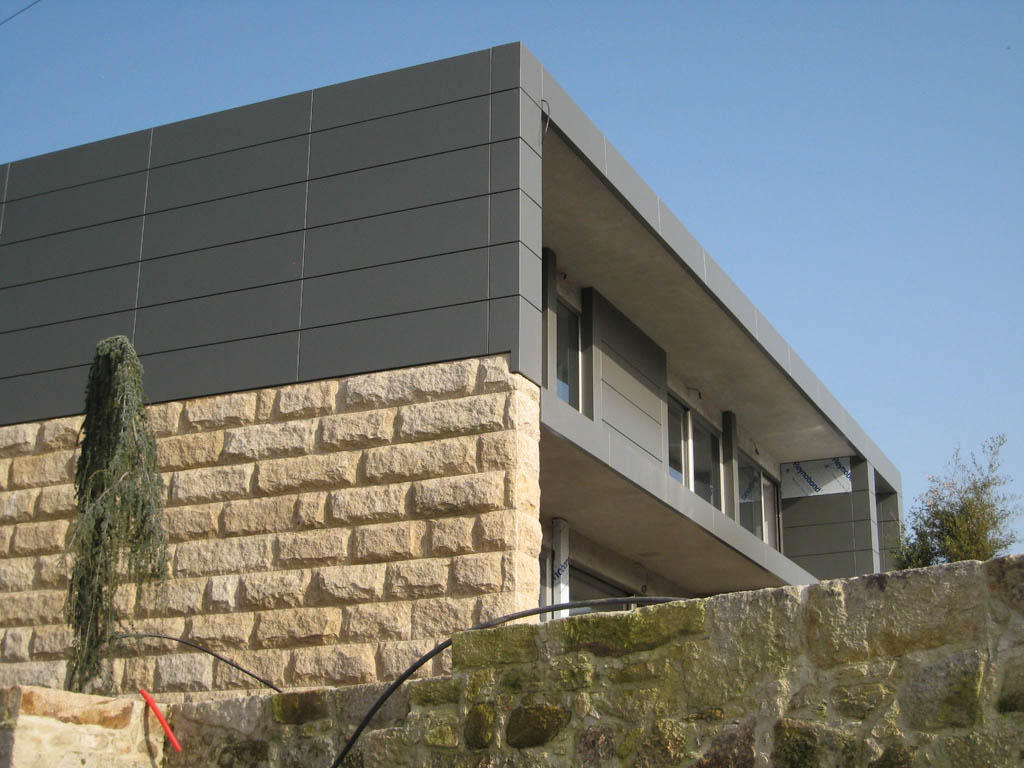
Alucobond vs Stone: Best Cladding for Kenyan Projects
Quick answer
Alucobond, an aluminium composite panel, is light enough to fix onto a subframe on most walls, while stone cladding is heavy and usually needs structural support and skilled masonry. ACP suits flat, modern facades, fascia and signage; stone gives a textured, natural elevation. ACP installs faster and wipes clean, whereas stone weathers and ages in place.
Alucobond vs Stone Cladding: Which Is Better for Kenyan Projects?
Alucobond vs stone cladding comes down to weight, appearance, installation, maintenance, structural requirements, environmental exposure, and project budget. Alucobond offers a lightweight, modern façade solution, while stone provides a heavier, natural finish with a different architectural character.
Choosing wall cladding is an important decision for architects, developers, contractors, and property owners in Kenya. The façade affects not only how a building looks but also how much structural support is required, how quickly the exterior can be installed, and how it will be maintained over time.
For a commercial building in Nairobi, a hotel in Mombasa, a residential development in Kiambu, or a retail facility in Eldoret, the best cladding material depends on the project's specific requirements.
This guide compares Alucobond vs stone across the factors that matter most when selecting façade materials in Kenya.
What Is Alucobond Cladding?
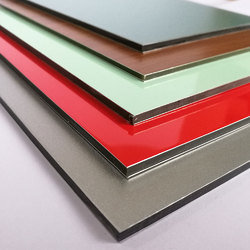
Alucobond is an aluminium composite panel system consisting of aluminium skins bonded to a core, providing a relatively lightweight and rigid surface for architectural cladding. It is commonly used on façades, fascias, columns, shopfronts, signage, and other exterior or interior applications.
Alucobond is commonly associated with aluminium composite panels, or ACPs.
A typical ACP panel contains:
- Aluminium outer skin
- Central core
- Aluminium inner skin
- Protective surface coating
The exact construction and performance depend on the particular product specification.
One of its major advantages is fabrication flexibility. Panels can be cut, routed, folded, and formed into architectural components.
BHD supplies Alucobond sheets in Kenya for architectural and finishing applications.
What Is Stone Cladding?
Stone cladding is a wall-finishing system that uses natural or manufactured stone as an exterior or interior surface. It provides a textured, substantial appearance and can be used to create traditional, premium, rustic, or contemporary architectural finishes.
Stone cladding may use:
- Natural stone
- Cut stone
- Stone veneer
- Manufactured stone
- Thin stone panels
The exact weight and installation method vary considerably according to the type of stone and panel system.
Unlike ACP, stone naturally provides a textured and material-rich appearance.
It is often selected when the visual character of natural materials is a major part of the architectural concept.
Alucobond vs Stone: Which Is Better?
Alucobond is generally better where low weight, clean modern lines, fast fabrication, and design flexibility are priorities, while stone is often better where a natural, textured, substantial appearance is desired. Neither material is universally superior; the correct choice depends on structural design, climate, budget, maintenance, and architectural objectives.
| Factor | Alucobond | Stone Cladding |
|---|---|---|
| Weight | Relatively lightweight | Generally heavier |
| Appearance | Modern and uniform | Natural and textured |
| Fabrication | Highly flexible | Depends on stone type |
| Installation | Requires suitable subframe/system | Varies by stone system |
| Maintenance | Generally manageable | Depends on stone and finish |
| Design flexibility | High | Moderate to high |
| Structural load | Lower in many systems | Higher in many systems |
| Colour options | Wide range | Depends on stone |
| Large flat surfaces | Excellent | Can be more demanding |
| Natural appearance | Manufactured finish | Natural/material appearance |
The choice should therefore be made from the complete project specification rather than from appearance alone.
Why Is Alucobond Popular for Modern Facades?
Alucobond is popular for modern façades because it creates clean, continuous surfaces with consistent colour and precise joint lines. Its relatively low weight and fabrication flexibility also allow architects to create contemporary building envelopes without the mass associated with many stone systems.
Modern commercial buildings often use strong geometric forms.
ACP can be fabricated for:
- Straight façades
- Building corners
- Columns
- Fascias
- Parapets
- Window surrounds
- Canopies
- Signage
This allows the same material to continue across different architectural elements.
A developer seeking a corporate or contemporary appearance may therefore prefer ACP.
Why Do Architects Choose Stone Cladding?
Architects choose stone cladding primarily for its natural appearance, texture, material depth, and architectural character. Stone can give a building a premium or timeless appearance that may be difficult to reproduce with manufactured panel finishes.
Stone is particularly attractive for:
- Villas
- Hotels
- Luxury residences
- Feature walls
- Entrance areas
- Landscaping structures
- Commercial developments
Different stone types can create very different visual results.
A rough stone finish creates a different appearance from polished or precisely cut stone.
The choice therefore depends heavily on architectural style.
Which Is Lighter: Alucobond or Stone?
Alucobond is generally much lighter than conventional stone cladding systems, which can reduce the weight carried by the supporting façade structure. Stone systems require careful consideration of their dead load and attachment method, particularly on large façades or taller buildings.
Weight affects:
- Subframe design
- Brackets
- Anchors
- Wall loading
- Handling
- Transportation
- Installation
This can make lightweight ACP particularly useful for renovation projects.
For example, if an existing commercial building needs a new façade, a lightweight cladding system may reduce the need for extensive structural reinforcement compared with a heavy stone system.
However, structural suitability must be assessed for each project.
Does Stone Cladding Require More Structural Support?
Stone cladding often requires more consideration of structural support because stone is significantly heavier than aluminium composite panels. The supporting wall, anchors, brackets, subframe, and fixing system must be designed for the actual stone weight and expected environmental loads.
This becomes increasingly important when:
- Large panels are used
- The building is tall
- The façade is exposed to wind
- The substrate has limited capacity
- The cladding is installed over an existing building
A qualified structural professional should establish the appropriate support arrangement.
For ACP installations, the subframe also requires proper design.
Lightweight does not mean unsupported.
Which Is Easier to Install: Alucobond or Stone?
Alucobond is generally easier to fabricate and handle than heavy stone, particularly when large façade areas require precise panel cutting and folding. Stone installation can be more labour-intensive depending on the stone type, thickness, support system, and project design.
ACP installation typically involves:
- Site measurement
- Subframe installation
- Panel cutting
- Routing or folding where required
- Panel positioning
- Mechanical or system-specific fixing
- Joint and flashing installation
- Final inspection
Stone installation may involve:
- Surface preparation
- Structural assessment
- Stone selection
- Cutting
- Support or fixing preparation
- Installation
- Joint treatment
- Cleaning and inspection
The actual installation method depends on the selected system.
Which Has More Design Flexibility?
Alucobond generally provides greater fabrication flexibility because panels can be cut, routed, folded, and formed into precise architectural shapes. Stone also provides significant design possibilities, but its physical properties and weight can limit certain applications.
ACP can be used to create:
- Sharp corners
- Folded panels
- Box sections
- Curved details
- Fascias
- Column wraps
- Signage
Stone can provide:
- Natural textures
- Random patterns
- Ashlar-style arrangements
- Large feature walls
- Traditional finishes
The right choice depends on the desired architectural language.
Which Looks More Modern: Alucobond or Stone?
Alucobond generally creates a more contemporary and uniform appearance, while stone provides a natural and textured appearance. However, both materials can be incorporated into modern architecture when their colour, proportions, joints, and surrounding materials are carefully designed.
For a modern office building, ACP may complement:
- Glass curtain walls
- Aluminium frames
- Minimalist entrances
- LED signage
Stone may complement:
- Large glazing
- Timber-effect finishes
- Landscaping
- Natural materials
Combining both can also produce an effective façade.
Alucobond vs Stone: Which Is Better for Nairobi?
In Nairobi, both Alucobond and stone can be suitable façade materials, but the choice should account for UV exposure, rainfall, temperature variation, building design, structural requirements, and maintenance. ACP is useful for lightweight contemporary façades, while stone is suitable where a natural and substantial finish is desired.
Nairobi buildings are exposed to:
- Strong sunlight
- UV radiation
- Seasonal rainfall
- Temperature changes
- Dust
- Wind
For ACP, the external coating should be appropriate for outdoor exposure.
For stone, the designer should consider:
- Water absorption
- Staining
- Joint detailing
- Cleaning
- Support system
The façade should also incorporate proper drainage.
Alucobond vs Stone: Which Is Better for Mombasa?
In Mombasa and other coastal locations, the façade system should be selected with humidity, salt-laden air, corrosion, and heavy rainfall in mind. Alucobond can be suitable when the panel coating, fasteners, subframe, and other components are appropriately specified, while stone selection should consider moisture and staining characteristics.
Coastal exposure can affect metal components such as:
- Fasteners
- Brackets
- Subframes
- Anchors
A panel itself may perform well while an unsuitable fixing system deteriorates.
For coastal projects, specify the complete façade assembly.
Which Handles UV Exposure Better?
UV performance depends on the specific product, coating, colour, exposure, and manufacturer specification rather than simply whether a façade is Alucobond or stone. External ACP panels should have an appropriate exterior coating, while natural stone can also change appearance depending on mineral composition and environmental exposure.
Large façades receive substantial sunlight.
When specifying ACP, consider:
- Exterior-grade coating
- UV resistance
- Colour stability
- Surface finish
For stone, consider:
- Natural colour stability
- Surface treatment
- Porosity
- Staining
- Cleaning requirements
Product documentation should be reviewed before purchase.
Which Is More Resistant to Moisture?
Neither material should be judged by the panel alone because moisture performance depends on the complete façade system. ACP requires properly detailed joints, flashings, and drainage, while stone cladding requires suitable installation, joints, backing systems, and moisture management.
Water can enter a façade through:
- Joints
- Windows
- Penetrations
- Poor flashing
- Damaged sealants
- Incorrect installation
A well-designed façade manages water before it becomes an internal building problem.
Which Is Easier to Maintain?
Alucobond can be relatively easy to maintain because its coated surface can generally be cleaned periodically, while stone maintenance depends heavily on the type of stone, surface finish, staining, moisture exposure, and sealing requirements.
ACP maintenance may involve:
- Cleaning
- Joint inspection
- Sealant inspection
- Fastener checks
- Coating inspection
Stone maintenance may involve:
- Cleaning
- Stain removal
- Joint inspection
- Surface treatment
- Sealant or grout maintenance
Coastal projects may require more frequent inspections for both systems.
Which Is More Affordable: Alucobond or Stone?
The total cost of Alucobond vs stone depends on material specification, façade area, fabrication, subframe, labour, access, transport, and installation complexity. ACP may reduce structural and handling costs because it is relatively lightweight, but the final project price must be compared using complete installed quotations.
A proper façade quotation should include:
| Cost Component | Alucobond | Stone |
|---|---|---|
| Main material | Panel cost | Stone cost |
| Subframe | Required in many systems | May be required |
| Fixings | Required | Required |
| Fabrication | Cutting/routing/folding | Cutting/shaping |
| Labour | Installation | Installation |
| Access | Project-dependent | Project-dependent |
| Transport | Project-dependent | Can increase with weight |
| Maintenance | Periodic | Periodic |
Comparing only the price per square metre can produce misleading conclusions.
Which Has Better Long-Term Value?
Long-term value depends on how well the material matches the building's requirements and how effectively the complete façade is installed and maintained. Alucobond may provide strong value where low weight, fast fabrication, and modern appearance are important, while stone may offer value where natural appearance and material longevity are primary priorities.
Consider:
- Initial purchase cost
- Installation cost
- Structural requirements
- Maintenance
- Cleaning
- Repairs
- Replacement
- Appearance over time
A material that costs less initially may not provide the lowest lifecycle cost.
Alucobond vs Stone: Specifications to Compare
The most useful comparison is based on measurable specifications rather than general descriptions such as "strong" or "durable." Buyers should compare panel construction, weight, thickness, coating, fixing method, stone type, moisture characteristics, structural requirements, and intended application.
Alucobond Specification Checklist
| Parameter | Specification to Confirm |
|---|---|
| Product type | Aluminium composite panel |
| Panel thickness | Confirm manufacturer specification |
| Aluminium skin | Thickness/grade |
| Core | Confirm core type |
| Weight | kg/m² |
| Surface | Matte, gloss, metallic, etc. |
| Coating | Exterior suitability |
| Colour | Selected finish |
| Fire classification | Project requirement |
| Dimensions | Width and length |
| Application | Exterior/interior |
| Fixing | Approved system |
Stone Cladding Specification Checklist
| Parameter | Specification to Confirm |
|---|---|
| Stone type | Natural/manufactured |
| Thickness | Project specification |
| Weight | kg/m² |
| Water absorption | Product specification |
| Finish | Polished/textured/etc. |
| Colour | Selected stone |
| Fixing | Mechanical/adhesive/system |
| Joint | Required joint arrangement |
| Sealing | Where applicable |
| Application | Interior/exterior |
Can Alucobond and Stone Be Used Together?
Yes, Alucobond and stone can be combined to create contrasting architectural façades. ACP can provide clean modern planes while stone introduces texture and natural material character.
A commercial building might use:
- Stone at the entrance
- ACP around upper façades
- Glass around windows
- Aluminium framing
- Signage on ACP panels
This approach allows architects to use each material where it performs or looks best.
What Other Materials Can Be Combined With Alucobond?
Alucobond can be combined with materials such as glass, aluminium, steel, Perspex, and polycarbonate to create complete architectural systems. Each material should be detailed separately for movement, fixing, weatherproofing, and its intended performance.
For example:
- ACP + glass for commercial façades
- ACP + steel for structural support
- ACP + Perspex for signage
- ACP + polycarbonate for daylighting
- ACP + stone for mixed-material façades
BHD also supplies Perspex sheets for architectural, display, and signage applications.
What Role Does Structural Steel Play in ACP and Stone Cladding?
The supporting structure is critical for both ACP and stone cladding because the façade must safely transfer its weight and environmental loads to the building structure. The correct steel sections, brackets, anchors, and fixing arrangement should be determined from the project's engineering requirements.
Depending on the design, façade structures may use:
- SHS
- RHS
- CHS
- Angles
- Flat bars
- Purlins
- Custom brackets
BHD supplies square hollow section SHS and rectangular hollow section RHS for structural and fabrication applications.
For other structural requirements, HR beams are also available.
The appropriate section must be selected based on engineering calculations rather than appearance.
What Are Common Installation Mistakes?
Common façade installation mistakes include inadequate structural support, poor alignment, incorrect fixing, poorly detailed joints, insufficient allowance for movement, and inadequate water management. These problems can reduce appearance, weather resistance, and service performance regardless of the cladding material selected.
Avoid:
- Installing over an unsuitable substrate
- Ignoring wind loads
- Using incorrect fasteners
- Poorly aligned subframes
- Incorrect joint dimensions
- Poor flashing
- Inadequate drainage
- Poor sealant application
- Damaging panel surfaces
- Ignoring manufacturer instructions
Installation quality is therefore a major part of façade performance.
What Standards Apply to Cladding Projects in Kenya?
Cladding projects should comply with applicable Kenyan building requirements, relevant KEBS standards, project specifications, structural requirements, fire provisions, and manufacturer installation instructions. The exact standards applicable depend on the material and building type.
The National Building Code 2024 should be considered for applicable construction requirements.
Relevant KEBS standards should also be checked for the selected construction products.
For larger commercial buildings, fire performance deserves particular attention.
ACP panels should not be selected solely by colour and thickness when the building has specific fire-performance requirements.
Frequently Asked Questions About Alucobond vs Stone
Alucobond and stone serve different architectural purposes, with ACP generally offering lower weight and greater fabrication flexibility while stone provides a natural, textured appearance. The best choice depends on structural, aesthetic, environmental, and budget requirements.
1. Is Alucobond better than stone cladding?
Neither is universally better. Alucobond is often preferable for lightweight modern façades, while stone is often chosen for natural appearance and substantial architectural finishes.
2. Is Alucobond cheaper than stone?
It can be more economical in some projects, but the total installed cost depends on materials, fabrication, subframes, labour, access, transport, and project complexity.
3. Which is lighter, Alucobond or stone?
Alucobond is generally much lighter than conventional stone cladding, which can reduce handling and structural loading requirements.
4. Can Alucobond replace stone?
Yes, where the design requires a lightweight manufactured façade finish rather than the natural appearance and texture of real stone. It should not be treated as a direct material equivalent in every application.
5. Is Alucobond suitable for outdoor walls?
Yes, provided an appropriate exterior-grade product and complete fixing/weatherproofing system are specified.
6. Does stone cladding last longer than Alucobond?
Service life depends on the specific products, environmental exposure, installation, and maintenance. Neither material should be assigned a universal lifespan without product-specific evidence.
7. Which is easier to maintain?
Alucobond can generally be cleaned and inspected relatively easily. Stone maintenance varies according to stone type, porosity, surface treatment, staining, and environmental exposure.
8. Which cladding is best for commercial buildings in Kenya?
Both can be suitable. ACP is often useful for modern commercial façades and signage, while stone can be effective for premium entrances, feature walls, and architectural sections.
Final Verdict: Alucobond vs Stone Cladding
Choose Alucobond when the project prioritizes lightweight construction, clean modern lines, fabrication flexibility, consistent finishes, and efficient façade detailing. Choose stone when natural texture, material character, and a substantial architectural appearance are more important.
The most important point is that there is no universal winner.
For a Kenyan project, consider:
- Building location
- Climate
- UV exposure
- Humidity
- Wind loads
- Building height
- Wall substrate
- Structural capacity
- Fire requirements
- Appearance
- Maintenance
- Installation
- Total project cost
For current ACP and architectural material availability, browse BHD's construction materials catalog.
Contact Burhani Hardware Dealers (BHD)
burhanihardwaredealers [at] yahoo.com
Call/WhatsApp: +254 731 217 462 | +254 704 606 131
Visit: BHD, Industrial Area, Funzi Road, Nairobi
Website: https://bhd.co.ke/
Delivery Guarantee:
Same-day delivery within Nairobi.
Next-day delivery countrywide to Nakuru, Kisumu, Mombasa, Eldoret, Thika, Meru, Kitengela, Malindi.
Frequently asked questions

Written & reviewed by
BHD Kenya
Burhani Hardware Dealers (BHD Kenya) is a Nairobi-based supplier of polycarbonate roofing, Alucobond/ACP cladding, Perspex, WPC wall panels and steel products, serving contractors, fabricators and homeowners across Kenya.