Polycarbonate Sheets Kenya: Best Roofing Guide 2026
Quick answer
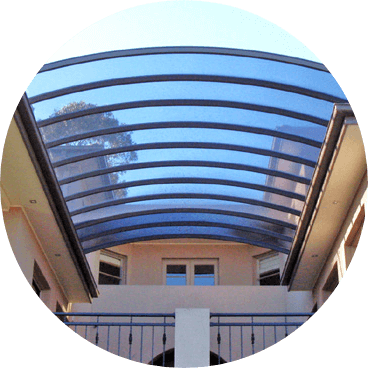
Polycarbonate roofing sheets come in two main forms: hollow multiwall sheets, which are lighter and insulate better, and solid sheets, which are clearer and stronger on impact. Thickness is chosen to suit the purlin spacing and span, and the UV-protected face must be installed upward. Both types are stocked in Nairobi for carports, skylights and walkways.
Best Polycarbonate Roofing Sheets in Kenya 2026
Polycarbonate sheets in Kenya are widely used for roofing applications where natural light, weather resistance, and impact strength are important. The best option depends on the building design, required light transmission, span, thickness, UV protection, and whether the roof is being used for a home, carport, skylight, greenhouse, or commercial structure.
For Kenyan construction projects, choosing roofing material based only on transparency or price can lead to problems later. Nairobi's intense sunlight and temperature changes, Mombasa's humid coastal conditions, and windy areas in the Rift Valley can place different demands on roofing materials.
This guide explains the main types of polycarbonate roofing sheets available for Kenyan projects, how they compare, where each type works best, and what contractors should check before buying.
What Are Polycarbonate Roofing Sheets?
Polycarbonate roofing sheets are lightweight roofing and glazing panels made from a strong thermoplastic material that allows light to pass through while providing considerably more impact resistance than ordinary glass. They are commonly used for skylights, canopies, carports, patio covers, walkways, and sections of commercial roofs.
Polycarbonate is different from conventional opaque roofing sheets because its main advantage is the combination of light transmission and structural performance.
Depending on the product, polycarbonate sheets can be:
- Clear or transparent
- Bronze or tinted
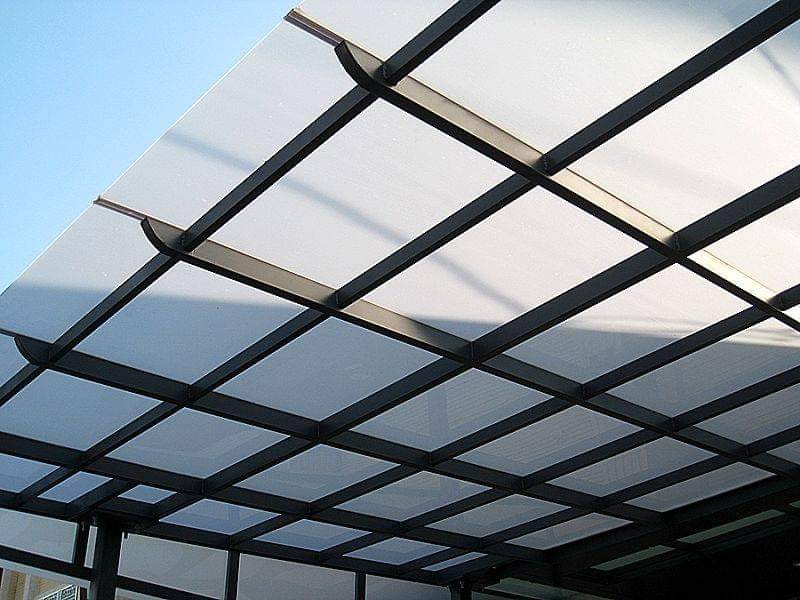
- Opal or translucent
- Hollow multiwall panels
- Solid polycarbonate panels
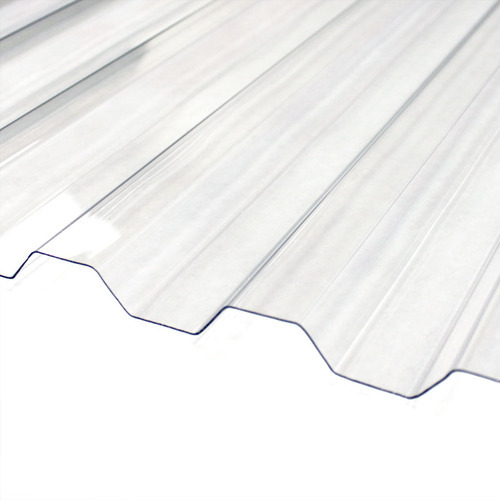
- Profiled roofing sheets
For a contractor, the correct choice depends on the application rather than appearance alone.
For example, a clear sheet may be suitable where maximum daylight is required, while an opal or tinted sheet may be preferable where glare and solar heat need to be reduced.
BHD supplies several polycarbonate options through its polycarbonate sheets catalog, including dedicated hollow polycarbonate sheets and solid polycarbonate sheets.
Which Are the Best Polycarbonate Roofing Sheets in Kenya?
The best polycarbonate roofing sheet depends on the project, but hollow polycarbonate is often suitable for lightweight roofing and daylighting, while solid polycarbonate is preferred where higher impact resistance and a more rigid panel are required. For Kenyan projects, contractors should also consider UV protection, thickness, profile compatibility, fixing requirements, heat gain, and expected loading conditions.
There is no single polycarbonate sheet that is automatically the best for every building.
A practical selection should begin with the intended use.
| Application | Suitable Polycarbonate Option | Main Consideration |
|---|---|---|
| Skylights | Clear or translucent polycarbonate | Light transmission |
| Carports | Solid or profiled polycarbonate | Impact and weather exposure |
| Walkways | Solid or multiwall polycarbonate | Strength and safety |
| Patio covers | Hollow or solid polycarbonate | Heat and light control |
| Commercial daylighting | Hollow/multiwall | Thermal and light performance |
| Interior partitions | Solid polycarbonate | Appearance and impact resistance |
| Canopies | Solid or profiled polycarbonate | Rigidity and fixing |
The sheet should also be compatible with the supporting structure.
A lightweight panel does not remove the need for properly designed purlins, rafters, fasteners, overlaps, edge details, and drainage.
Hollow vs Solid Polycarbonate Sheets: Which Is Better?
Hollow polycarbonate sheets have internal chambers that reduce weight and can improve thermal performance, while solid polycarbonate sheets have a continuous cross-section and provide a more rigid, glass-like panel. Hollow sheets are often practical for larger lightweight daylighting areas, while solid sheets are useful where impact resistance and a robust appearance are priorities.
The two products should not be selected simply because one is cheaper.
Hollow Polycarbonate
Hollow sheets contain internal air channels.
Their advantages can include:
- Low weight
- Good daylight transmission
- Reduced material use
- Useful thermal insulation characteristics
- Easy handling on site
- Suitability for large daylighting areas
They are commonly considered for roofing sections, skylights, canopies, and architectural applications.
BHD's Egyptian hollow polycarbonate sheets are an option for projects requiring this type of material.
Solid Polycarbonate
Solid sheets have a continuous panel structure.
They are generally selected where the project requires:
- Higher impact resistance
- A flat architectural appearance
- Greater rigidity than a comparable thin hollow panel
- Clear glazing
- Protective barriers
- Canopies and architectural features
See BHD's solid polycarbonate sheets for applications where a solid panel is appropriate.
The important point is that solid does not automatically mean better. A contractor should match the material to the design requirements.
What Specifications Should You Check Before Buying Polycarbonate Roofing?
Before purchasing polycarbonate roofing sheets, check the sheet type, thickness, dimensions, colour, UV protection, light transmission, profile, weight, fixing method, and manufacturer or supplier specifications. The correct combination determines whether the sheets will perform properly under the project's environmental and structural conditions.
A useful purchasing specification should contain more than "clear polycarbonate sheets."
Polycarbonate Roofing Specifications Checklist
| Parameter | What to Check | Why It Matters |
| Material | Polycarbonate | Confirms the panel type |
| Sheet type | Hollow, solid or profiled | Determines construction and application |
| Thickness | Manufacturer's stated thickness | Affects rigidity and performance |
| Width | Actual sheet width | Determines coverage |
| Length | Available panel length | Affects joints and installation |
| Colour | Clear, opal, bronze, etc. | Affects light and heat |
| UV protection | UV-protected surface | Important for outdoor exposure |
| Light transmission | Manufacturer specification | Determines daylight level |
| Profile | Flat or profiled | Must match installation system |
| Weight | kg/m² or supplier specification | Important for structural planning |
| Fixings | Recommended fasteners | Prevents installation problems |
| Support spacing | Manufacturer/engineer guidance | Affects panel performance |
For structural projects, the final specification should be confirmed against the manufacturer's technical data and the structural design.
Why Is UV Protection Important for Polycarbonate Roofing in Kenya?
UV protection is important because outdoor polycarbonate roofing is continuously exposed to solar radiation, which can degrade unprotected polymer surfaces over time. For Kenyan roofs, contractors should verify that the product has appropriate UV protection rather than assuming every transparent panel has the same outdoor performance.
Kenya receives significant solar exposure throughout the year.
In Nairobi and Central Kenya, roofs can experience strong sunlight combined with daily temperature changes. On exposed roofs, this can contribute to thermal expansion and contraction.
A suitable product should therefore be specified for external use.
The installer should also follow the manufacturer's recommendations for:
- Orientation of the UV-protected surface
- Fastener placement
- Hole sizing
- Expansion allowance
- Panel overlap
- Edge finishing
Incorrect installation can create problems even when the sheet itself is suitable.
Are Polycarbonate Sheets Good for Kenyan Weather Conditions?
Polycarbonate sheets can be suitable for Kenyan weather when the correct grade, thickness, UV protection, support structure, and installation method are selected. However, coastal humidity, strong sunlight, heavy rainfall, wind exposure, and temperature changes should all be considered when specifying a roof.
Kenya has several distinct construction environments.
Nairobi and Central Kenya
Roofing materials are exposed to:
- Strong sunlight
- UV radiation
- Temperature changes
- Seasonal rainfall
- Dust
- Wind
For transparent roofing, solar heat and glare should be considered alongside light transmission.
Mombasa and the Coast
Coastal projects require additional attention to corrosion.
The humid, salt-laden environment can accelerate corrosion of metal components even where the polycarbonate itself performs well.
For coastal installation, contractors should therefore consider:
- Corrosion-resistant fasteners
- Appropriate metal framing
- Proper drainage
- Sealing details
- UV-resistant roofing products
The roofing sheet is only one part of the roof system.
Rift Valley and Wind-Exposed Areas
In windy areas, the key concern is not simply whether the sheet is strong.
The roof system must have adequate:
- Structural support
- Purlin spacing
- Edge fixing
- Fastener placement
- Overlap detailing
- Wind-load design
A strong panel can still fail if it is poorly fixed to an inadequate structure.
Can Polycarbonate Sheets Be Used for Skylights?
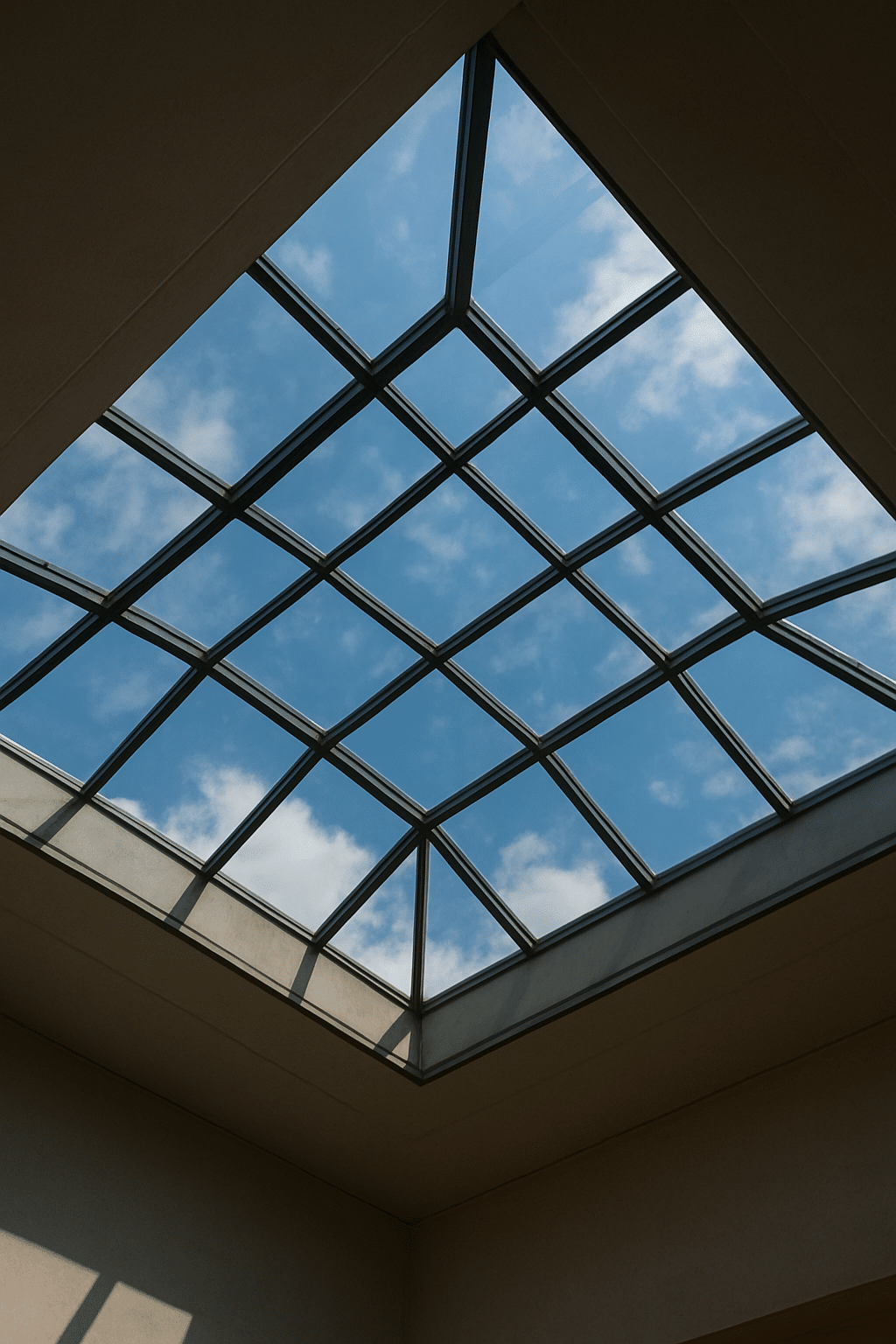
Polycarbonate sheets are particularly useful for skylights because they allow natural daylight into areas that would otherwise require artificial lighting. Clear, translucent, and tinted panels can be selected depending on the desired balance between daylight, glare, and solar heat.
Skylights are one of the most practical applications for transparent roofing.
They can be installed as:
- Roof panels
- Roof strips
- Industrial daylighting sections
- Canopy panels
- Atrium covers
- Walkway covers
- Residential extensions
The major design consideration is controlling excessive heat and glare.
A completely clear sheet may provide maximum light but can also increase solar heat gain in an enclosed space.
For some applications, a translucent or tinted panel can provide a better balance.
BHD also supplies Perspex sheets, which may be considered for certain glazing and architectural applications where the project specification calls for acrylic rather than polycarbonate.
Are Polycarbonate Sheets Suitable for Carports?
Polycarbonate is suitable for many carport applications because it is lightweight, provides weather protection, and can allow daylight through the roof. The supporting frame, sheet thickness, fixing system, drainage, and wind exposure must be designed correctly for the specific carport.
A carport roof has different requirements from an indoor skylight.
The material must withstand:
- Rain
- Sunlight
- Wind
- Impact from falling objects
- Thermal movement
- Repeated outdoor exposure
For a residential carport in Nairobi, for example, a contractor should consider how much daylight is required and whether excessive solar heat underneath the canopy will be a problem.
A tinted or translucent panel may be preferable where glare reduction is important.
For the supporting steel frame, products such as square hollow section SHS and rectangular hollow section RHS can be considered according to the structural design.
The correct section size should be determined by the engineer or fabricator based on span, loading, support conditions, and wind exposure.
How Much Do Polycarbonate Roofing Sheets Cost in Kenya?
Polycarbonate roofing sheet prices in Kenya vary according to the type, thickness, dimensions, colour, UV protection, profile, brand, quantity, and market conditions. The most reliable way to establish a project price is to request a current quotation based on the exact specification and required quantity.
There is no responsible single price that applies to every polycarbonate roofing project.
A contractor requesting a quotation should provide:
- Sheet type
- Thickness
- Width
- Required length
- Quantity
- Colour or transparency
- Application
- Delivery location
- Required accessories
For example, "polycarbonate roofing sheets" is not enough information to prepare an accurate bill of materials.
A project requiring 100 m² of clear hollow panels is different from one requiring 100 m² of solid panels.
Transport can also affect the final delivered cost, especially for projects outside Nairobi.
For current availability and quotations, contractors can contact BHD with their project requirements.
How Should Polycarbonate Roofing Sheets Be Installed?
Polycarbonate roofing should be installed on a properly prepared supporting structure using the manufacturer's recommended fasteners, spacing, overlaps, and expansion allowances. Correct installation is essential because thermal movement, wind uplift, water penetration, and incorrect fixing can damage otherwise suitable roofing sheets.
A typical installation process includes the following steps.
1. Prepare the Supporting Structure
Ensure the rafters and purlins are correctly aligned and structurally adequate.
Do not install sheets over a frame that has excessive movement or incorrect spacing.
2. Confirm Panel Orientation
Where the product has a dedicated UV-protected side, install it according to the manufacturer's instructions.
3. Allow for Thermal Movement
Polycarbonate expands and contracts as temperature changes.
The fixing system must allow the sheet to move without creating excessive stress.
4. Use Suitable Fasteners
Fasteners should be compatible with the roofing system and supporting material.
Over-tightening screws can damage panels.
5. Maintain Correct Overlaps
Side and end overlaps must be appropriate for the roof design and manufacturer's instructions.
6. Provide Proper Drainage
Roof pitch, gutters, flashing, and overlaps should direct rainwater away from the building.
BHD supplies PVC gutters for drainage applications that can be incorporated into suitable roofing systems.
What Are the Common Mistakes When Installing Transparent Roofing?
The most common transparent-roofing mistakes include incorrect support spacing, over-tightened fasteners, inadequate allowance for thermal movement, incorrect UV-side orientation, poor overlaps, and inadequate drainage. These errors can cause cracking, leaks, panel distortion, or premature deterioration.
Contractors should avoid treating polycarbonate like ordinary metal roofing.
Common mistakes include:
- Drilling holes that do not accommodate thermal movement
- Tightening screws until the sheet deforms
- Using unsuitable washers
- Incorrect panel orientation
- Insufficient roof pitch
- Poor sealing
- Unsupported sheet edges
- Incorrect purlin spacing
- Mixing incompatible materials
- Ignoring wind exposure
Installation details should always follow the specific product manufacturer's instructions.
How Does Polycarbonate Compare With Other Roofing Materials?
Polycarbonate differs from metal roofing primarily because it provides daylight transmission while remaining lightweight and impact-resistant. It is best used where natural light or architectural transparency is part of the design rather than as a universal replacement for opaque roofing.
| Material | Main Advantage | Main Limitation | Typical Application |
| Polycarbonate | Natural daylight and impact resistance | Solar heat needs consideration | Skylights, canopies |
| Steel roofing | Strength and broad availability | Does not transmit light | General roofing |
| Glass | Excellent transparency | Heavy and more fragile | Architectural glazing |
| Acrylic/Perspex | Optical clarity | Different impact characteristics | Glazing, partitions |
| Concrete | Mass and permanence | Heavy | Structural roofing systems |
The comparison should always be based on the building's requirements.
For example, installing opaque steel roofing over an area where daylight is needed may increase dependence on artificial lighting.
Conversely, using large transparent areas where solar control is required can create unnecessary heat gain.
What Polycarbonate Roofing Accessories Are Important?
Polycarbonate roofing requires compatible accessories for secure fixing, water management, movement, and finishing. The required accessories depend on whether the panel is hollow, solid, flat, or profiled.
Depending on the system, accessories may include:
- Roofing screws
- Washers
- Profiles
- Flashings
- End closures
- Aluminium or compatible tapes
- Sealants
- Ridge details
- Gutter connections
- Edge trims
Accessories should be selected as part of the complete roofing system.
A cheap sheet combined with inappropriate fasteners or poor edge detailing can create a more expensive installation problem later.
How Do You Choose the Right Polycarbonate Sheet for a Project?
Choose polycarbonate roofing by matching the sheet type and specification to the project's structural, lighting, environmental, and aesthetic requirements. The decision should consider thickness, panel construction, UV protection, light transmission, span, support spacing, wind exposure, and installation method.
A practical selection process is:
Step 1: Define the Application
Is it for:
- A skylight?
- Carport?
- Patio?
- Walkway?
- Commercial building?
- Warehouse?
- Residential extension?
- Architectural feature?
Step 2: Determine the Lighting Requirement
Decide whether the area needs:
- Maximum transparency
- Diffused daylight
- Reduced glare
- Reduced solar heat
Step 3: Determine the Structural Requirement
Check:
- Span
- Purlin spacing
- Wind exposure
- Roof pitch
- Expected loading
- Fixing arrangement
Step 4: Select the Sheet Type
Choose between:
- Hollow/multiwall
- Solid
- Profiled
Step 5: Confirm Outdoor Performance
Check:
- UV protection
- Weather suitability
- Manufacturer specifications
- Installation requirements
Step 6: Calculate Quantity
Measure the roof area and account for:
- Side laps
- End laps
- Cutting
- Waste
- Flashings
- Accessories
Step 7: Confirm Delivery
For large construction projects, delivery planning is important because long sheets and panels require appropriate transport and handling.
How Can Contractors Order Polycarbonate Sheets in Kenya?
Contractors can order polycarbonate roofing sheets by providing the supplier with the required sheet type, dimensions, thickness, colour, quantity, application, and delivery location. Giving complete specifications helps the supplier recommend an appropriate product and prepare a more accurate quotation.
For project procurement, prepare a simple material request containing:
- Product type
- Dimensions
- Thickness
- Quantity
- Colour
- Application
- Required accessories
- Delivery location
- Required delivery date
BHD's construction materials catalog provides access to its wider range of construction and architectural products.
For projects involving several materials, contractors can also review BHD's steel products in Kenya when planning the supporting structure.
Frequently Asked Questions About Polycarbonate Sheets in Kenya
Polycarbonate roofing is commonly selected for skylights, carports, canopies, walkways, and daylighting applications because it combines transparency with impact resistance. The correct product still depends on thickness, construction, UV protection, structural support, and the project's location.
1. Are polycarbonate roofing sheets good for Kenya?
Yes. Polycarbonate can perform well in Kenyan outdoor conditions when the correct UV-protected product, thickness, support system, and installation method are selected.
2. Which is better, hollow or solid polycarbonate?
Neither is universally better. Hollow panels can be advantageous where lightweight daylighting and thermal performance are important, while solid panels are useful where a continuous, rigid and impact-resistant panel is required.
3. Are polycarbonate sheets waterproof?
When correctly installed as part of a properly designed roofing system, polycarbonate panels can provide weather protection. Waterproof performance depends heavily on overlaps, fasteners, flashing, roof pitch, and drainage.
4. Do polycarbonate sheets become hot?
Polycarbonate can transmit solar energy, particularly in clear panels. Where heat gain is a concern, contractors should consider tinted, opal, multiwall, or other solar-control options appropriate to the project.
5. Can polycarbonate sheets be used for a carport?
Yes. Polycarbonate is commonly suitable for carports, provided the supporting structure, sheet specification, fixing system, drainage, and wind exposure are properly addressed.
6. Do polycarbonate sheets need UV protection?
For outdoor roofing, UV protection is an important specification to verify. It helps protect the panel from prolonged ultraviolet exposure and supports longer-term outdoor performance.
7. Can polycarbonate replace all roofing sheets?
No. Polycarbonate is particularly useful for transparent or daylighting sections but is not automatically the most suitable material for every roof area.
8. How do I get a price for polycarbonate sheets in Kenya?
Request a quotation based on the exact type, thickness, dimensions, colour, quantity, accessories, and delivery location. This provides a more useful project price than relying on a generic per-sheet figure.
Why Choose BHD for Polycarbonate Roofing Materials?
BHD supplies polycarbonate and related construction materials for Kenyan building projects, giving contractors access to roofing, structural, and architectural products through one supplier. The practical advantage is being able to specify the transparent roofing material alongside supporting construction materials and accessories required for the project.
BHD's wider product range includes:
- Polycarbonate sheets
- Structural steel
- SHS
- RHS
- CHS
- Purlins
- Gutters
- Architectural sheets
- Perspex
- Other construction materials
For larger procurement requirements, contractors can review BHD's construction material supply services and discuss the required specifications directly with the supplier.
Final Verdict: What Are the Best Polycarbonate Roofing Sheets in Kenya?
The best polycarbonate roofing sheets in Kenya are the ones whose construction, thickness, UV protection, light transmission, and fixing requirements match the specific project. Hollow polycarbonate is a practical choice for many lightweight daylighting applications, while solid polycarbonate is better suited to applications requiring a continuous, rigid and impact-resistant panel.
The right decision should start with the project rather than the product name.
A contractor working on a Nairobi carport may prioritize solar control and structural fixing. A commercial building may need large areas of diffused daylight. A coastal project may require additional attention to corrosion-resistant supporting components and fasteners.
For every application, check:
- Sheet type
- Thickness
- UV protection
- Light transmission
- Dimensions
- Support spacing
- Wind exposure
- Thermal movement
- Fixing method
- Drainage
- Accessories
- Delivery requirements
For current product availability and project quotations, contact BHD with your exact requirements.
Contact Burhani Hardware Dealers (BHD)
burhanihardwaredealers [at] yahoo.com
Call/WhatsApp: +254 731 217 462 | +254 704 606 131
Visit: BHD, Industrial Area, Funzi Road, Nairobi
Website: https://bhd.co.ke/
Delivery Guarantee:
Same-day delivery within Nairobi.
Next-day delivery countrywide to Nakuru, Kisumu, Mombasa, Eldoret, Thika, Meru, Kitengela, Malindi.
Frequently asked questions
Written & reviewed by
BHD Kenya
Burhani Hardware Dealers (BHD Kenya) is a Nairobi-based supplier of polycarbonate roofing, Alucobond/ACP cladding, Perspex, WPC wall panels and steel products, serving contractors, fabricators and homeowners across Kenya.